
Office cleaning
Why self-cleaning glass still needs help during a dry spell
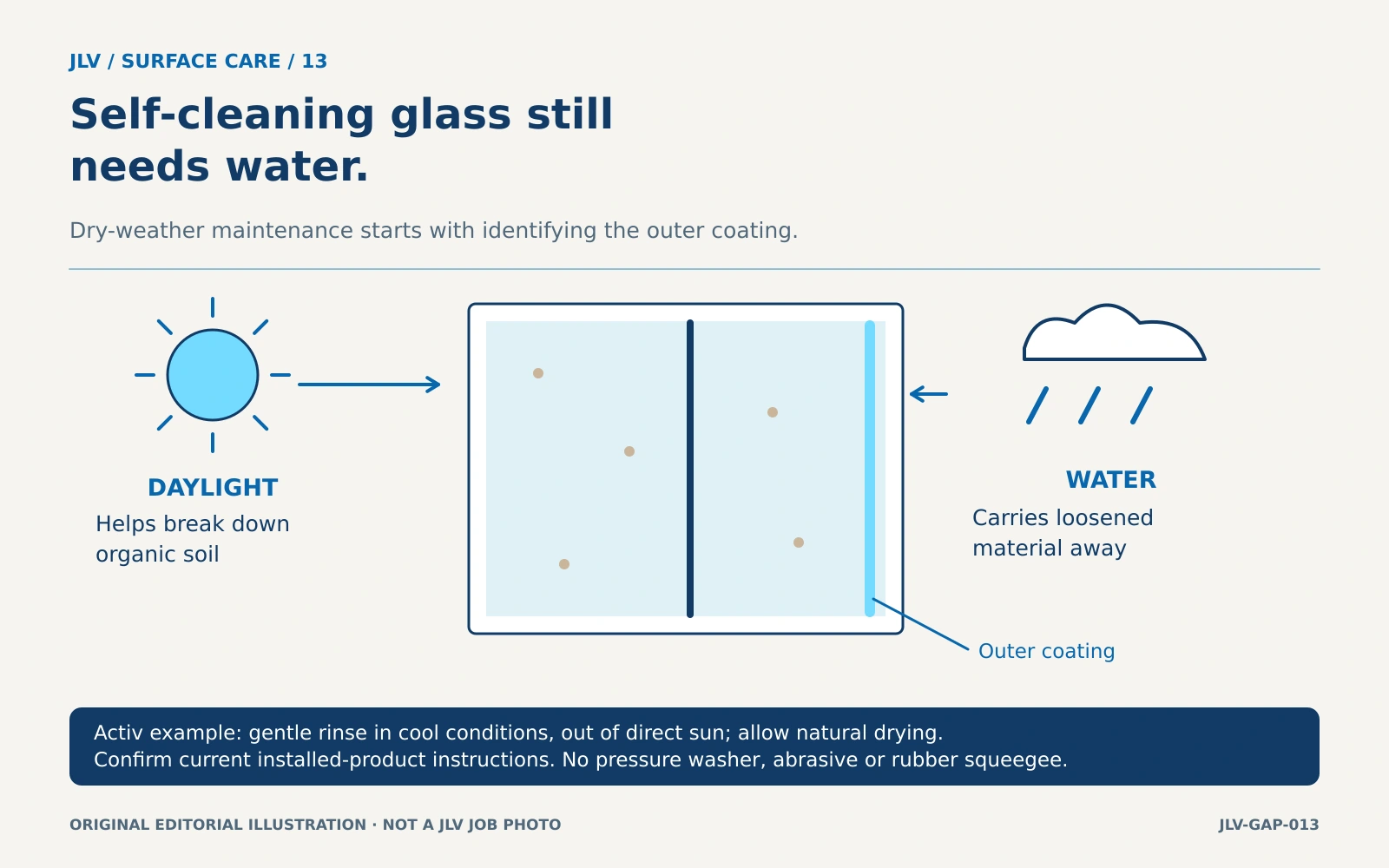
Self-cleaning glass can still look dusty after a long period without rain. Before adding it to an ordinary window-cleaning route, find out what coating is installed. A method intended for plain glass may be unsuitable for the coated outer face.
This guide uses Pilkington Activ as a specific example. It does not establish a cleaning method for every coated window, aftermarket film or unidentified pane. The useful decision is whether the office needs an approved dry-weather rinse or a glazing supplier’s assessment.
Confirm the glass and the working area
Ask facilities for the glazing schedule, installer information and product certificate. Identify which panes have the coating and which face carries it. A description such as “special glass” on an old cleaning quote is not enough to choose a method.
Also check whether the surface is genuinely reachable from the ground. A nearby canopy, planted bed, locked courtyard or busy entrance can change the access plan. This article does not cover roof glazing, ladder work or reaching across an obstruction. Arrange an appropriate access assessment separately when needed.
Write down where rinse water would go. Keep pedestrians away from the working area and protect nearby items that should not get wet. Schedule the visit around the entrance’s use rather than assuming an empty-looking lobby will remain empty.
Understand what the coating needs
Pilkington’s Activ guide explains that daylight helps the coating break down organic soil; water then carries loosened material away. Dry weather can interrupt that second part. For Activ, the maker permits gentle hosing in cool conditions out of direct sun, followed by natural drying. Pressure washers are excluded.
Hard water can leave white marks or a milky mineral appearance after rinsing. Follow the exact glazing instructions for water quality and ask the supplier for directions if this occurs. Do not improvise additives or assume that one rinse-water recommendation applies to every coated pane.
For stubborn ordinary marks, its sequence is an initial rinse, warm soapy water with a soft cloth, then a final rinse. Rubber squeegees and abrasives are excluded. After cloth cleaning, reactivation may take several days. These instructions concern Activ products, and the brochure is dated March 2021; confirm the current instructions for the installed glazing before work.
Make the first pass a controlled check
With the product identified and its instructions approved, choose a small, unobtrusive area for the initial method check. Record its starting appearance. Check the cloth and equipment for trapped grit before contact, and keep the first pass within the agreed method.
Let the trial area dry before judging it. Look for remaining ordinary soil, unexpected streaking or a change in appearance. A satisfactory small test supports continuing with that same method; it does not authorize a stronger product or establish that every pane has the same coating.
If a test behaves unexpectedly, stop and give facilities the exact pane location, product information and observations. Do not turn an unclear result into repeated aggressive cleaning. A photograph taken from a consistent position helps the glazing supplier understand the question.
Set a clear handoff point
Paint, cement, adhesive residue, suspected silicone contamination and damage belong outside this ordinary-soil workflow. Do not scrape them or improvise a solvent treatment. Ask the installer to specify the next step for the particular deposit and coating.
Likewise, record persistent marks instead of promising they will disappear immediately. The office should know whether the visit removed loose soil, whether a coating-related question remains, and who will review it. Schedule any follow-up observation around the supplier’s advice rather than selling another wash before the result can be assessed.
For an office or post-construction cleaning inquiry, contact JLV with the pane locations, glazing details and access restrictions. Ask which accessible cleaning tasks can be included and which need a separate glazing professional.