
Space and astrophysics
Voyager's Pale Blue Dot Changed the Scale of the Picture
Historical event:
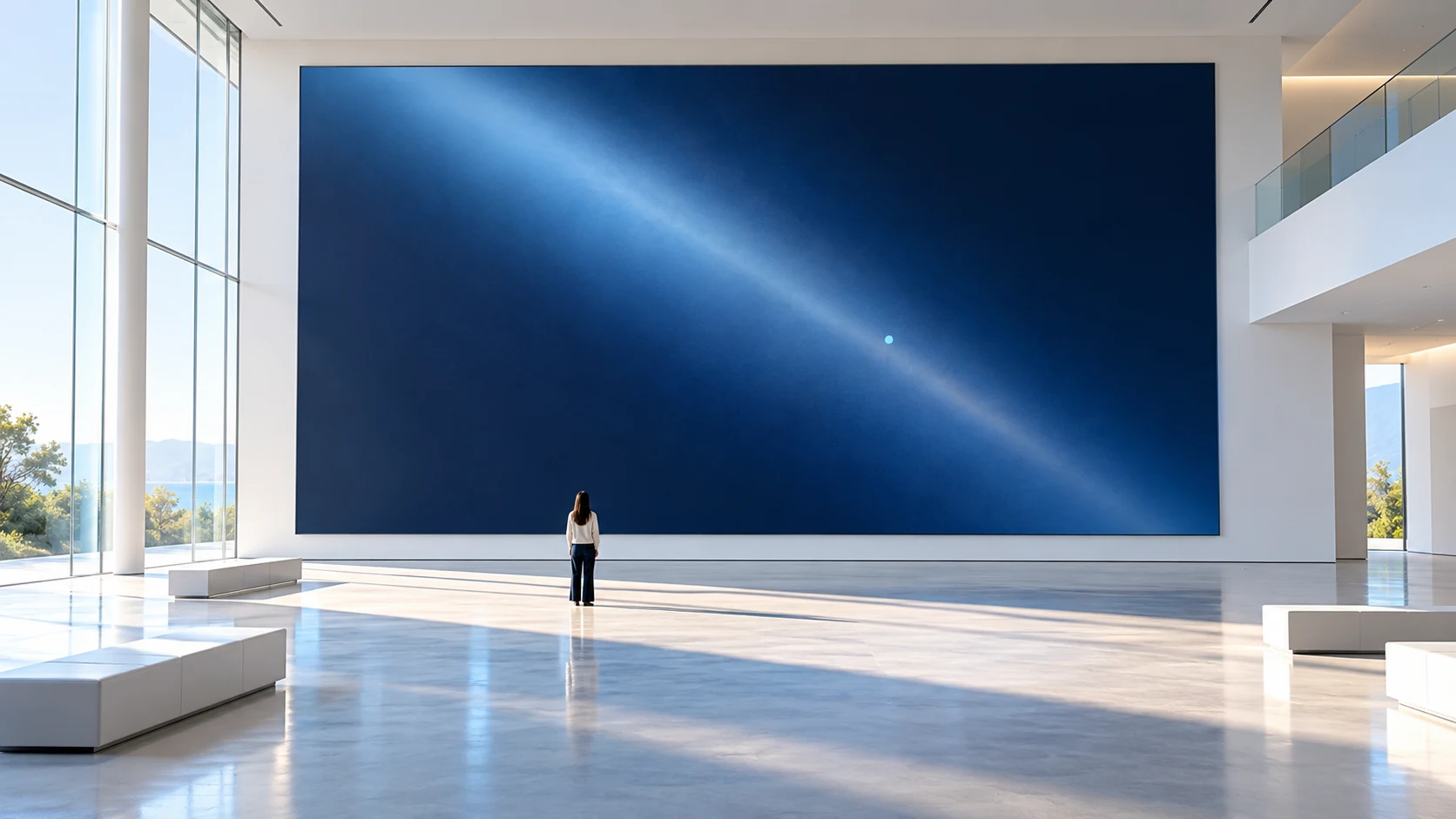
On February 14 in 1990, Voyager 1 photographed Earth from far beyond the region where our world normally dominates a picture. The planet appeared as a tiny point within scattered sunlight. Oceans, cities, and the entire familiar map had disappeared into a speck.
NASA calls the image the Pale Blue Dot. When the photographs were taken, Voyager 1 was about 3.7 billion miles from the Sun. Earth occupied roughly a pixel from that viewpoint. The remarkable part wasn't a newly revealed detail on the planet. It was the way the planet's familiar details had become impossible to distinguish.
A portrait with a very wide perspective
The Earth image belonged to a sequence of sixty pictures used to make a solar-system family portrait. Several planets appeared as small points. Others didn't make a useful appearance: Mercury was too close to the Sun, while Mars was obscured by scattered light in the camera.
That imperfection is part of the real image-making story. The portrait had a specific vantage point, instruments, and constraints. It wasn't an all-seeing map of everything in the solar system.
The Earth pictures came shortly before Voyager's cameras were shut down. Decades later, a revised version released in 2020 used modern processing to revisit the original data. NASA identifies both the original image and the reprocessed version, keeping the historical observation distinct from the later work that made another presentation possible.
What gives the picture its emotional force is the distance between what we know and what we can see. We know Earth contains a world of detail. The image withholds almost all of it. The point is meaningful because of that gap, not because a viewer could enlarge it into a street map.
It is a useful reminder when we look at any photograph: a wide perspective can reveal a relationship while concealing a condition. The missing detail isn't necessarily a failure. It may simply belong to another scale of observation.
Two views of the same room
For a business space, a room-wide photograph can be helpful when discussing layout and overall presentation. It can show an entrance, the arrangement of seating, or where common areas connect. It may say very little about residue along a ledge or a mark beside a handle.
A useful cleaning walkthrough combines that broad view with a closer look at agreed surfaces. Begin by identifying the areas that matter most to the business, then name the specific details within them. If photographs are used, obtain the owner's authorization and keep private information and people out of the images.
The goal isn't to make every conversation microscopic. It is to choose the view that answers the question. Overall order and a particular surface condition are both worth discussing, but one image needn't stand in for both.
For an Orange County office, the next step can be refreshingly down to earth: tell JLV what you want visitors to notice and which cleaning details need attention. Let's connect the big picture with the close-up, one real workspace at a time.