
Pop culture
Back to the Future and the Art of Spotting a Change
Historical event:
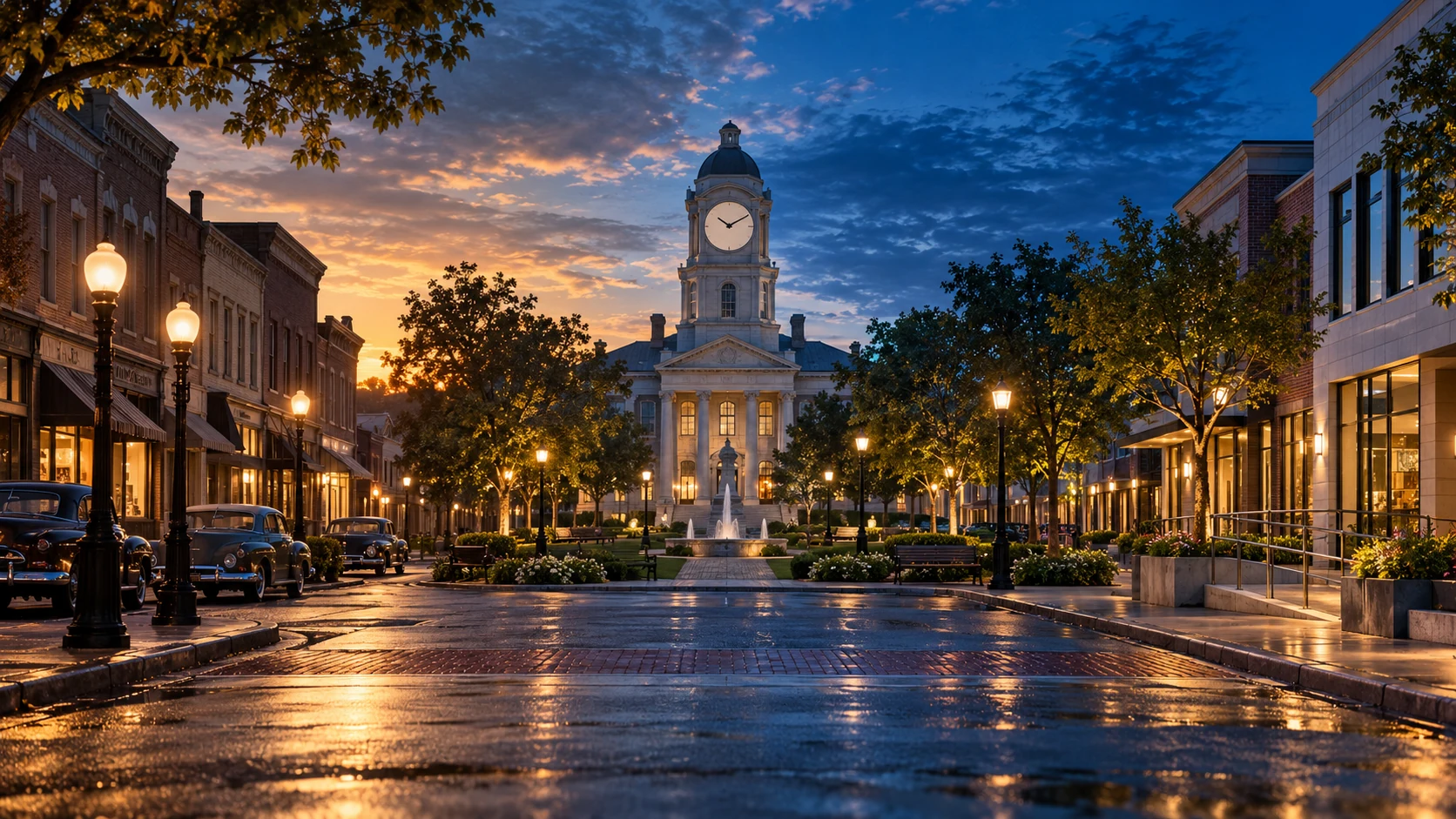
On July 3 in 1985, Back to the Future opened in U.S. theaters. Marty McFly's trip to 1955 gave him a startling new perspective on familiar people. It also gave the film's designers a demanding assignment: make the same town look like itself in two different decades.
Production designer Larry Paull and his team built the 1955 Hill Valley square on Universal's backlot. The film's original production notes describe research through photographs, magazines, and old yearbooks. The setting needed the texture of a particular period, not merely a calendar announcing the year.
A grassy square and a turquoise malt shop helped establish one version of the town. After filming there, the crew moved to other locations while the set was transformed into its 1985 counterpart. The production notes describe a turnaround of two and a half weeks. Shops changed, the grassy area became a parking lot, and the same location told a different story.
The sequence rewards attention because the audience has something to compare. Recognizable geography anchors the view while changed objects and uses carry the passage of time. You can notice a difference without losing your sense of where you are.
There is a second, less flashy pleasure in knowing how it was made. The change that looks like thirty years to the audience was a tightly coordinated stretch of work for the production team. Decisions about a sign or storefront had to fit the larger picture. Details were doing narrative labor.
We tend to remember the DeLorean when we think about the movie. The town square offers its own kind of time machine: a place that lets you compare what is there with what you remember being there.
In an office, that comparison is useful only if the reference is fair. A photograph taken from a bright doorway and another taken from a dark corner may create an impression of change that is difficult to interpret. The framing can also hide the exact surface you meant to discuss.
If the business authorizes condition photos, choose a repeatable position and a clearly identified area. Use similar lighting when possible and record when each image was taken. Keep people, private paperwork, screens, and client information out of the frame. The purpose is a useful record of an agreed area, not a behind-the-scenes tour of the business.
Pair the image with a short description. For example, specify which ledge or section of door glass is being reviewed. That makes the comparison easier to discuss and leaves less room for a dramatic photograph to become an exaggerated claim. A visible change still tells you only about what the image actually shows.
Clear records can help a Chino business make its cleaning conversation more precise. Discuss the areas you want to improve with JLV, along with how you will review them. A better view of the present doesn't require a flux capacitor.