
On this day
The Empire State Building, Seen at Eye Level
Historical event:
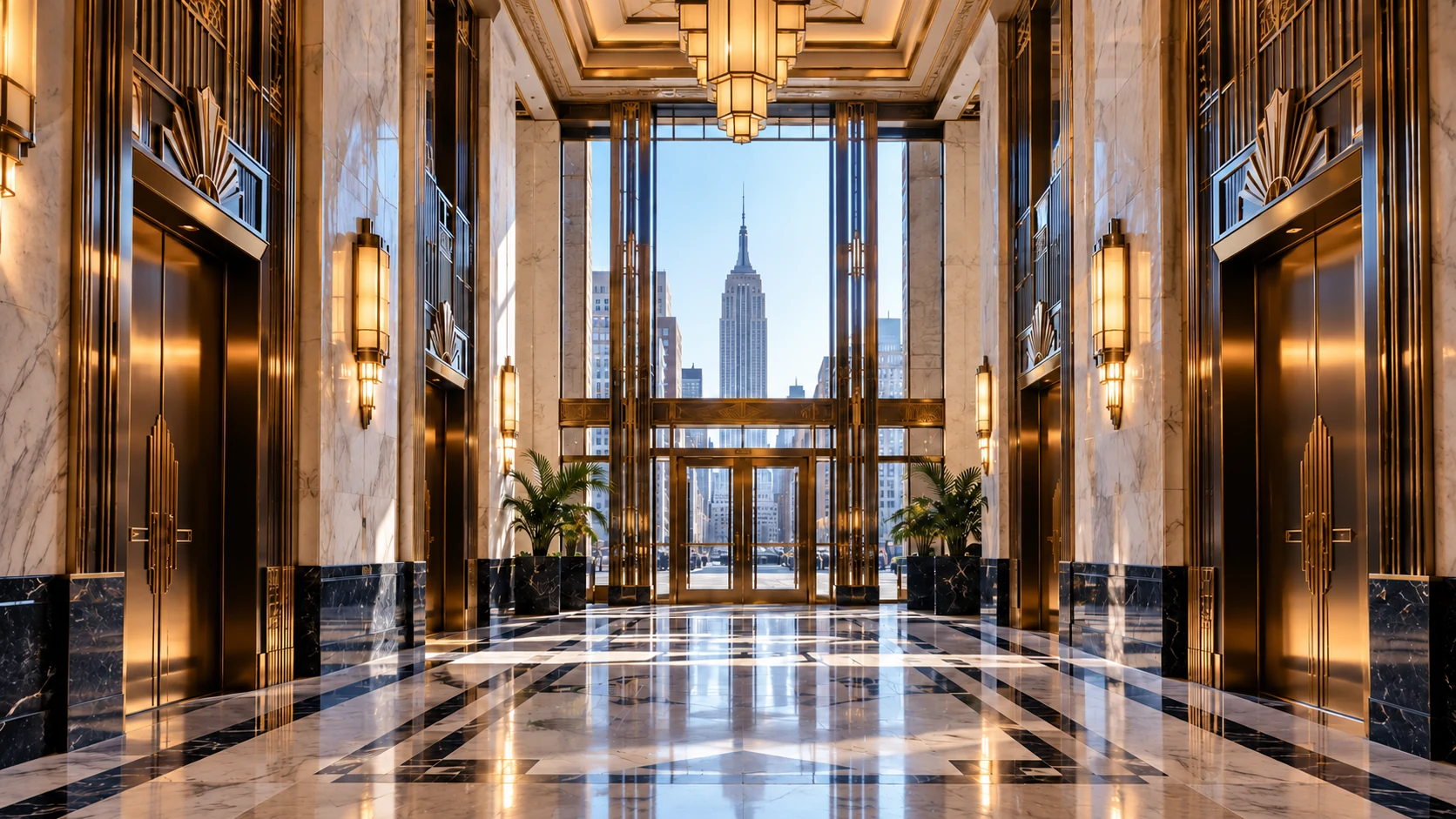
On May 1 in 1931, a button pressed in Washington, D.C., helped announce a new New York landmark. President Herbert Hoover officially opened the Empire State Building by activating its lights. The skyline had acquired a spectacular new point of reference.
At 102 stories, the building gave people plenty of reasons to look up. Its official history traces construction from March 1930 to the opening in May 1931, an extraordinary compression of activity into little more than a year. Architects Shreve, Lamb & Harmon and builders Starrett Bros. & Eken helped turn the project into a physical presence that could dominate a view from far away.
But a skyline is not how a person enters a building. A visitor eventually puts away the camera, reaches for a door, and stands in a lobby. The scale changes from an entire city to a few feet of space.
The part beneath the postcard
The Empire State Building's Art Deco lobby has its own story. The building's later restoration program included recreating its original gold-and-aluminum ceiling. That work recognized something easy to overlook: the experience inside was worth attention in its own right, not merely as a passage to the famous view above.
A skyline photograph can make a building feel like one enormous object. At eye level, it becomes a sequence. There is the approach to the entrance, the pause to get oriented, the area around the elevators, and the little details visible while a person waits. Architecture happens at both scales.
Think about how you remember a place after an appointment. You might recall an impressive exterior. You might also remember having time to notice the reception counter or the ledge beside your seat. Waiting gives small details a surprisingly large audience.
The waiting chair is an unusually useful vantage point. Staff pass the same ledge in seconds; a visitor may sit beside it for several minutes. Try borrowing that view before deciding which entrance details deserve attention. The familiar lobby may reveal a different set of priorities.
Try the waiting-chair view
Before reviewing an office cleaning scope, take a short seat in the waiting area. Look at the visible door glass, reachable ledges, baseboards, and elevator surrounds. Then walk the route a first-time visitor would take. Write down the specific areas you would like included in the conversation, rather than one broad instruction to make the lobby look better.
Also distinguish something that needs cleaning from a worn or damaged finish that needs a maintenance decision. Naming the condition accurately gives everyone a more realistic starting point. It helps keep expectations clear without asking a cleaning visit to become a restoration project.
Your Ontario business may never appear on a New York postcard. It still has an entrance, an audience, and a story to tell at eye level. Talk with JLV about the office cleaning details people encounter on the way in.