
On this day
Grand Central and the Places Where People Pause
Historical event:
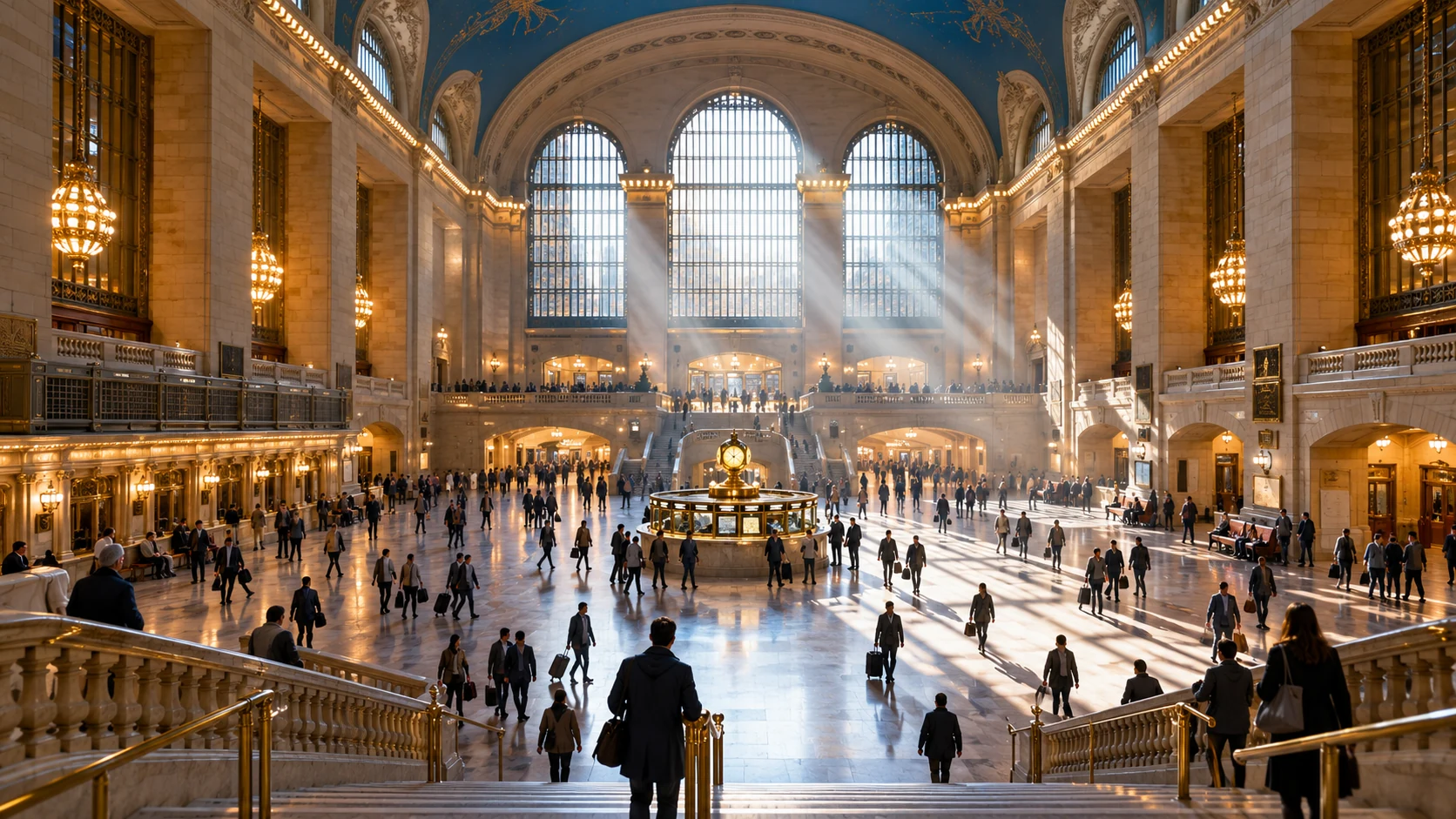
Grand Central Terminal began its public life just after midnight. On February 2 in 1913, at 12:01 a.m., New York's new terminal officially opened. According to its museum-curated history, construction was not yet entirely complete, but the public was ready to explore.
More than 150,000 people visited that first day, the terminal's account reports. Imagine the change represented by that number: a construction project becoming a place people could enter, navigate, and eventually take for granted on the way to something else.
The Main Concourse's four-faced clock offers a quieter way to understand the terminal. Grand Central's own description identifies it as a meeting place. A clock tells you when. This one also helps answer where.
A building for movement, and for meeting
That combination is what makes a terminal more interesting than a container for trains. Some people are hurrying through. Others have arrived early, are waiting for a companion, or need a moment to get their bearings. One space holds several kinds of attention at once.
Grand Central's later history added more connections to that movement. The Hotel Commodore, opened in 1919, and the Graybar Building, completed in 1927, had passageway links to the Main Concourse. The terminal helped connect a neighborhood as well as railway journeys. Its edges mattered alongside its central room.
You don't have to memorize an architectural plan to appreciate the idea. Try looking at a busy public place and separating the people in motion from those who have stopped. The same doorway may serve both. The same corner may be a shortcut for one visitor and a meeting spot for another.
This is why a room can feel different when it is occupied. The empty version invites your eye toward the middle. The working version reveals the places where bags rest, chairs are used, and conversations pause. Those small pockets are part of the room's real story.
The waiting area belongs in the plan
For an office, it is worth asking where people spend those in-between minutes. A reception seating group, a doorway edge, or an accessible area beneath a bench may deserve a specific place in the cleaning discussion. The aim is to look beyond the broad center of the floor.
A useful exercise is to mark the waiting spots on a simple sketch and add the times they are usually occupied. That gives the business and its cleaning provider a concrete starting point for discussing access, frequency, and the boundaries of the work. Moving furniture or personal belongings should be agreed rather than assumed.
This also gives staff an easier way to describe a recurring concern. They can point to the place visitors actually use, instead of referring vaguely to the lobby.
Your Chino workplace has its own everyday meeting places. Give them a place in the cleaning conversation with JLV, along with the spaces between destinations. No train ticket required.