
On this day
The Brooklyn Bridge Opened a New Everyday Route
Historical event:
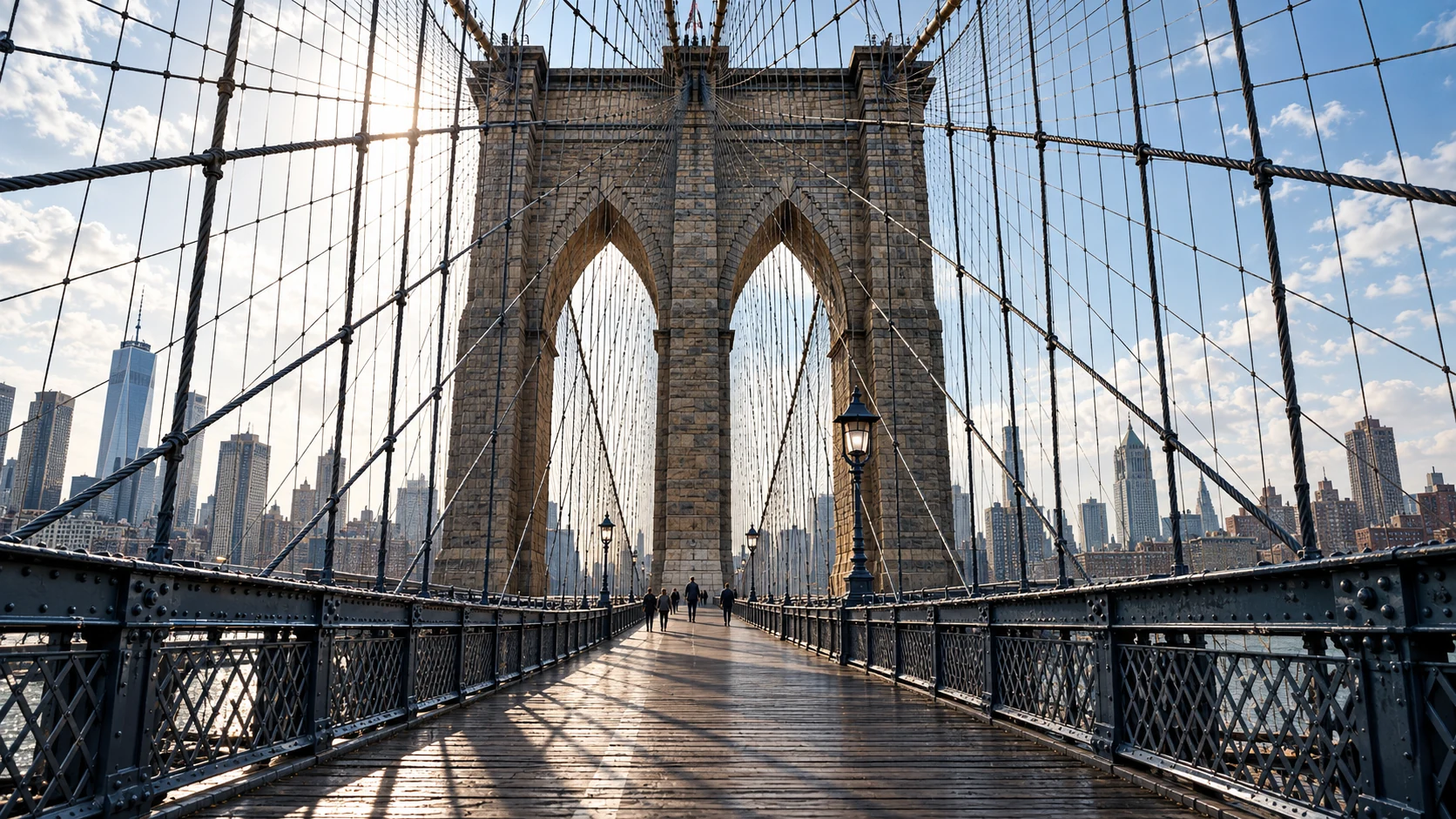
On May 24 in 1883, the Brooklyn Bridge opened across the East River. A line that people could trace on a map became a route they could actually take. That is an enormous change hiding inside a simple word: open.
The bridge's stone towers and suspension cables made a spectacular announcement. At completion, it had the longest suspension span in the world. John A. Roebling designed it, and construction stretched from 1869 to 1883. The New York City Department of Transportation records a main span of 1,595.5 feet, but the full bridge and its approaches extend much farther. Getting across the water was only part of the design problem. People also had to get onto the bridge and back down to the city.
The approach is part of the experience
That detail changes how the landmark looks. The famous span occupies the postcard. The approaches do the quieter work of connecting it to ordinary streets. Because the crossing sits high above the river, its sloping approaches reach well inland. The engineering achievement includes those less glamorous stretches, whether they make the photograph or not.
The bridge also kept changing after the celebration. A major twentieth-century reconstruction removed railroad and trolley tracks and reworked its roadways. In 2021, a protected bicycle lane took over space formerly used by vehicles. An opening date begins a building's public life; it doesn't freeze how people will use it.
There is something wonderfully human about that. We celebrate the moment the ribbon comes down, then spend years working out the daily details. Where do people pause? Which entrance do they prefer? What happens when two busy routes meet? A place becomes familiar one crossing at a time.
Follow the feet
An office entrance offers a smaller version of that question. A floor plan shows where people are meant to go. Watching a normal arrival period shows where they really go: toward reception, around a seating group, or through the door closest to the parking area.
For a useful cleaning walkthrough, follow one complete arrival route instead of assessing the lobby from a single spot. Note the entry flooring, the point where visitors stop to ask a question, and the corners exposed when doors open. Discuss when each area is occupied before deciding when cleaning should happen. Any access arrangements should be agreed with the person responsible for the building.
The best route through a building is the one its people actually use. Following that route gives your cleaning plan a connection to the daily life of the business. A beautifully presented center floor is only one part of a visitor's journey. The route to it deserves attention too.
For an Orange County office, a clear welcome begins before the reception desk. Talk with JLV about business and office cleaning that takes the whole arrival route into account. Let's give your first impression a good crossing.