
Pressure washing
How to Set Up a Pressure Washer Safely
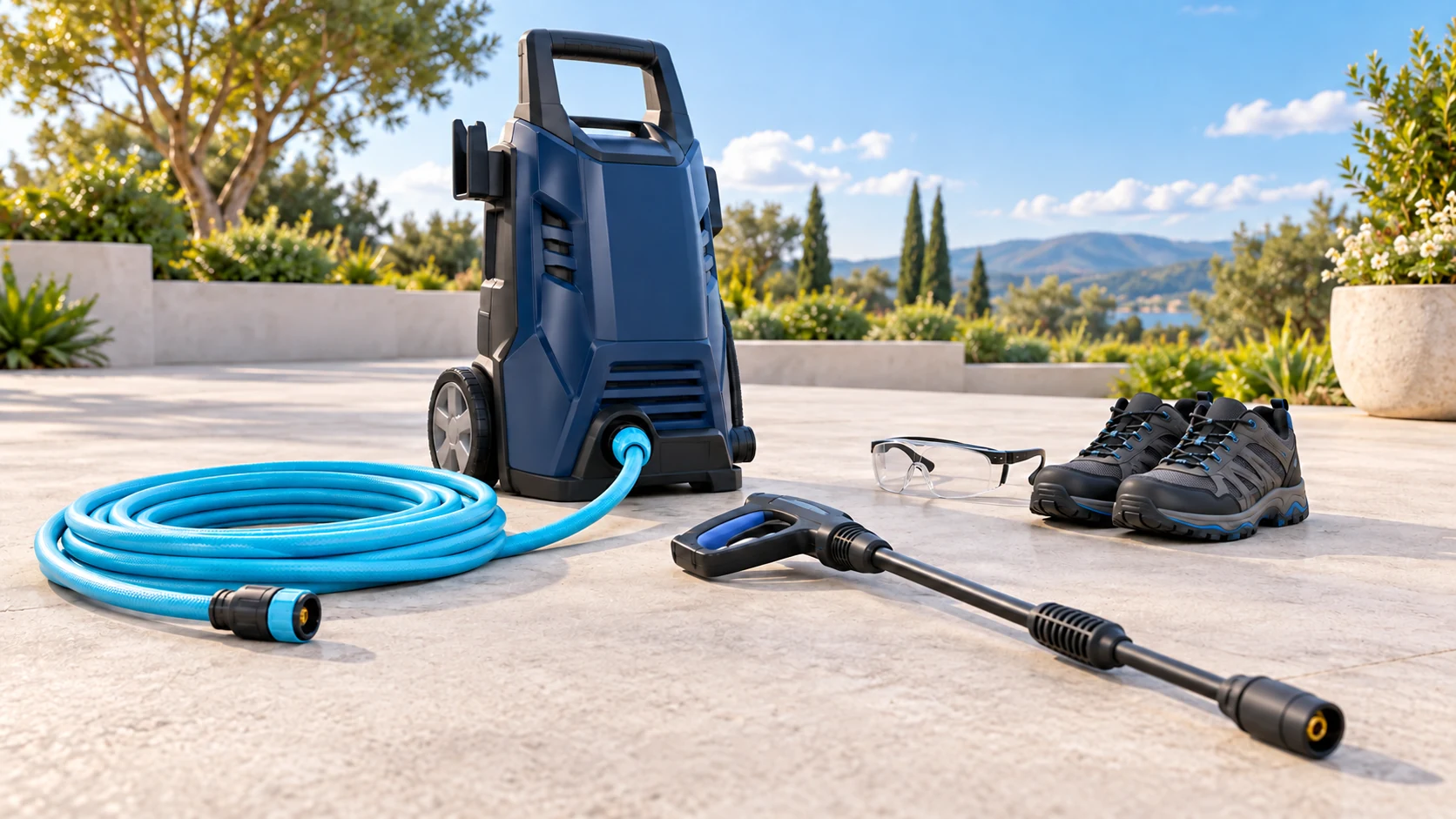
Quick answer
Set up a pressure washer only after confirming that the surface permits pressure cleaning and that you can collect the wash water. Read the exact machine manual before connecting anything. A tidy hose layout and a suitable test area are useful; a powerful machine cannot make an unsuitable surface safe to wash.
Before you start
This guide is for routine, ground-level outdoor cleaning by adults able to operate the equipment safely. Never allow children to operate a pressure washer, and keep them outside the work zone. It excludes roofs, ladders, unknown coatings, suspected lead or asbestos, construction dust and hazardous spills. “Power washing” sometimes means heated-water cleaning, while pressure washing describes pressurized water. The terms are also used loosely. Check the equipment's actual temperature rating; never supply hot water to a cold-water-only machine. Check current city and water-provider restrictions before wet cleaning; collecting runoff does not itself authorize water use.
Supplies
- The operator manual, surface-care instructions and a compatible nozzle identified by the manufacturer.
- Eye protection, closed slip-resistant footwear, suitable clothing and any hearing or other protection specified in the manual.
- Sound supply and pressure hoses, barriers, and a wash-water collection setup with an approved disposal route.
Step-by-step method
- 1. Walk the whole work area before unpacking. Locate windows, outlets, vents, weak joints, vehicles, people routes and storm drains. Choose a dry standing position and an exit that will remain usable. Move loose objects by hand rather than with the spray.
- 2. Confirm where collected water will go before opening the faucet. Separate ordinary leaves and litter from the washing task. If construction dust, paint flakes or unknown residues are present, stop for a qualified assessment instead of sweeping or spraying them.
- 3. Inspect the gun, safety lock, hose jacket, fittings and water inlet. Do not use damaged or leaking high-pressure components, and never feel for a leak with your hand. Record the model number if replacement parts or a service call are needed.
- 4. Never run a fuel-burning engine indoors or in a partially enclosed space. Position gasoline-powered equipment entirely outdoors, away from occupied areas and air intakes. CDC specifies at least 20 feet from doors, windows and vents. A garage with its door open is still an unsafe operating location. Keep fuel and hot exhaust away from the working path.
- 5. For an electric machine, follow its grounding and GFCI instructions, test the GFCI and keep connections dry. Use an extension cord only if the manual permits the exact type and arrangement. Stop after a breaker or GFCI trips; do not bypass protection or repeatedly reset it. Have a qualified electrician assess an electrical fault before reuse.
- 6. Connect and prime the equipment in the manufacturer’s sequence with the machine off until instructed otherwise. Secure approved fittings, provide the required water supply and purge air as directed. Do not improvise startup steps from a different model.
- 7. Clear bystanders, take the prescribed two-handed grip and start the approved test from the manual’s working distance. Maintain stable ground-level footing. Stop, shut down and depressurize as directed before changing nozzles or disconnecting hoses.
Check the result and avoid common mistakes
- A quiet leak, pulsing spray or unusual vibration needs attention before the full job. Do not compensate by moving closer to the surface.
- Never point the jet at people, animals or electrical equipment. Seek prompt medical care for a pressure-injection wound even when the opening looks small.
- Keep the trigger lock functional. Never tie the trigger open or operate from a ladder.
Keep it easier next time
After the job, use the manual’s shutdown, flushing and storage procedure. Keep a short record of the nozzle and surface test that worked, without assuming it applies to a different material. Store attachments together so that the correct tip is easy to identify next time.
When to stop
Stop for escaping runoff, worsening weather, unsafe footing, electrical faults, a damaged hose or any change to the surface texture. If you cannot create a controlled work zone, choose hand cleaning or a qualified exterior-cleaning professional.
A practical next step
For business and office cleaning or post-construction cleaning in Orange County, Chino or Ontario, California, contact JLV Cleaning and Maintenance to discuss your space at /contact/.