
Exterior & outdoor cleaning
How to Clean a Concrete Walkway
Quick answer
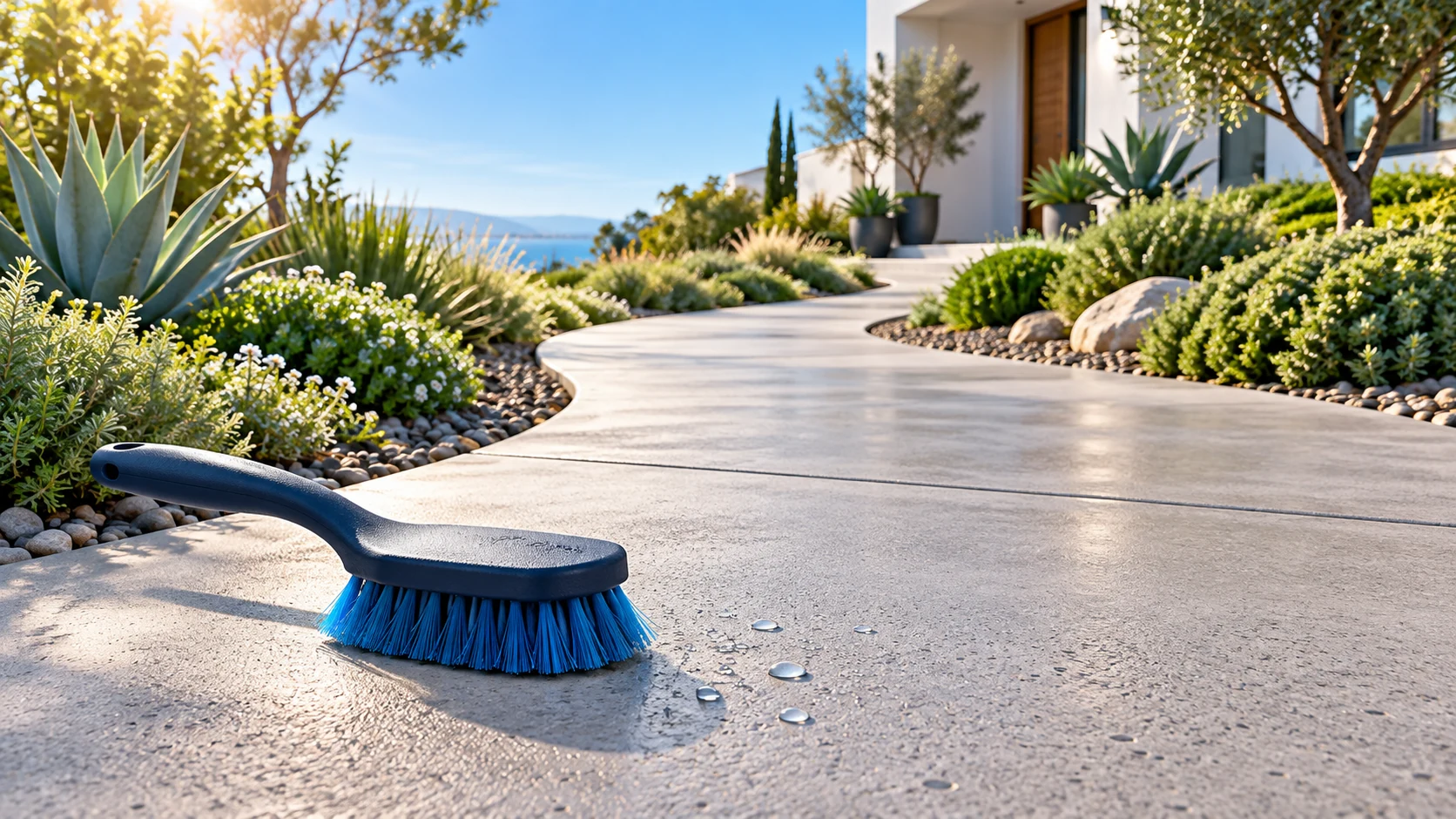
For ordinary dirt on a sound concrete walkway, remove loose debris, test a concrete-compatible cleaner, scrub with a nonmetal brush and recover the dirty rinse water. Start with hand cleaning. Strong pressure is unnecessary for many paths, and a pale patch left by aggressive washing can be permanent surface damage.
Before you start
Identify whether the path is bare concrete, sealed, painted, stained or a thin overlay. Follow the concrete and coating supplier’s care instructions, especially for recent installations. This method excludes oil spills, unknown construction dust, old painted surfaces and deteriorating concrete. Keep the route closed during cleaning and until it is safe to walk on. Check current city and water-provider restrictions before wet cleaning; collecting runoff does not itself authorize water use.
Supplies
- A broom and dustpan for ordinary leaves and grit, or another suitable low-dust collection method.
- A nonmetal deck brush, clean water, and one cleaner approved for the concrete and any sealer.
- Gloves and eye protection required by the label, barriers, and equipment to collect the wash water.
Step-by-step method
- 1. Inspect the path while dry. Photograph cracks, flaking, exposed aggregate, settled sections and coating damage. Note where stains begin and whether sprinklers, planters or an adjacent soil bed keep re-soiling the same place. Repairs and drainage problems belong on a separate list.
- 2. Plan a usable alternate entrance. Move pots and freestanding items without dragging them, then collect ordinary litter and grit. Do not brush mysterious fine powder into the air. If recent cutting or grinding produced the residue, have the contractor identify and control it first.
- 3. Trace the rinse-water route and arrange collection before wetting the path. Avoid sending any wash water into storm drains or neighboring property. A sloped walkway may need a professional containment setup even if the cleaning itself looks straightforward.
- 4. Test the cleaner and brush in an inconspicuous area. Follow label dilution, contact time and rinse instructions exactly. Assess the dry patch for color loss, softened coating, tackiness or changed sheen. Use the result to decide whether to continue.
- 5. Clean one manageable section at a time. Apply the approved solution, gently agitate the ordinary soil and pay attention to the low points of a broom-finished texture. Change dirty water and rinse the brush instead of spreading the same grit over successive sections.
- 6. Recover the dirty liquid and rinse as the product requires. Work toward the collection point without flooding joints, thresholds or planted areas. Avoid leaving cleaner to dry. A second gentle pass is preferable to increasing force without identifying the remaining mark.
- 7. Let the section dry, then compare it in even daylight. Check corners and edges for residue and confirm that the surface is no longer slick. Keep barriers in place if dampness or a cleaning film still makes footing uncertain.
Check the result and avoid common mistakes
- Avoid wire brushes, acid etching and improvised stain-removal mixtures. Cleaning should not become a resurfacing experiment.
- If pressure washing is genuinely appropriate, follow both manufacturers’ nozzle, distance and pressure instructions. Never select a universal PSI from a generic guide.
- Dark concrete can simply be wet. Judge the result after drying before repeating the treatment.
Keep it easier next time
Collect leaves before they remain damp on the path and report persistent irrigation overspray. After the next normal rain, observe from a safe place whether water still ponds at a damaged joint. A brief photo record helps distinguish recurring dirt from a drainage or surface problem that cleaning will not resolve.
When to stop
Stop for crumbling concrete, unknown coatings, loose paint, suspicious dust, a spreading oily stain or uncontrolled runoff. Pressure equipment adds injection, electrical and carbon-monoxide hazards; do not use it without suitable training and a complete safety plan.
A practical next step
For business and office cleaning or post-construction cleaning in Orange County, Chino or Ontario, California, contact JLV Cleaning and Maintenance to discuss your space at /contact/.