
Pressure washing
How to Plan Pressure-Washing Runoff Control
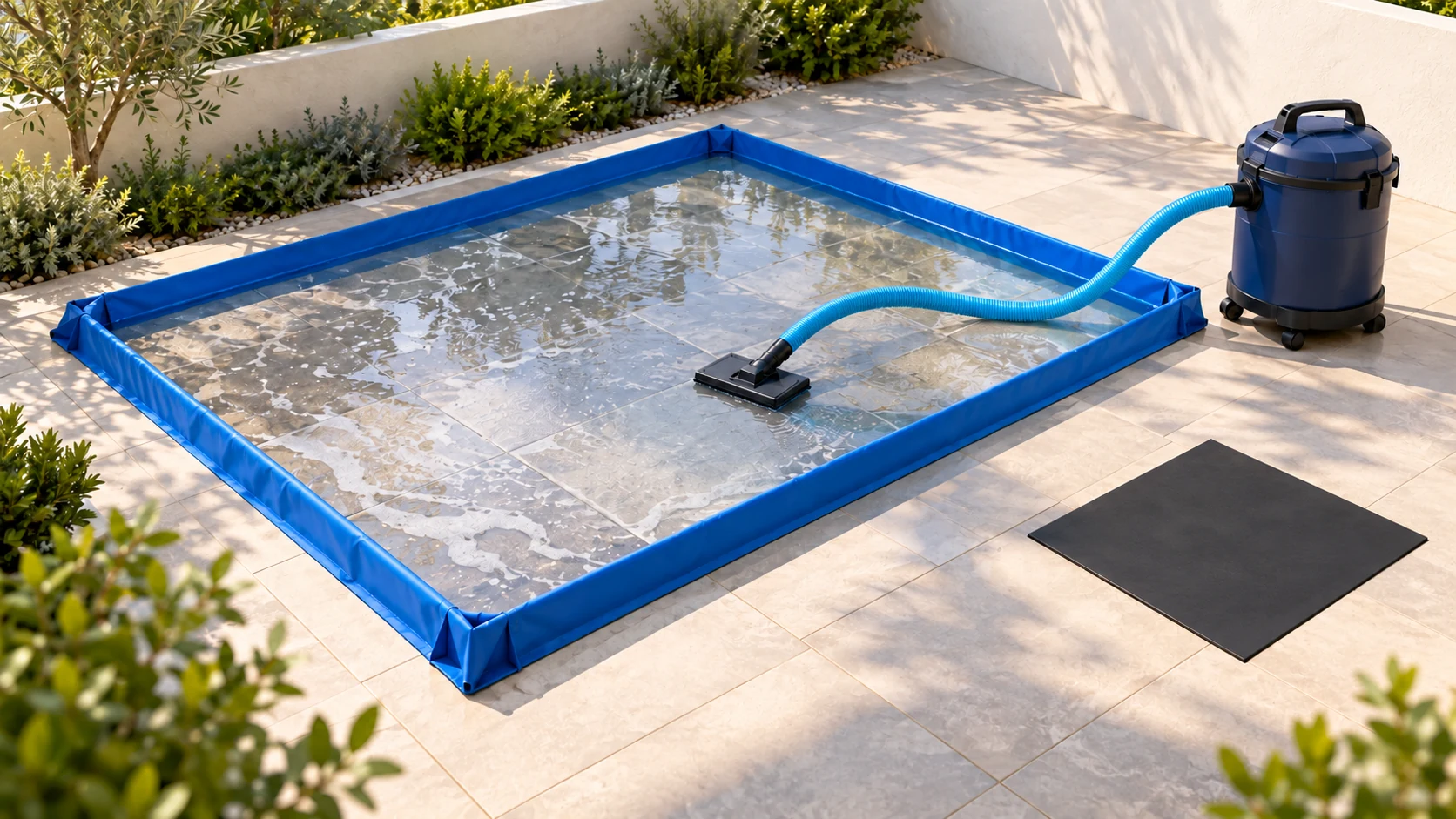
Quick answer
Plan the water’s destination before planning the cleaning pattern. Keep wash water, detergent and loosened material out of storm drains, and arrange an approved collection and disposal route before work begins. A product described as biodegradable does not make its wash water suitable for a gutter, landscaped bed or storm inlet.
Before you start
This is a planning guide, not a discharge permit or a containment-system design. The right method depends on the site, contaminants, wash volume and receiving utility. A sanitary-sewer connection is not automatic permission to discharge. Oil, paint debris, construction dust, biological contamination and unknown chemicals require specialist advice before washing.
Supplies
- A site sketch or photos showing slopes, inlets, doorways, landscaping and nearby public routes.
- A written list of surfaces, contaminants and proposed cleaning products with their labels and safety information.
- Professionally appropriate containment and recovery equipment, suitable containers, and confirmed disposal instructions.
Step-by-step method
- 1. Walk the route water would follow from each work section. Look beyond the obvious curb inlet: a channel drain, landscaped swale or pipe may connect to the storm system. Ask the property manager for drainage information rather than guessing from the grate’s appearance.
- 2. Reduce the amount of material that will become wash water. Pick up ordinary litter and leaves with suitable tools. For routine, nonhazardous debris, use dry collection rather than hosing it along the pavement. Do not dry sweep unknown construction dust or disturb flaking coatings.
- 3. List the expected contaminants separately. Dirt alone, oily residue and detergent solution may need different handling. Share the surface history with the contractor or receiving utility, including previous coatings or spills. Do not assume a clear-looking liquid is clean.
- 4. Confirm the local route. For Orange County, start with the city stormwater program and H2OC guidance; for Chino or Ontario, consult the relevant city and wastewater authority. Chino currently lists washing hard or paved surfaces as prohibited except when necessary to address safety or sanitary hazards. Confirm applicability with the city before wet work. Ask about collection, discharge authorization, pretreatment and disposal; containing runoff does not override water-use restrictions.
- 5. Choose the smallest practical work sections and design recovery around their drainage. Barriers need to direct liquid into suitable collection, not merely shift it toward another property. A drain cover on its own is not a complete plan if water can overflow the area.
- 6. Assign one person to watch the boundary and collection level throughout the work. Explain the stop signal before the machine starts. Protect accessible routes and emergency exits, and do not create an unattended trip hazard with hoses or containment equipment.
- 7. Test the collection arrangement conservatively, then check it while washing. Stop immediately if liquid escapes, an inlet cannot be protected, a container approaches capacity or rain would overwhelm the setup. Do not continue cleaning while someone improvises a downstream fix.
- 8. Finish by recovering remaining liquid and residue using the approved method. Dispose of material only at the agreed destination, remove temporary controls after cleanup and leave stormwater paths functional. Keep a record of the receiving authority’s instructions and the disposal documentation.
Check the result and avoid common mistakes
- A filter that catches leaves does not necessarily remove dissolved detergent, metals or oil.
- Do not pump collected water to the sanitary sewer, soil or street without verified authorization for that waste.
- Avoid jobs scheduled just before rain when residual pollutants could be carried away before cleanup is complete.
Keep it easier next time
For repeat work, keep an updated drainage sketch with the site’s cleaning plan. Recheck it after landscaping, paving or tenant changes. Orange County’s stormwater program recommends sweeping ordinary driveway and sidewalk debris rather than hosing it away; reducing water use also reduces what must be recovered.
When to stop
If the destination, contamination or required controls remain uncertain, postpone washing and contact the appropriate local authority or qualified contractor. This guide does not establish that any particular discharge is lawful or that JLV provides pressure-washing or wastewater-recovery services.
A practical next step
For business and office cleaning or post-construction cleaning in Orange County, Chino or Ontario, California, contact JLV Cleaning and Maintenance to discuss your space at /contact/.