
Exterior & outdoor cleaning
How to Clean Concrete Pavers
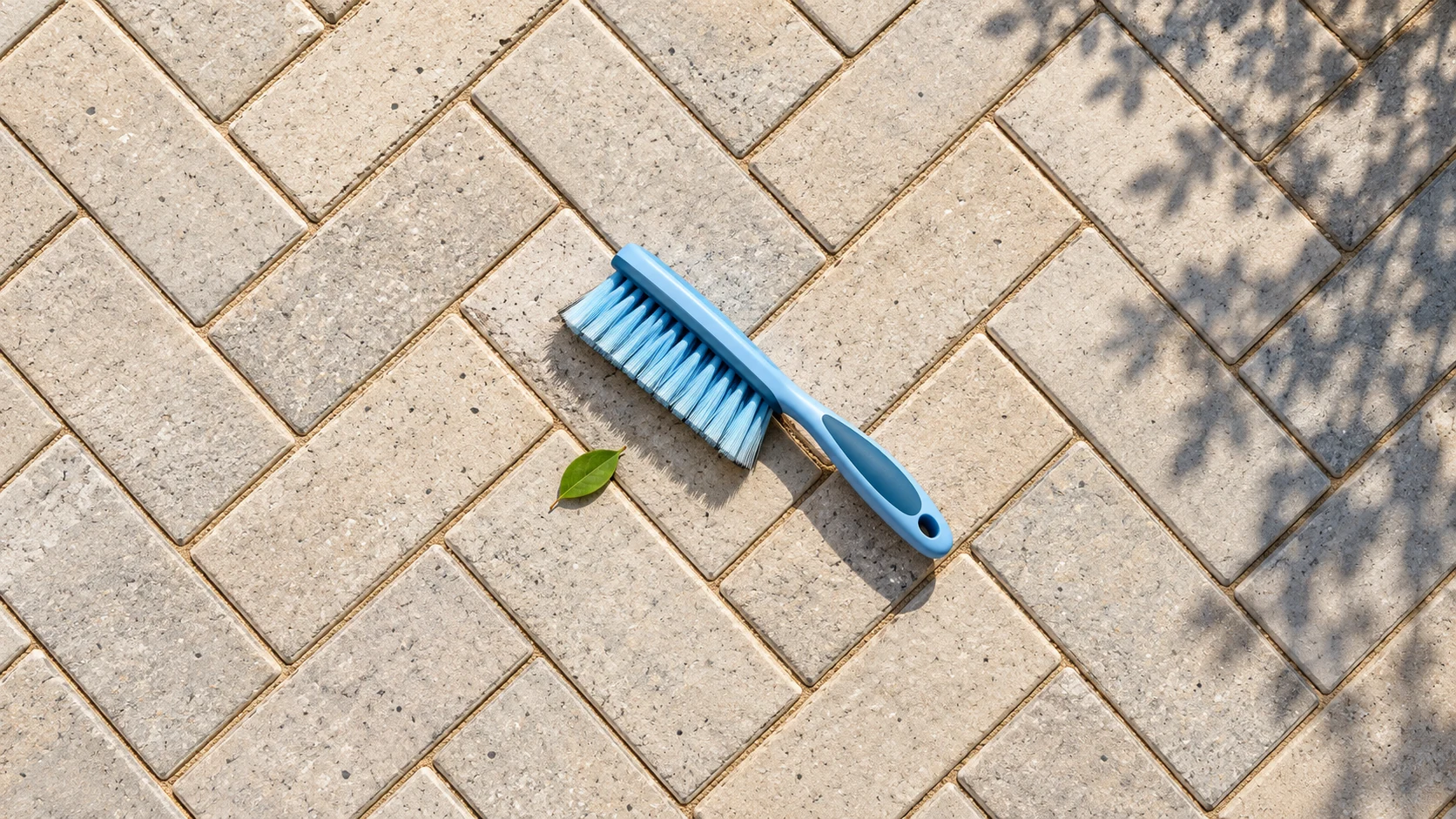
Quick answer
Clean concrete pavers with a surface-compatible product and controlled hand brushing, while protecting the material in the joints. Inspect the joints before and after cleaning. Belgard cautions that power washing can expose aggregate and that depleted joints need attention. A brighter patio is not a good result if its surface or support has been damaged.
Before you start
Confirm that the units are concrete rather than clay brick, natural stone or porcelain. Also identify any sealer and whether the joints contain ordinary sand, polymeric sand or mortar. Permeable paving has its own maintenance system; do not apply this routine guide to blocked permeable joints or assume that infiltration makes wash-water disposal acceptable. Check current city and water-provider restrictions before wet cleaning; collecting runoff does not itself authorize water use.
Supplies
- A soft broom for ordinary debris, dustpan, nonmetal hand brush and clean water.
- One cleaner approved by the paver and sealer makers, with its label available during use.
- Protective gloves and eyewear as required, work-zone markers and suitable runoff collection.
Step-by-step method
- 1. Inspect a dry section closely. Photograph loose units, deep joints, edge gaps and changes in surface texture. If the paving rocks underfoot or its edge restraint has shifted, arrange repair before cleaning. Do not use a washing session to test how much movement it will tolerate.
- 2. Collect leaves, litter and loose surface grit without excavating the joints. Work gently across the paver faces. Avoid leaf blowers or vigorous brushing where unknown construction dust or deteriorating material is present; obtain a qualified assessment instead.
- 3. Plan where every rinse will go. Keep runoff out of storm drains and do not flush it into the joints as a disposal method. Move lightweight planters and furniture to expose the whole cleaning area, and leave a safe route around the work.
- 4. Test the proposed cleaner on a small area that includes a joint and a representative paver. Follow its label and allow the trial to dry. Check the color, sealer gloss and joint condition. When different paver colors share a pattern, test each before treating the whole area.
- 5. Apply the approved cleaner in a manageable section and gently agitate the paver faces. Keep the brush from digging along joint lines. Let the product work only for its labeled time, keeping within all wetting and rinsing instructions. Do not add another cleaner to strengthen it.
- 6. Remove the loosened soil and recover rinse water without driving a jet into the gaps. If joint particles are coming loose, pause immediately. Changing the angle while continuing the same aggressive rinse can still remove more material than intended.
- 7. Inspect after drying. Compare joint levels with the initial photos and check for new roughness or pale areas. Ask the installer to address joint loss with the correct system; casually sprinkling different sand over the top can create another maintenance problem.
Check the result and avoid common mistakes
- Absorb a fresh oil spill rather than rubbing it deeper, then use a stain-specific professional plan. Routine dirt washing is not an oil-remediation method.
- Do not grind away a stubborn mark or use acid on a colored surface without manufacturer direction.
- Leave resealing and polymeric-sand installation out of the routine wash unless they have been separately specified.
Keep it easier next time
Remove damp leaves promptly and keep nearby soil from repeatedly washing onto the pavers. Keep the installation record and joint-product information together. Check the same reference joints after strong rain or heavy traffic so that maintenance responds to actual loss rather than a fixed washing habit.
When to stop
Stop for loose pavers, damaged joints, unknown coatings, persistent white deposits, construction powder or escaping runoff. Where pressure cleaning is being considered, use a professional familiar with that exact paver and joint system; no universal PSI or nozzle advice applies.
A practical next step
For business and office cleaning or post-construction cleaning in Orange County, Chino or Ontario, California, contact JLV Cleaning and Maintenance to discuss your space at /contact/.