
Exterior & outdoor cleaning
How to Clean White Efflorescence From Masonry
Quick answer
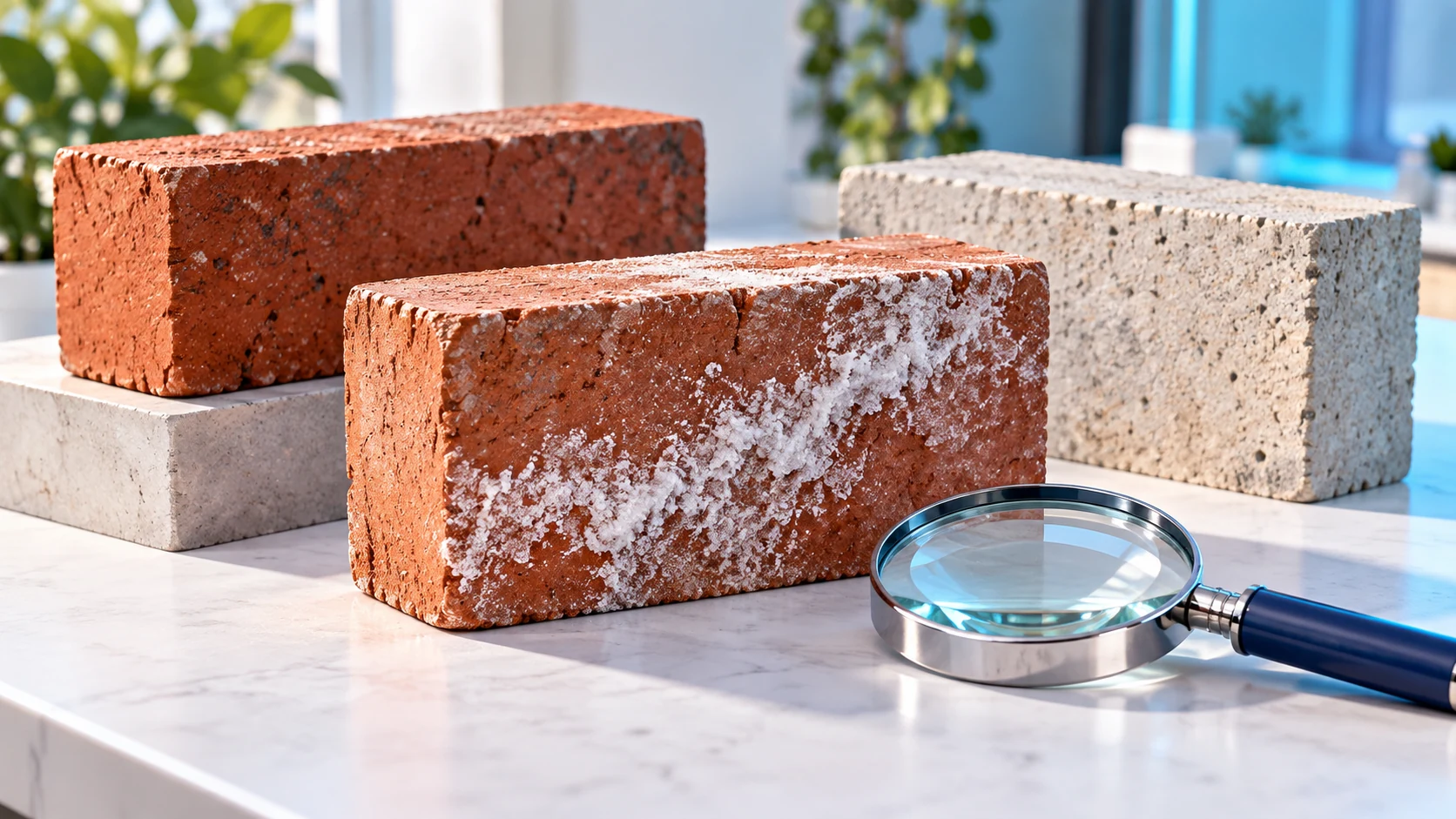
Treat white masonry deposits as an identification and moisture question before treating them as a cleaning problem. Efflorescence can form when water carries dissolved salts to the surface and evaporates. Confirm the deposit and correct the moisture source before attempting removal. Do not assume every white patch is harmless salt or that acid is the answer.
Before you start
This guide covers observation and a conservative decision process for ground-level brick or masonry. White paint, mortar residue, a failing sealer and mineral deposits can look similar. Do not scrape or brush unidentified powder, old coatings or construction residue. Porous natural stone also has different chemical limits, so confirm the material before any trial.
Supplies
- A phone camera, dated notes and the installation or maintenance records if available.
- The masonry manufacturer’s care information and details of any sealer or prior treatment; for an approved trial, a nonmetal fiber brush, clean water, required protection and runoff collection.
- Access to the property manager, installer or a qualified mason when the deposit or water source is uncertain.
Step-by-step method
- 1. Photograph the dry deposit before touching it. Take one wider image showing windows, joints, ground level and nearby irrigation, then a close view of the pattern. Record whether it is powdery, crust-like, beneath a coating or concentrated at a particular joint without disturbing it.
- 2. Check when it first appeared. Recent masonry can behave differently from an established wall that suddenly develops deposits. Note recent rain, irrigation changes, plumbing work, paving or a new coating. A timeline helps a professional distinguish an isolated event from recurring moisture.
- 3. Inspect only what can be seen safely from the ground. Look for obvious irrigation spray, ponding at the base or damaged joints. Do not climb onto a roof, open a wall, remove flashing or block weep openings. Report these clues for the right trade to investigate.
- 4. Confirm the diagnosis with the masonry supplier or qualified mason, especially for persistent deposits or an unknown finish. Ask whether the material can be cleaned without changing its face and whether moisture correction should happen first. Send the photos and product records, not a guess based on color alone.
- 5. For confirmed light deposits on sound, uncoated clay brick, the Brick Industry Association lists fiber-brush cleaning with water as one option. If the brick maker approves it, test a nonmetal fiber brush and clean water using light, controlled strokes. Stop if brick particles or color come away. Other masonry needs its own approved method; do not substitute acid or a pressure jet.
- 6. Keep any loosened material and wash water contained for proper disposal. Do not send residue to a storm drain or allow it to collect on adjacent stone or metal. A chemical procedure requiring specialized containment or protection belongs with a qualified contractor.
- 7. Photograph the dry result and observe the same area after subsequent wet weather. If white material returns, document how quickly and where. Repeated washing without addressing the water path can turn one deposit into an expensive cycle of surface treatments.
Check the result and avoid common mistakes
- Do not coat or seal over the deposit simply to hide it. The Brick Industry Association does not recommend coatings as the sole control for efflorescence.
- Do not confuse a temporary darker wet patch with successful removal. Compare dry surfaces.
- Skip vinegar, muriatic acid, wire brushes and blasting experiments when the masonry system is unknown.
Keep it easier next time
Keep a small record containing dates, weather, location, photos and any professional findings. Have the appropriate provider correct confirmed irrigation, drainage or building-envelope problems. The useful measure is whether the source has been addressed and the deposit recurs, rather than whether a freshly wet wall looks clean for an afternoon.
When to stop
Stop for flaking masonry, expanding cracks, loose coating, interior dampness, recurring heavy deposits or powder whose origin is unknown. These conditions need qualified assessment. This guide does not provide lead, asbestos, silica or masonry-restoration procedures.
A practical next step
For business and office cleaning or post-construction cleaning in Orange County, Chino or Ontario, California, contact JLV Cleaning and Maintenance to discuss your space at /contact/.