
Exterior & outdoor cleaning
How to Clean a Brick Patio
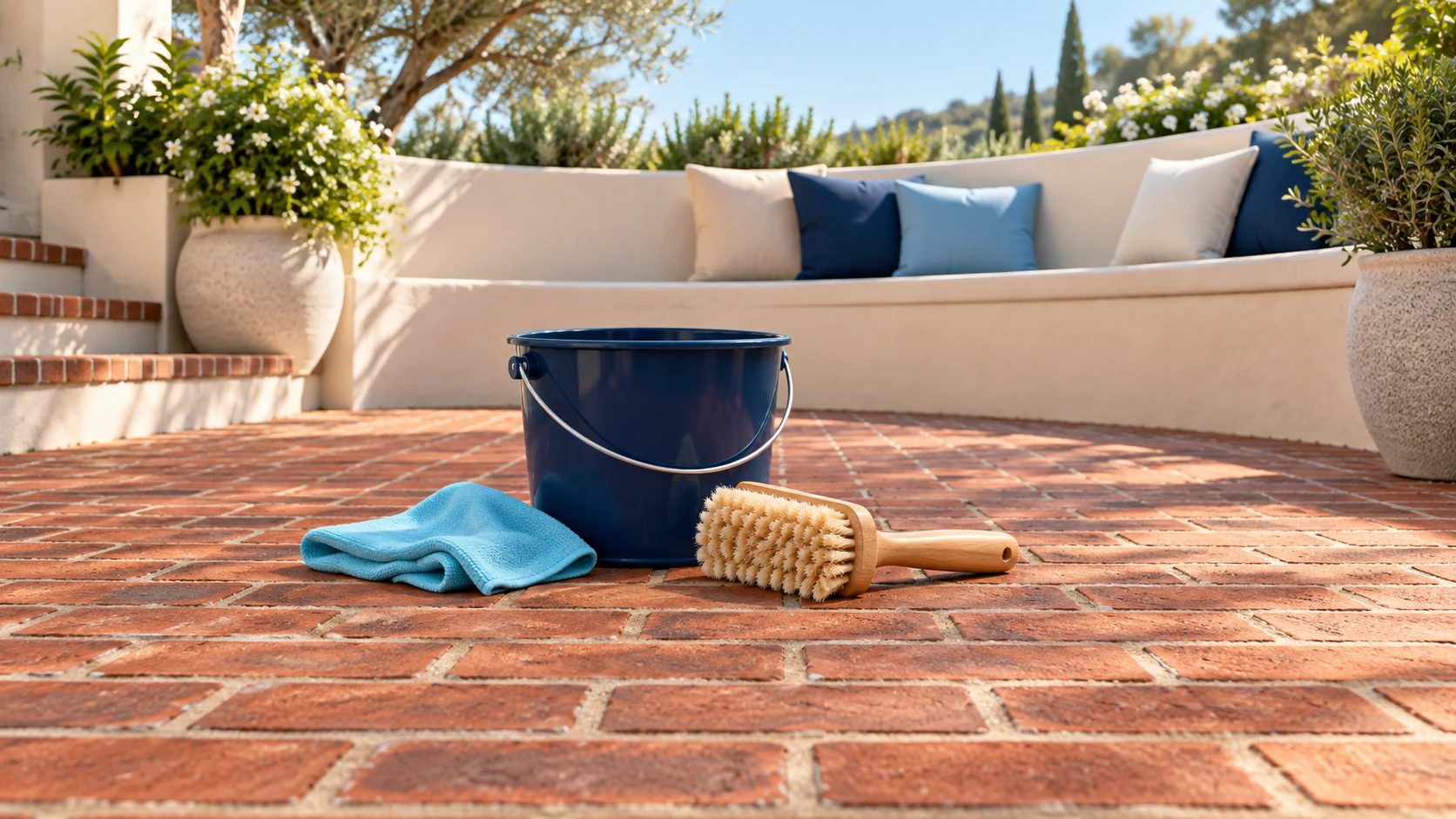
Quick answer
For a sound clay-brick patio, begin with ordinary debris collection and a small water-and-brush test. Use a brick-approved cleaner only when needed, and protect the joints. Brick varies in finish and condition. The Brick Industry Association warns that incorrect pressurized cleaning can permanently damage it, so this guide uses a gentle hand method.
Before you start
First confirm you have clay brick rather than brick-shaped concrete pavers. Sand-set brick, mortared paving, painted brick and sealed brick need different limits. Antique, soft, spalling or unknown brick deserves a mason’s assessment. This guide does not cover mortar-smear removal, paint stripping, efflorescence treatment or construction-dust cleanup. Check current city and water-provider restrictions before wet cleaning; collecting runoff does not itself authorize water use.
Supplies
- A soft broom or suitable debris collector, dustpan and a nonmetal brush that will not scour the finish.
- Clean water and, if necessary, a cleaner expressly approved for the brick, joint material and sealer.
- Label-required protective equipment, barriers and a wash-water collection plan.
Step-by-step method
- 1. Look at the dry patio and its joints. Identify any flaking brick faces, hollow areas, loose units or crumbling mortar. Photograph the worst spots and choose a representative sound section for testing. Do not assume an intact-looking red surface is equally durable everywhere.
- 2. Lift furniture and planters away from the area. Pick up litter and leaves, then gently gather ordinary surface grit. Leave compacted joint material in place. Avoid scraping between units or chasing weeds with a strong water jet during the cleaning job.
- 3. Arrange containment before using water. Check the patio’s slope, adjoining beds and nearest drains. Cleaning water should be collected for an approved destination, not washed through the patio edge into a stormwater path.
- 4. Test plain water and light brushing on a small, inconspicuous section first. Inspect the brush and runoff for signs that the brick or mortar is being removed. Allow the section to dry and compare its texture and color before deciding whether a cleaner is needed.
- 5. If needed, test one manufacturer-approved cleaning product. Follow its instructions for prewetting, dilution, dwell and rinse. Include both brick and mortar in the test because a cleaner suitable for one may change the other. Do not make an acid recipe or combine products.
- 6. Clean a manageable area using light, controlled strokes. Work across the faces without repeatedly digging into soft joints. Replace dirty water and rinse the brush to avoid redistributing grit. Stop before scrubbing becomes an attempt to remove the surface itself.
- 7. Collect loosened soil and rinse as directed, then let the patio dry. Examine the finished section in even daylight. Record remaining stains and their location rather than automatically applying a stronger treatment to the entire patio.
Check the result and avoid common mistakes
- A wire brush can leave scratches and metal particles. Choose a nonmetal tool appropriate to the brick finish.
- White deposits need identification and a moisture check; adding more water may not solve their cause.
- Do not interpret a manufacturer’s pressure-washer guidance for modern concrete pavers as approval for clay brick.
Keep it easier next time
Keep ordinary leaves and soil from accumulating, especially under pots and at the patio’s low edge. Check drainage after rain from a safe, dry position. A recurring dark or white patch in the same location is useful evidence for a mason or drainage professional. Save the brick and sealer details if the installer can provide them.
When to stop
Stop for shedding brick faces, deteriorating mortar, loose paving, unknown residue, old paint or a failed test. Ask a qualified mason about restoration. Cleaning should preserve the patio’s existing surface, and historic variation may remain even after ordinary soil is gone.
A practical next step
For business and office cleaning or post-construction cleaning in Orange County, Chino or Ontario, California, contact JLV Cleaning and Maintenance to discuss your space at /contact/.