
Exterior & outdoor cleaning
How to Clean Stamped Concrete
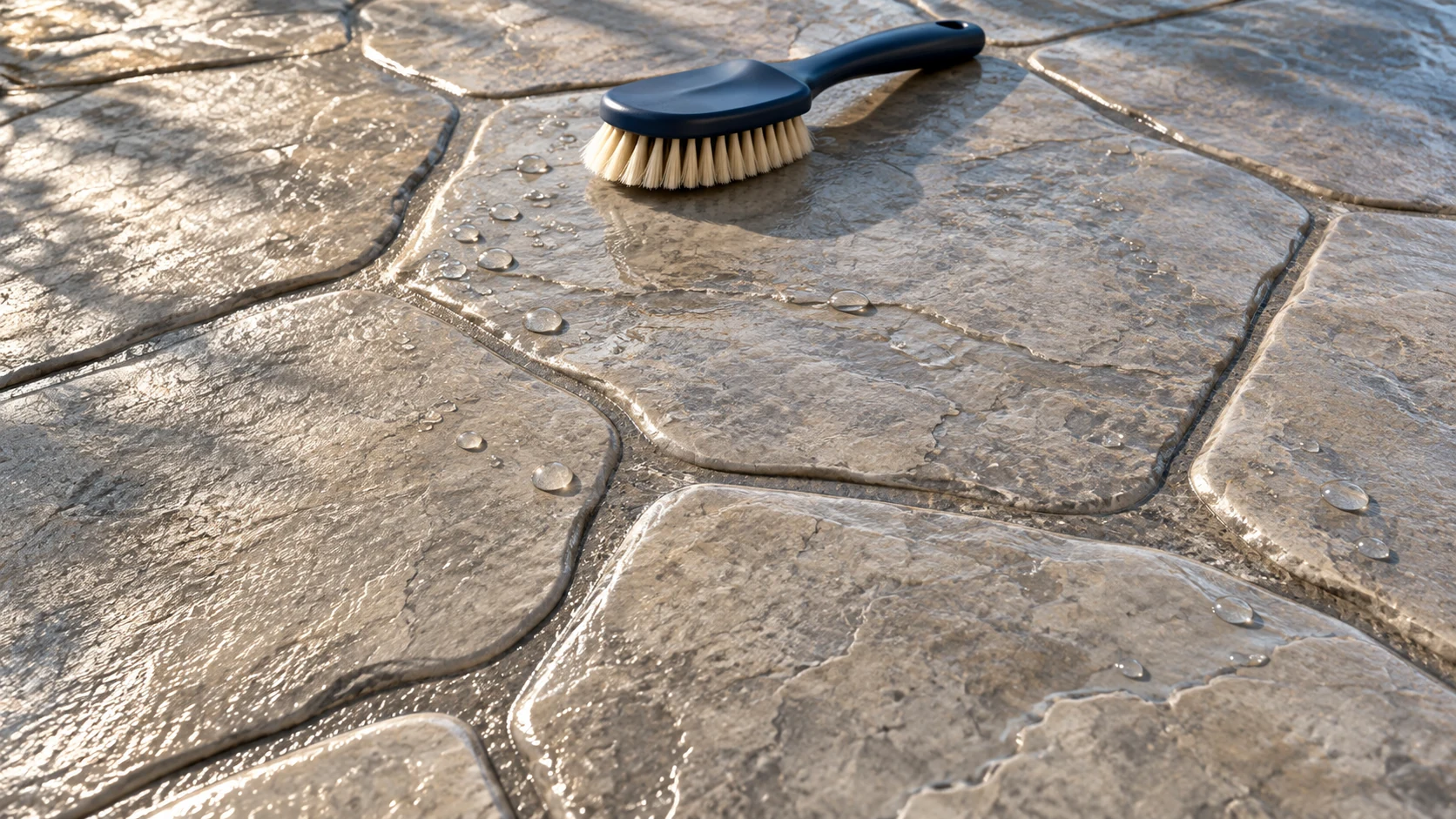
Quick answer
Clean stamped concrete as a decorative finish, not simply a hard slab. Identify the sealer, use its approved mild cleaning method and gently work soil out of the pattern’s recesses. Judge the result only after drying. White haze, peeling gloss or a loss of color may require a finish specialist rather than another wash.
Before you start
Stamped surfaces can have integral color, surface-applied color, release pigments, overlays and several types of sealer. Appearance alone will not tell you which. Obtain the installer’s product record if possible. Do not use a generic pressure setting, acid cleaner or solvent on an unidentified decorative system. New work needs the installer’s release for cleaning. Check current city and water-provider restrictions before wet cleaning; collecting runoff does not itself authorize water use.
Supplies
- The installer’s care instructions and sealer identity, plus photographs of existing wear.
- A soft nonmetal brush, gentle applicator or mop, clean cloths and a coating-compatible cleaner.
- Label-required gloves and eye protection, walkway barriers, and a means of controlling and collecting runoff.
Step-by-step method
- 1. View the dry surface from several angles before cleaning. Separate loose dirt in the pattern from dull traffic lanes, glossy ridges, white areas and peeling edges. Mark concerns on a photo rather than on the surface. This gives the installer useful evidence if a finish problem emerges.
- 2. Remove movable furniture and collect ordinary litter. Work carefully around textured ridges and joints. If unknown powder or construction residue is present, stop and have the responsible contractor identify it rather than brushing, blowing or washing it into the pores.
- 3. Create a small test area containing both a raised section and a recessed part of the pattern. Apply only the sealer-compatible cleaner at the label’s specified strength. A product that cleans plain concrete may be unsuitable for the decorative top layer.
- 4. Clean a short section with gentle agitation. Use the brush tips to reach depressions without leaning hard on high spots. Keep the section small enough that you can remove dirty liquid and complete the required rinse before the cleaner dries.
- 5. Collect the wash water as you go. Do not push it toward a storm inlet, planted bed or doorway. Follow local disposal instructions for the actual liquid, particularly when an old surface’s product history is uncertain.
- 6. Remove rinse residue with the least water and handling needed for the approved method. Pay attention to deep stamp lines, where small puddles can remain after the high spots look dry. Avoid forceful jets intended to excavate those grooves.
- 7. Inspect only when fully dry. Compare the test to the surrounding surface for color, gloss and feel. If cleaning exposes a mismatch that follows the original pattern or a traffic lane, document it and ask the installer whether it is wear or a sealer issue.
Check the result and avoid common mistakes
- Do not automatically reseal after cleaning. Coating compatibility and condition need assessment before another layer is added.
- Repeatedly scrubbing a cloudy patch can make a finish problem worse. Stop if the cleaner lifts color or the surface becomes tacky.
- The safest brush is not always the stiffest one. Avoid metal bristles and abrasive pads unless the exact finish maker expressly approves them.
Keep it easier next time
Keep a simple care record with the sealer name, installation date if known, cleaner and test result. Move planters periodically to inspect beneath them, using lift assistance rather than dragging. Remove ordinary leaves promptly and address recurring wet areas with the property’s maintenance provider instead of repeatedly spot-cleaning the same pattern.
When to stop
Stop for flaking, blistering, white haze that returns, exposed overlay edges, unknown coatings or slippery areas that remain after rinsing. Ask a decorative-concrete professional to diagnose these conditions. This routine-care guide does not include stripping, solvent treatment, resealing or pressure-washing instructions.
A practical next step
For business and office cleaning or post-construction cleaning in Orange County, Chino or Ontario, California, contact JLV Cleaning and Maintenance to discuss your space at /contact/.