
Pressure washing
How to Choose a Pressure Washer Nozzle
Quick answer
Choose the nozzle by its approved application, spray pattern and compatibility with your machine, then check the surface maker’s instructions. A wider fan spreads the jet over more area, but it does not guarantee that a delicate finish can tolerate pressure washing. The right choice may be a garden hose and soft brush.
Before you start
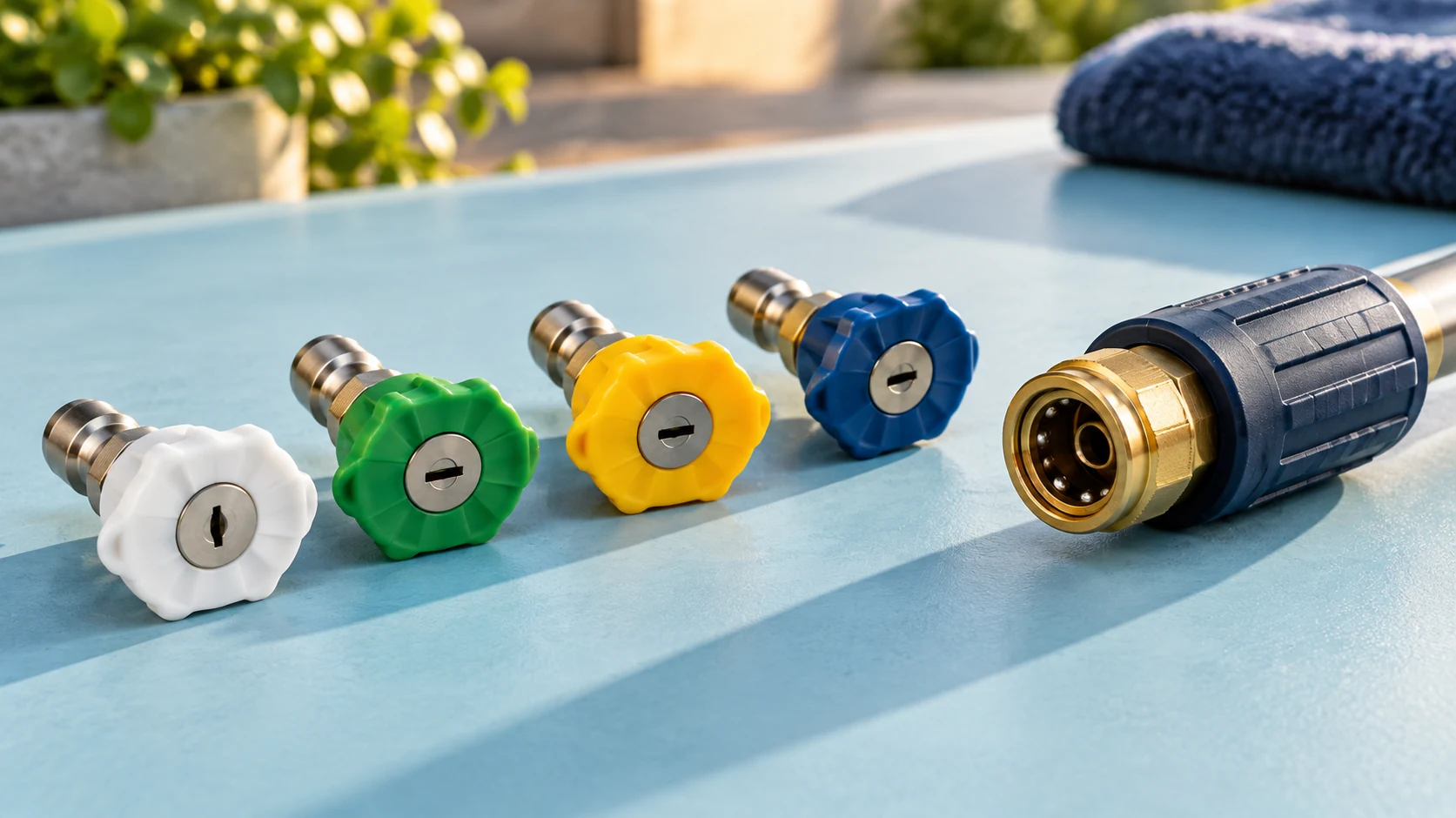
Nozzle color is a useful cue only when it matches your manufacturer’s chart. Different machines and accessories can use different fittings or markings. Do not borrow a tip just because it clicks into the connector. This guide concerns routine ground-level cleaning; paint removal, roof cleaning, suspected hazardous residues and fragile masonry need a different professional assessment. Check current city and water-provider restrictions before wet cleaning; collecting runoff does not itself authorize water use.
Supplies
- Your pressure-washer manual and the care guide for the exact surface or coating.
- Manufacturer-approved nozzles in readable condition, eye protection and the other PPE required by the manual.
- A low-visibility test location, a dry footing area and a plan to capture wash water.
Step-by-step method
- 1. Identify what is being cleaned, including its finish. A coated slab, a weathered wood board and an uncoated masonry unit are different jobs. Record the surface’s approval or prohibition before consulting the machine’s nozzle chart.
- 2. Read the tip designation. Check the permitted pressure, flow, connector and any temperature restrictions against the machine manual. A fitting match alone does not establish compatibility. Set aside unidentified, worn or damaged attachments until the manufacturer confirms them.
- 3. Select the least aggressive approved pattern for the task. A narrow stream concentrates force; a rotating or turbo attachment can also be aggressive despite the moving pattern. Do not treat either as the automatic answer to a persistent stain.
- 4. Check whether detergent application uses a dedicated low-pressure tip, an adjustable setting or a separate attachment. Follow that machine’s instructions. Use only products approved for both equipment and surface, and never combine cleaners or add an improvised chemical recipe.
- 5. Shut down and release trapped pressure using the manual’s procedure before a tip change. Engage the safety lock where instructed, connect the nozzle securely and check its retention before restarting. Keep your face and hands away from the outlet throughout.
- 6. Test at the maker’s specified distance and settings. Direct the spray at the approved surface with both feet on stable ground and a controlled grip. Evaluate a small section, then allow it to dry. Check for exposed aggregate, raised fibers, missing coating or lost joint material.
- 7. Proceed only if the test is satisfactory. Keep the approved angle, distance and motion consistent; pause before changing direction around an edge. If the job requires closer access than the instructions allow, change the cleaning method rather than forcing the nozzle to solve it.
Check the result and avoid common mistakes
- Clean-looking stripes can be damage. Compare texture and sheen as well as color after drying.
- A nozzle chart describes the tool, not every possible surface. Surface restrictions take priority over a general illustration on a nozzle package.
- Never test spray on your skin, spray people, or work from a ladder. Keep gasoline engines outdoors at least 20 feet from doors, windows and vents, as CDC advises. Test GFCI protection before use and keep electrical connections dry.
Keep it easier next time
Label stored tips by their actual designation and keep their instructions. If spray becomes uneven, switch off and depressurize before following the approved inspection procedure. Do not enlarge an opening with a drill or wire. Replacing a damaged nozzle is preferable to altering its spray characteristics.
When to stop
Stop if you cannot identify the coating, nozzle or compatibility requirements. Hand the work to a suitable professional for brittle surfaces, old paint, deep stains or any task requiring height access. Keep all wash water out of storm drains and obtain prompt medical help for injection injuries.
A practical next step
For business and office cleaning or post-construction cleaning in Orange County, Chino or Ontario, California, contact JLV Cleaning and Maintenance to discuss your space at /contact/.