
Office cleaning
How to Remove Chewing Gum From Office Carpet Without Pulling the Pile
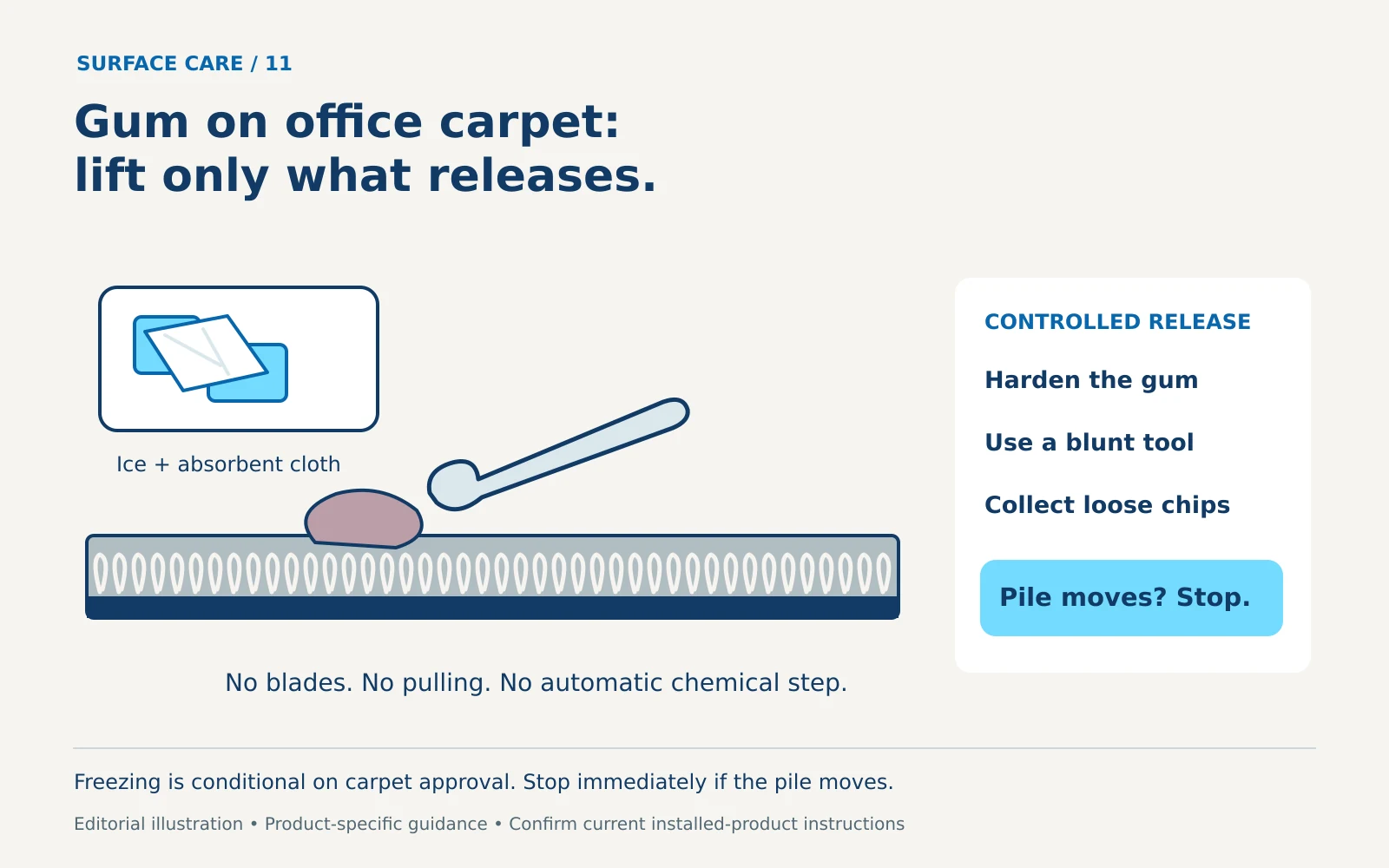
For carpet whose manufacturer permits freezing, use ice to harden gum before gently lifting released pieces. Stop if the pile moves with it. Preserve the carpet rather than force the last trace to release.
Confirm what you are treating
Keep foot traffic off the spot while it is assessed. Record its location and approximate size, and photograph the condition without including workplace records or people. Check whether it is actually chewing gum; unknown adhesive or construction residue needs a different identification process.
Find the carpet manufacturer, product and care instructions. Include the backing and installation details when seeking advice. A spot-removal instruction from another product line does not automatically approve treatment on a commercial carpet tile, wool installation or specialty backing.
Shaw Floors' gum-removal guidance provides the freezing example below. Confirm that it applies to the installed product; a generic internet tip cannot select the method for an unidentified carpet.
Separate the solid gum before considering a spotter
For an approved freezing attempt, prepare ice, white absorbent cloths and a rounded spoon. Avoid blades.
Shaw's sequence is to freeze the gum, break it gently with a blunt implement and collect the chips. Work at the surface without striking the floor or digging into the pile. Control meltwater with absorbent cloths and lift only pieces that release easily.
Pause if the gum becomes soft and stretchy again. Do not compensate with more force. Stop entirely if a loop lifts, fibers stretch, the surface becomes fuzzy or the gum remains firmly bonded. Leave the remaining material for a qualified carpet-care assessment rather than trimming around it.
Test before treating a remaining mark
Once loose gum is removed, look again. There may be no further work to do. A remaining colored mark, sticky residue and a pulled fiber are different observations; record which one remains instead of assuming they share a remedy.
If a compatible spotter is approved for the installed carpet and the residue, follow its current label and safety instructions, including ventilation and protective equipment. Do not improvise with an unapproved household solvent or mix products.
The Carpet and Rug Institute's spot-care guidance calls for testing a cleaner on a spare piece or inconspicuous area, following its directions and using controlled blotting. Evaluate the dry test for color or texture change. If the result is doubtful, stop before treating the visible spot.
Where its solvent method applies, Shaw specifies cloth application and warns against direct application that could damage backing. Complete the approved residue-removal procedure. A chemical step is conditional, not automatic after ice.
Decide when the job is finished
Keep the area protected until any introduced moisture has dried. Inspect from the same angle and lighting as the initial check. Look for remaining material and changes in texture, then document the result.
Do not promise complete color recovery. If the solid gum has released but the mark remains, escalating with a more aggressive product may create a larger problem. Give the manufacturer or carpet-care professional the product identity, steps already tried, spotter label if used, and before-and-after observations.
A small-spot example
A facilities coordinator finds one gum spot beside a meeting-room doorway. Product records confirm a permitted freezing method. The hardened gum releases in small pieces, and the dry inspection shows no remaining residue or pile change. The coordinator records the result and ends treatment without adding a chemical.
If, instead, a loop rises with the first piece, the decision changes immediately: stop, protect the area and request advice. Success is a controlled attempt that preserves the carpet, even when a specialist must finish the task.
For ordinary liquid spills, use the separate carpet-tile spot-cleaning guide. Gum needs its own assessment because it is a bonded solid.
For an office or business cleaning quote, contact JLV Cleaning & Maintenance in Orange County, Chino Hills, Chino, Ontario, Corona or Eastvale. Describe the carpet condition and confirm whether spot assessment belongs in the proposed work.