
Floor & carpet cleaning
How to Spot-Clean Carpet Tiles
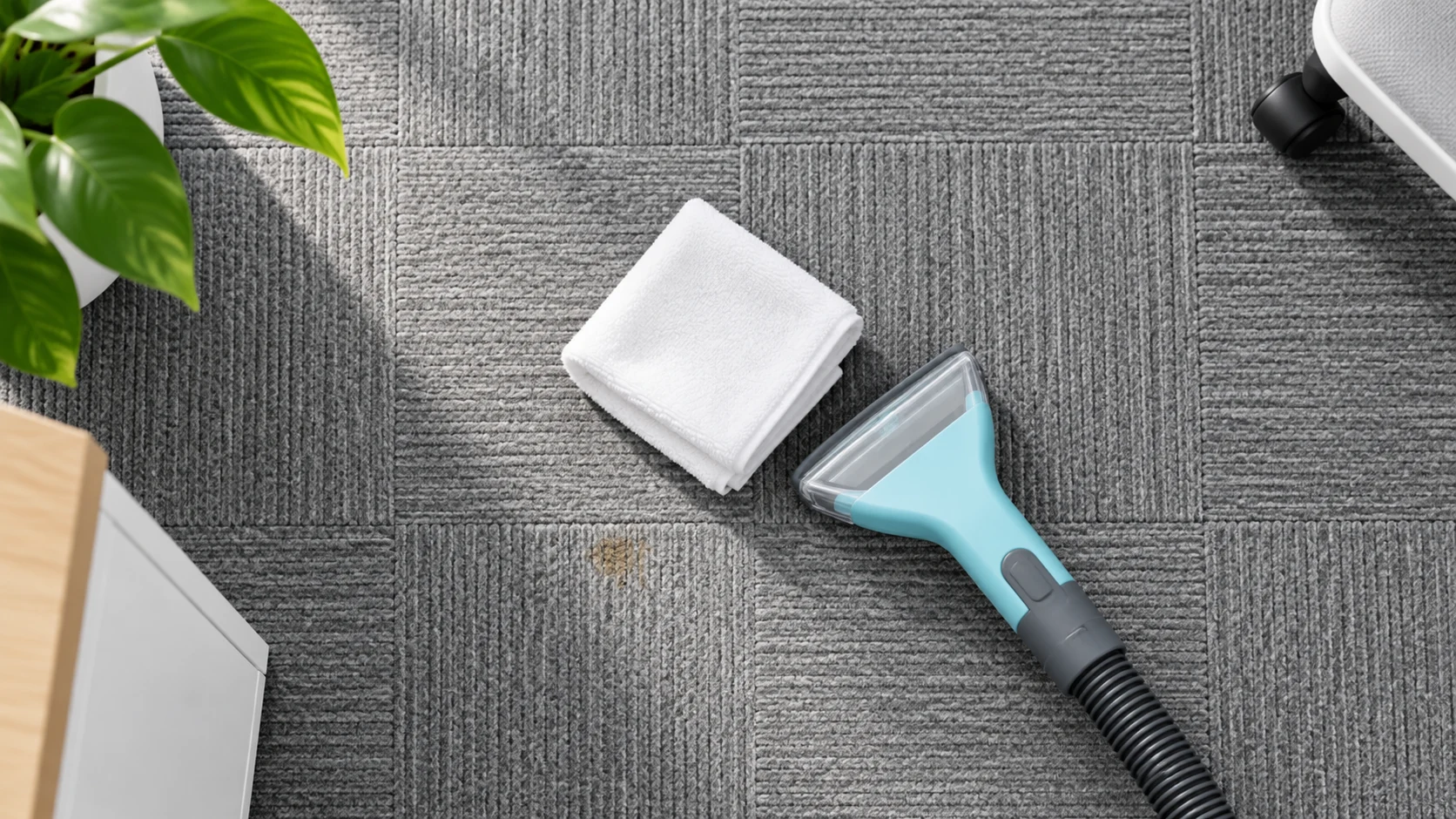
Quick answer
Blot an ordinary spill promptly, identify the carpet tile and the spilled material, and use the manufacturer's spot-care method with as little product as directed. Keep moisture controlled and the area out of use until dry. Stop if dye transfers, the tile edge lifts, or the mark spreads despite gentle treatment.
Decide whether this is a routine spot
This guide covers a small, known everyday spill on installed carpet tile. Blood, body fluids, unknown chemicals, contaminated water, and construction dust need the facility's separate response procedure. Do not hand those materials to someone with a household spot-cleaning bottle.
Check the carpet brand, fiber, backing, and approved cleaning instructions. A replacement tile's appearance can also depend on its direction and wear, so do not lift or rotate tiles without the building manager's approval and the installation guidance. A loose tile is a repair issue as well as a cleaning concern.
Your spot kit
- Several plain white absorbent cloths
- A spoon or other blunt tool for lifting ordinary solid residue
- The carpet maker's approved spotting product, if needed
- Clean water when the fiber and instructions permit it
- A small barrier and a place to record the spill and treatment
Avoid colored towels, bleach, improvised chemical mixtures, and stiff scrubbing brushes. The aim is to move the spill into a cloth, not deeper into the backing or onto neighboring tiles.
Work patiently from the outside inward
Mark the area so people do not walk through it. Gently lift removable solid material without driving it into the pile. For liquid, press a fresh white cloth onto the spot and lift. Repeat with clean sections until the cloth absorbs little more.
Note what was spilled and whether any cleaner has already been applied. Follow the carpet maker's first recommended step. If a product is needed, test it in an inconspicuous area and check for color transfer or texture change before treating the visible spot.
Apply the approved product by the label's method. Work from the edge toward the center and keep each pass small. Repeated hard rubbing can enlarge the stained area and distort the pile. Use only the amount and working time the directions require.
Remove residue using the specified rinse or extraction method. If that method requires equipment or skills you do not have, stop and arrange appropriate help rather than soaking the area by hand. Blot residual moisture and keep the area protected until completely dry.
Inspect the dry spot in normal room lighting. Gently restore the pile only as the manufacturer permits. Return the area to use once the backing and surrounding floor are no longer damp and the surface is stable.
Why the spot sometimes returns
A stain that reappears after drying may involve material remaining deeper in the carpet or cleaning residue. Document it rather than adding more product. A wide damp ring, recurring odor, or a lifted tile calls for professional assessment of the carpet and what is underneath.
Some spills alter dye or permanently stain fibers. Stop when approved care is no longer improving the result. More scrubbing can create a visibly different patch even after the original spill is gone.
Keep response simple
Maintain a small labeled spill kit and ask staff to report spills promptly. Share the carpet's exact care instructions with whoever handles the next incident. For business-office cleaning in Orange County, Chino, or Ontario, discuss your maintenance needs with JLV at /contact/.