
Cleaning tools & process
How to Clean a Vacuum Filter Safely
Quick answer
Find the vacuum's exact model and filter instructions before cleaning it. Some filters are washable; others must be replaced. Switch off and unplug the machine or isolate its battery as directed, remove the filter carefully, and never reinstall a washed filter until the required drying time has passed and it is completely dry.
First ask what the vacuum collected
This guide applies to ordinary, known housekeeping dust in a machine intended for that use. If it collected suspect asbestos, lead, silica-containing construction dust, unknown chemicals, or another hazardous substance, stop. Keep the unit out of routine use and ask the responsible qualified person how it and its waste must be handled.
A filter bearing the word HEPA does not prove that the entire vacuum is suitable for hazardous cleanup. The housing, seals, collection system, use, and maintenance all matter. Do not open an unknown contaminated vacuum over an office bin or try to make it safe by blowing out its filter.
Identify each component
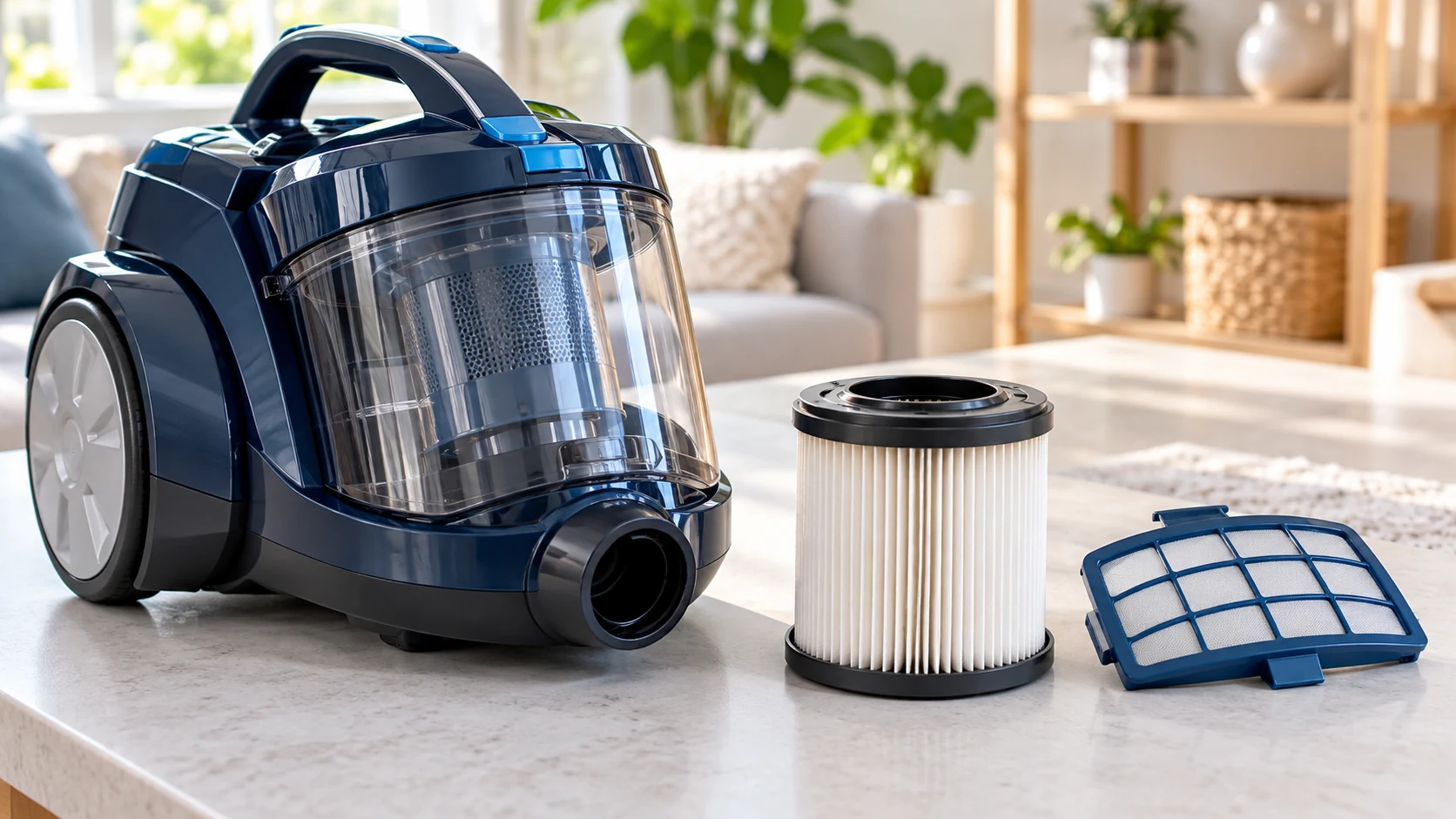
Look up the model number and determine which part is the dust container, prefilter, exhaust filter, or disposable bag. A washable plastic bin does not mean the adjacent pleated filter is washable. Photograph the normal assembly if helpful, without replacing the manual's instructions.
Gather the maintenance supplies before opening the machine:
- The exact model manual and filter part information
- An approved replacement or the specified washing supplies
- Required protective equipment and a suitable waste container
- A clean protected drying location, if washing is allowed
Keep spare filters only if they are compatible with the model and can be stored without damage.
A careful maintenance sequence
Power down the vacuum, disconnect it safely, and let it cool if the manual requires it. Work in the designated maintenance area away from people, clean supplies, and open food or drink. Remove the container or cover using the specified release; do not force clips or pull on filter material.
Handle ordinary dust with minimal disturbance. Follow the maker's disposal method and avoid creating a visible cloud. Do not use compressed air, strike the filter aggressively, or brush delicate media unless the instructions explicitly call for an appropriate method.
For a replace-only filter, install the specified replacement. For an expressly washable filter, use the exact water temperature and process in the manual. Do not add detergent, disinfectant, or fragrance unless allowed. Dyson's SV10 instructions are one example of cold-water-only filter care, not a rule for every vacuum.
Dry for at least the manufacturer's stated period and longer if any moisture remains. Do not assume the clock alone proves dryness. Keep heat guns, ovens, microwaves, and improvised forced heating out of the process.
Inspect the filter, seals, and housing for damage before refitting. Confirm correct orientation and a secure closure. Reassemble all required components before operation, and never run the vacuum without its filter to finish the room faster.
If performance is still poor
Reduced suction can come from a full bag, blocked hose, tangled brush, damaged seal, or other fault. Follow the troubleshooting guide rather than repeatedly washing the same filter. Stop if the machine leaks dust, smells overheated, makes unusual noise, or shows electrical damage.
Discard damaged filters according to their contents and applicable instructions. Cleaning cannot repair torn media or a deformed sealing edge.
Keep maintenance visible
Record the model, correct filter part, last service, and replacement needs. Assign the task to someone who has the instructions. Contact JLV at /contact/ to discuss business-office cleaning in Orange County, Chino, or Ontario and the maintenance expectations behind a reliable routine.