
Cleaning tools & process
How to Clean and Dry Mop Heads
Quick answer
Empty and clean the mopping equipment after use, then wash reusable heads using their specific care instructions. Rinse as directed, dry completely, and store clean heads away from dirty tools. A mop left standing in yesterday's bucket is not ready for the next floor, even if more cleaner is added.
Identify what can be washed
Cotton string heads, microfiber pads, synthetic loops, sponge heads, and disposable systems need different care. Check the label and model before removing components or putting anything in a washer. Some heads are designed for repeated commercial laundering; others require replacement or a separate manual-care method.
Rubbermaid's Web Foot microfiber tube mop is one example of a launderable product. Its permissions do not apply automatically to another head or to the plastic hardware attached to it. Follow the particular head's detergent, temperature, bleach, and drying limits.
Sort by use and contamination
Keep restroom tools assigned to their area and separate from tools used around general workspaces. Set aside heads used on body fluids, unknown chemicals, hazardous dust, or contaminated water for the facility's specific handling procedure. Ordinary laundering is not a universal decontamination method.
Prepare the supplies before emptying the bucket:
- A designated wash area with an approved waste-water disposal route
- Detergent allowed by the mop manufacturer
- Required protective equipment and the mop care instructions
- Clean drying space and a separate container for washed heads
Dispose of used cleaning solution according to its label and local requirements. Do not pour unknown mixtures into a sink, storm drain, or outdoor planted area.
A complete after-use sequence
First empty the bucket through the approved disposal route. Check the head for sharp debris without reaching blindly into tangled strands. Remove routine loose material safely using the workplace's procedure; do not shake dried dirt into the air.
Detach the head only as its maker directs. Clean the handle, frame, bucket, and wringer with products suitable for those parts. A clean mop head placed back into a dirty bucket can carry soil straight to the next room.
Wash reusable heads with the allowed method. Separate incompatible materials and avoid overloading the machine. Measure detergent correctly, and do not add an improvised disinfectant cocktail. If chemical disinfection is required by the facility, use a validated procedure compatible with the tool rather than guessing at concentration or soak time.
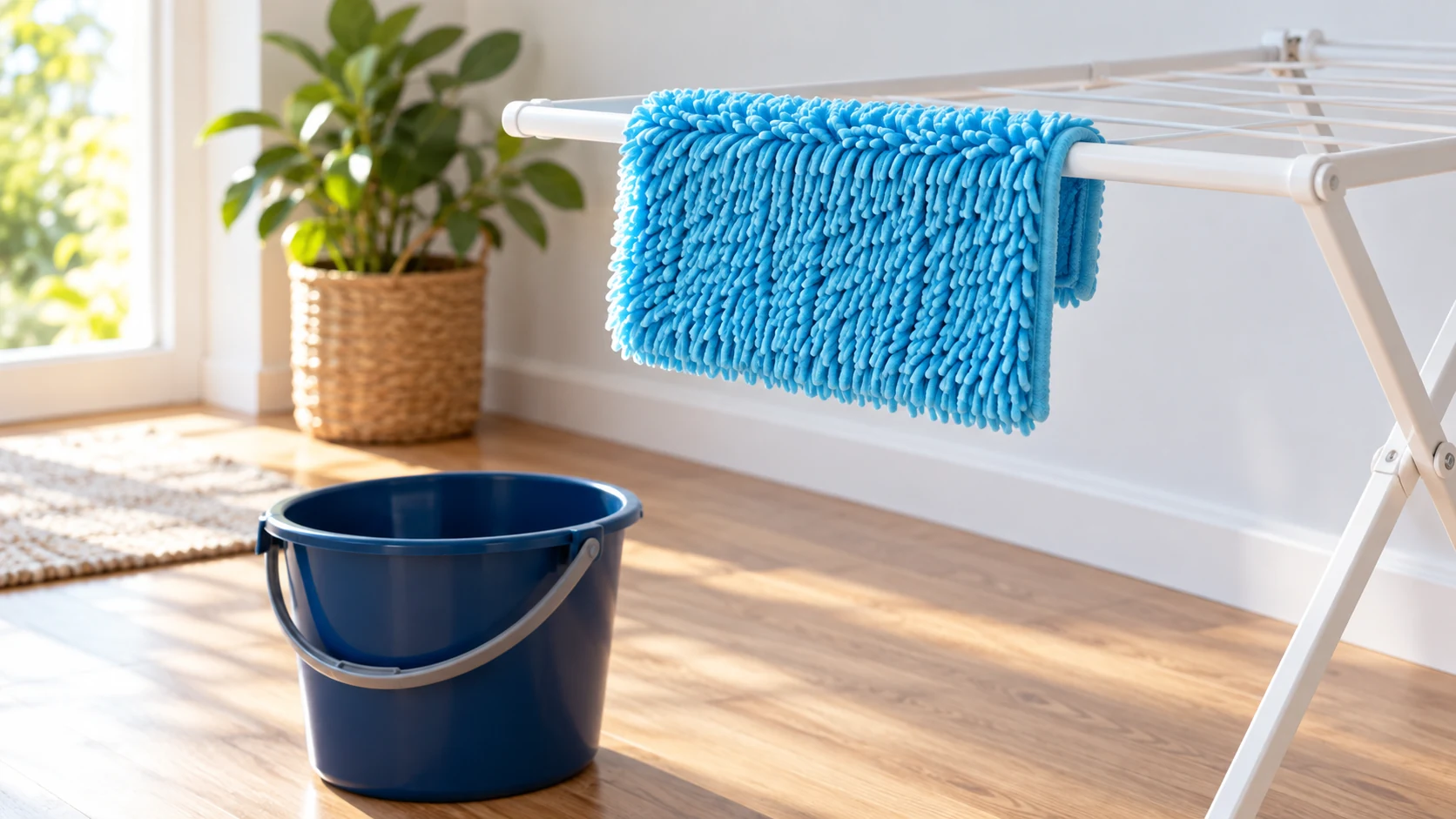
Rinse thoroughly as specified. Remove excess water using the approved method without tearing fibers or stressing the attachment. Dry the head in a clean, ventilated position or a permitted dryer cycle. Arrange strands or pads so moisture is not trapped inside a dense bundle.
Check that the entire head is dry before putting it in enclosed storage. Keep clean heads elevated and protected from splash, leaks, and used equipment. Store the handle so it cannot fall into a walking route.
When washing is no longer enough
Persistent odor, stiffness, poor liquid pickup, fraying, loose loops, cracked sponge, or failing attachment hardware calls for inspection and often replacement. A dark stain alone may be cosmetic, but a head that keeps leaving debris or streaks is not performing its job.
If several freshly washed heads smear the floor, review the laundry process and cleaning-product dose rather than blaming the flooring immediately. Check the bucket and wringer as well.
Keep a usable spare supply
Build enough drying time into the rotation so nobody must begin a shift with damp stored tools. Label the head type and care method when purchasing replacements. JLV can discuss organized office-cleaning routines in Orange County, Chino, and Ontario at /contact/.