
Cleaning tools & process
How to Keep Floors Safe While Mopping
Quick answer
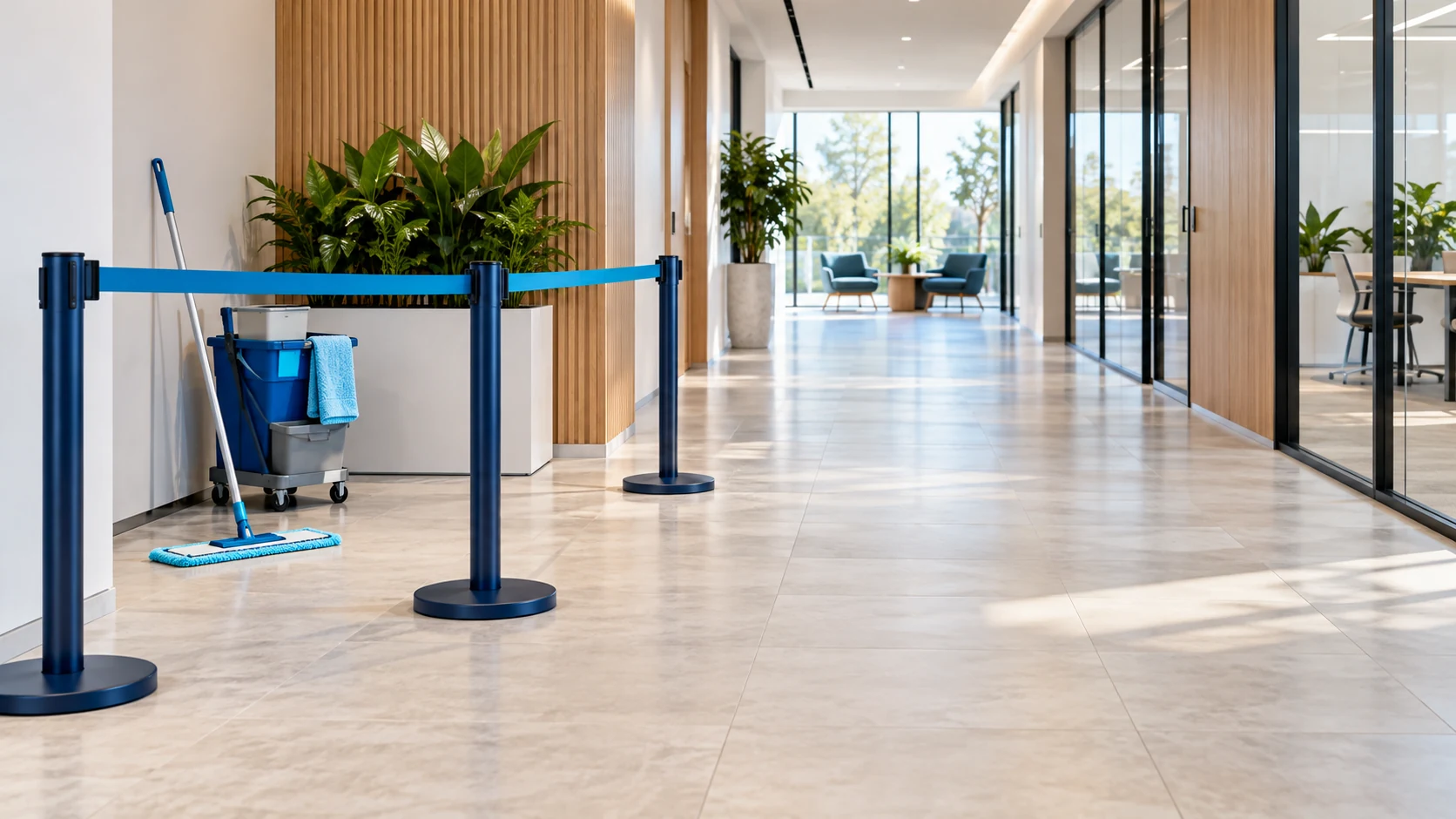
Plan the route before wetting the floor, keep people out of the active cleaning section, and reopen it only after it is dry and free of residue. Use warning signs to communicate the hazard, supported by effective access control. A sign alone cannot prevent someone from stepping onto a wet surface.
Start with the people using the space
Check arrival times, deliveries, meetings, and the paths people need to reach exits and restrooms. Choose a lower-traffic window when possible. Agree a dry alternative route with the office manager, including access for people using mobility aids. Do not block a required exit or leave occupants with no practical way through.
For a busy passage, consider cleaning separate sections only when the building layout and facility procedure allow it. Keep the boundary clear. A thin wet strip across the entire doorway can undermine an otherwise careful plan.
Prepare the equipment and floor
- Barriers and signs appropriate to the location
- A cleaner and mop system approved for the floor material
- Clean pads, correctly measured solution, and a recovery setup
- Footwear suitable for the task and facility requirements
- A dry route for the worker to leave without crossing finished areas
Inspect the floor for damaged transitions, loose mats, leaks, and obstacles. Remove ordinary grit before damp cleaning. Address unexpected contamination using the relevant spill procedure rather than spreading it with the routine mop.
Work in small controlled sections
Place signs and barriers before the floor gets wet, where approaching occupants can see them in time to change route. Coordinate with anyone whose desk or office is inside the work zone. Keep buckets, cords, carts, and spare tools out of the alternate path.
Apply only the amount of solution the floor and product instructions call for. Excess water increases the area requiring control and may damage seams or finishes. Change dirty pads and solution so you are removing soil rather than redistributing it.
Work toward a dry exit. Recover dirty water and rinse if the product requires it. Watch corners, door thresholds, and the area beneath furniture, where small puddles can remain after the main floor appears dry. Do not leave wet tools leaning against the surface.
Maintain the barrier while the area dries. If ventilation is needed, use the facility-approved approach without directing a fan into dusty areas or creating cable hazards. Do not assume a promised number of minutes guarantees that every surface is ready.
Inspect the floor in normal lighting before reopening. Check for visible moisture, remaining product film, displaced mats, and equipment left in the path. Remove signs only after the hazard is addressed, rather than because the cleaning shift has ended.
If the floor stays slippery
Keep access controlled and investigate. Incorrect dilution, incompatible products, poor recovery, a leak, or an existing coating issue can all require different responses. Follow the floor maker's corrective advice and notify facilities if the cause is uncertain.
Do not layer another chemical or finish over the problem. Repeated mopping without identifying the cause can leave more residue. A person reporting an unexpected slip is important information even if the floor looks glossy and dry.
Make safety part of the handover
If drying or corrective work continues after the cleaner leaves, assign responsibility for maintaining barriers and checking the floor. Record unresolved issues clearly. Contact JLV at /contact/ to discuss office-cleaning schedules and access planning in Orange County, Chino, or Ontario.