
Cleaning tools & process
How to Dilute Cleaning Products Correctly
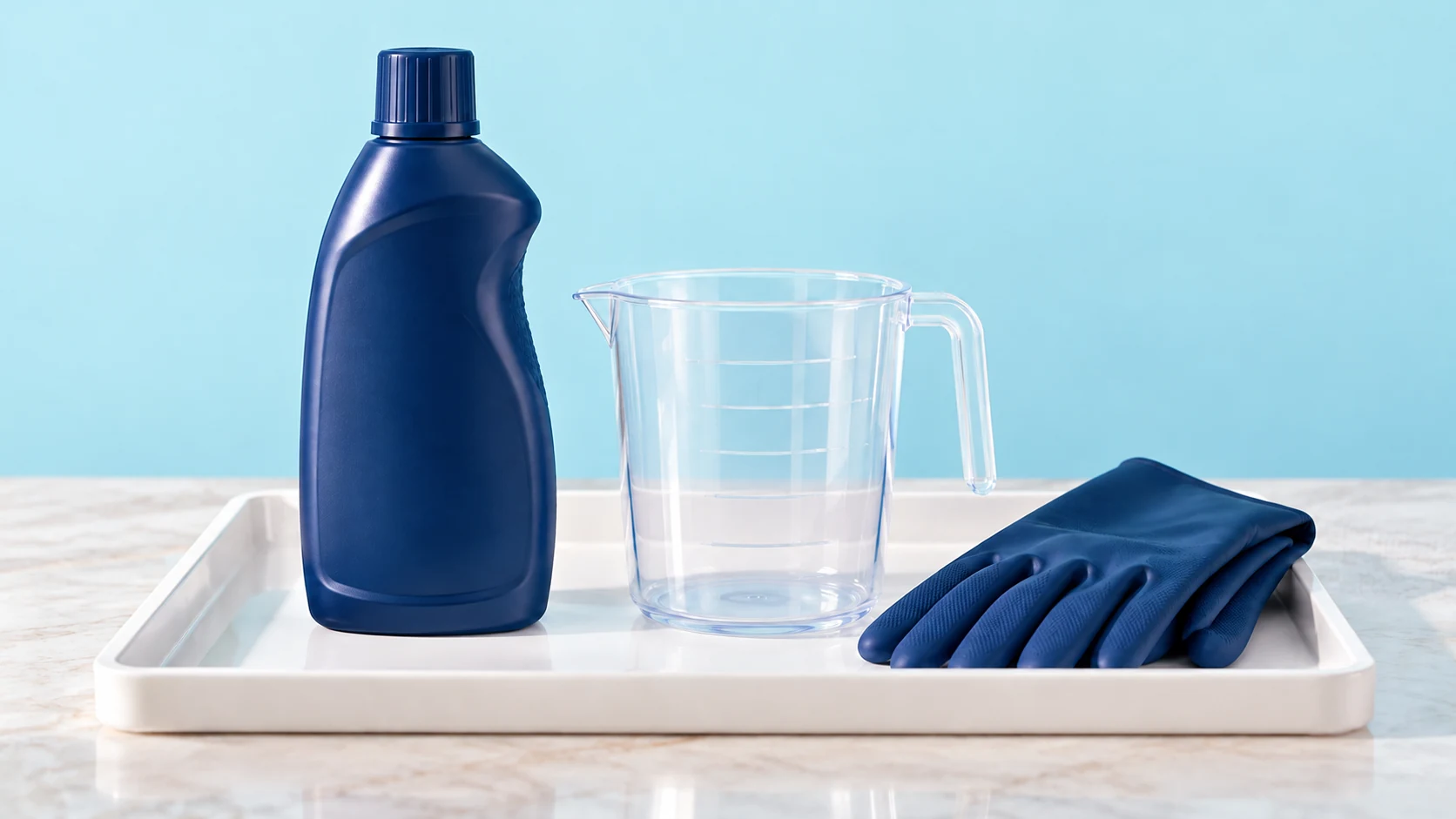
Quick answer
Use the current product label to determine whether dilution is required, what the stated ratio means, and how much water and concentrate to measure. Follow the specified mixing order and use a dedicated measuring device or approved dispenser. Never assume more concentrated means more effective, and never mix different cleaning products.
Read before measuring
Start with the original container. A ready-to-use product is meant to be used as supplied unless its label explicitly says otherwise. A concentrate may list several dilutions for different tasks. Choose the instruction that matches the intended surface and purpose; routine cleaning and disinfection may have different requirements.
Read the label together with the safety data sheet for handling, protective equipment, ventilation, storage, and spill response. If a bottle is unlabeled, its identity is uncertain, or directions are illegible, stop. Color, smell, and a coworker's memory are not reliable identification methods.
Confirm the units and ratio
The label may specify fluid ounces per gallon of water, milliliters per liter, a dispenser setting, or a parts ratio. A ratio written as one part product to ten parts water yields eleven total parts. A direction to make ten total parts means something different. Do not guess which convention the manufacturer intended.
For a straightforward example, if a cleaner explicitly calls for 20 milliliters per liter of water, two liters of water require 40 milliliters of concentrate. That is an arithmetic example, not a formula for any particular product. Follow the actual label if it specifies a final solution volume instead.
Gather the correct equipment
- Original labeled product and current safety data sheet
- Dedicated compatible measuring cup or calibrated dispensing system
- Approved secondary container with enough capacity
- Water at the temperature the label requires
- Required gloves, eye protection, and an appropriate preparation area
Do not use beverage bottles or food utensils. Check dispensers and bottle markings periodically; an improvised pump count is not a measurement unless the system is designed and verified for that dose.
Prepare a controlled amount
Check the container for old residue and confirm that it is compatible with the product. Follow the label's preparation sequence, including whether water goes in first. Measure accurately and avoid splashing. Prepare only an amount that can be used within the product's stated life after dilution.
Label the working container according to the product and workplace requirements, including its identity and hazards. Include preparation or expiry information when required or useful under the facility's procedure. Keep the full instructions available to the person using it.
Close the concentrate, clean the measuring equipment as directed, and store everything in the designated location. Do not leave open solution where staff can mistake it for water or use it on an incompatible surface.
Common mistakes worth preventing
If a floor feels sticky, check the actual dose and recovery method before adding more product. If a disinfectant was diluted incorrectly, do not count the surface as successfully treated; consult the label or manufacturer for the correct response.
Never top up a partly used bottle with another product or pour an unknown leftover into the concentrate. Do not neutralize a mistake by adding another chemical. Follow the stated disposal and spill procedures, and get help when the identity or concentration is uncertain.
Keep the method easy to repeat
Post clear product-specific instructions near the approved dispenser and update them when products change. JLV can discuss office-cleaning routines and supply coordination in Orange County, Chino, and Ontario at /contact/.