
Office cleaning
How to Clean Shared Office Touchpoints
Quick answer
List the surfaces people actually share, identify their materials, and clean them with compatible products and fresh cloth surfaces. Add disinfection when the facility's needs call for it, using a product labeled for the surface and intended use. A quick spray followed by immediate drying does not automatically meet disinfectant directions.
Start with a short walk-through
Trace a typical arrival and workday: entry handle, reception counter, meeting-room controls, shared desk edge, printer buttons, and exit push plate. Observe real use instead of cleaning every shiny object at the same frequency. Restroom surfaces should have dedicated tools and their own sequence.
CDC's community-facility guidance recommends regular cleaning of frequently touched surfaces and distinguishes this from additional disinfection. Healthcare and other regulated settings need their own standards. This guide is for an ordinary business office, not an infection-control certification or a response to blood or body fluids.
Match supplies to surfaces
- A touchpoint list with each material or device type
- Compatible cleaning products and their labels
- Enough clean cloths to change faces and separate areas
- An EPA-registered disinfectant only where the plan requires one
- Label-required protective equipment, timing method, and safe product storage
A door handle, painted frame, touch screen, and coated desk may not tolerate the same product. Confirm equipment directions with IT. Arrange the ventilation required by the product label and facility procedure before applying chemicals. Keep sprays away from electrical openings and choose a permitted application method rather than wetting controls indiscriminately.
Turn the list into a workable route
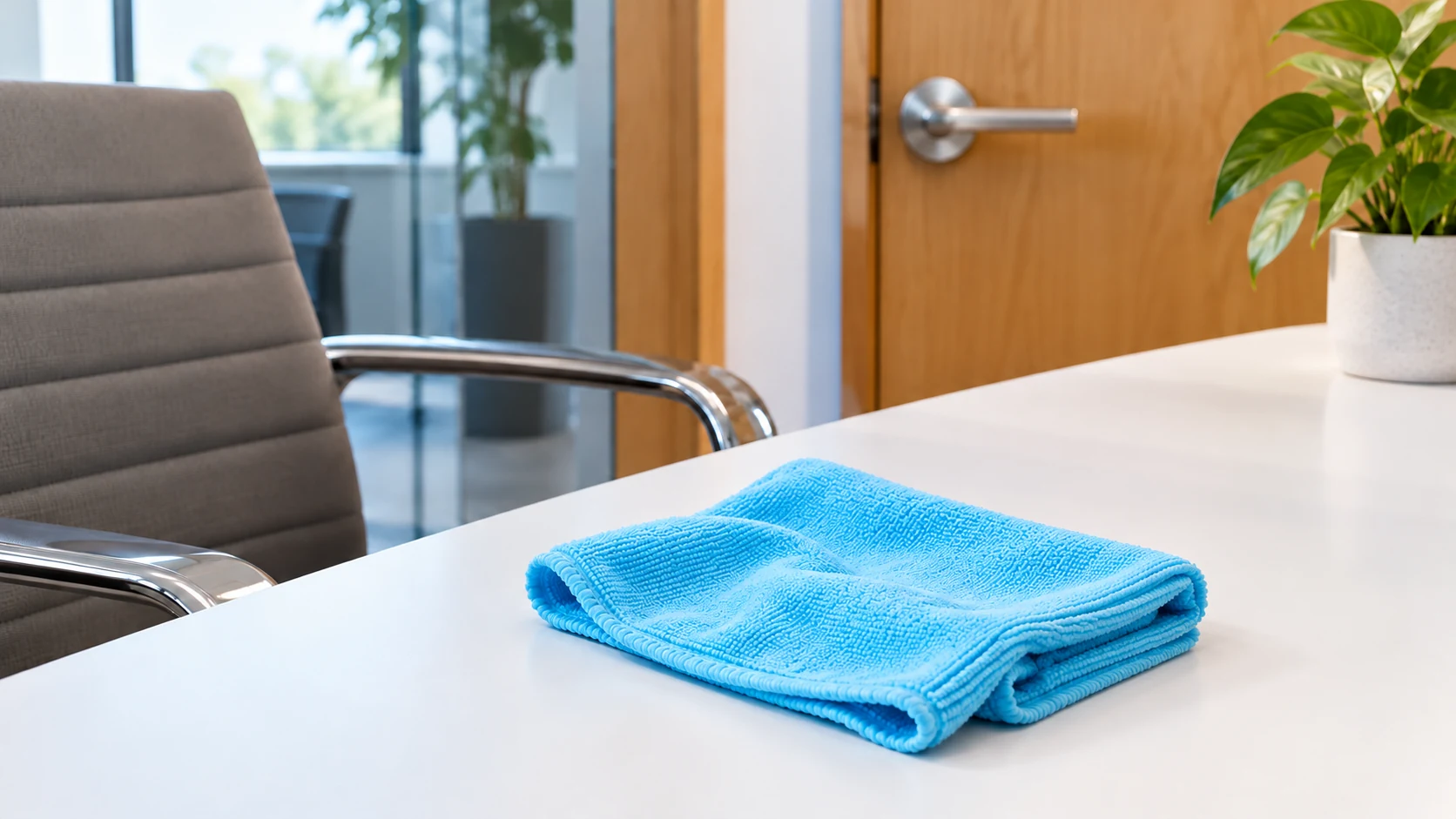
Begin with cleaner areas and move toward dirtier ones, changing cloths and tools as needed. Remove ordinary visible soil using the appropriate cleaner. Fold a cloth into usable faces and move to a fresh face as it loads with dirt. Keep used cloths separate from the clean supply.
For disinfection, read the label for the approved surface, use site, target organism when relevant, dilution, and contact time. Meet its precleaning directions and keep the surface wet for the stated period. Follow any required rinse or drying step. Do not substitute a familiar number of minutes from another product.
Plan small zones so staff can avoid touching a surface while it is being treated. If the label's required wetness would damage a device, stop and obtain a compatible method. Never resolve that conflict by shortening the time while still recording the item as disinfected.
Finish with an inspection for streaks, residues, missed edges, and liquid near controls. Return items to their agreed locations. Wash hands after handling cleaning supplies and follow the facility's glove-use procedure.
Avoid misleading shortcuts
One wipe cannot necessarily cover an entire office. Replace it when soiled or when it can no longer deliver the product as labeled. A strong fragrance, a glossy finish, or a dry appearance is not proof of disinfection.
Do not mix products, top up unidentified bottles, or use a stronger concentration for reassurance. If someone reports illness, a spill of bodily material, or an unusual exposure, refer to the facility's response plan instead of simply extending the routine route.
Review the plan after real use
Check which surfaces become visibly dirty between visits and which are rarely touched. Adjust the route with the office manager and keep product compatibility notes current when furniture or equipment changes. Contact JLV at /contact/ to discuss a clear business-office cleaning scope in Orange County, Chino, or Ontario.