
Bathroom cleaning
How to Clean a Toilet Seat and Exterior
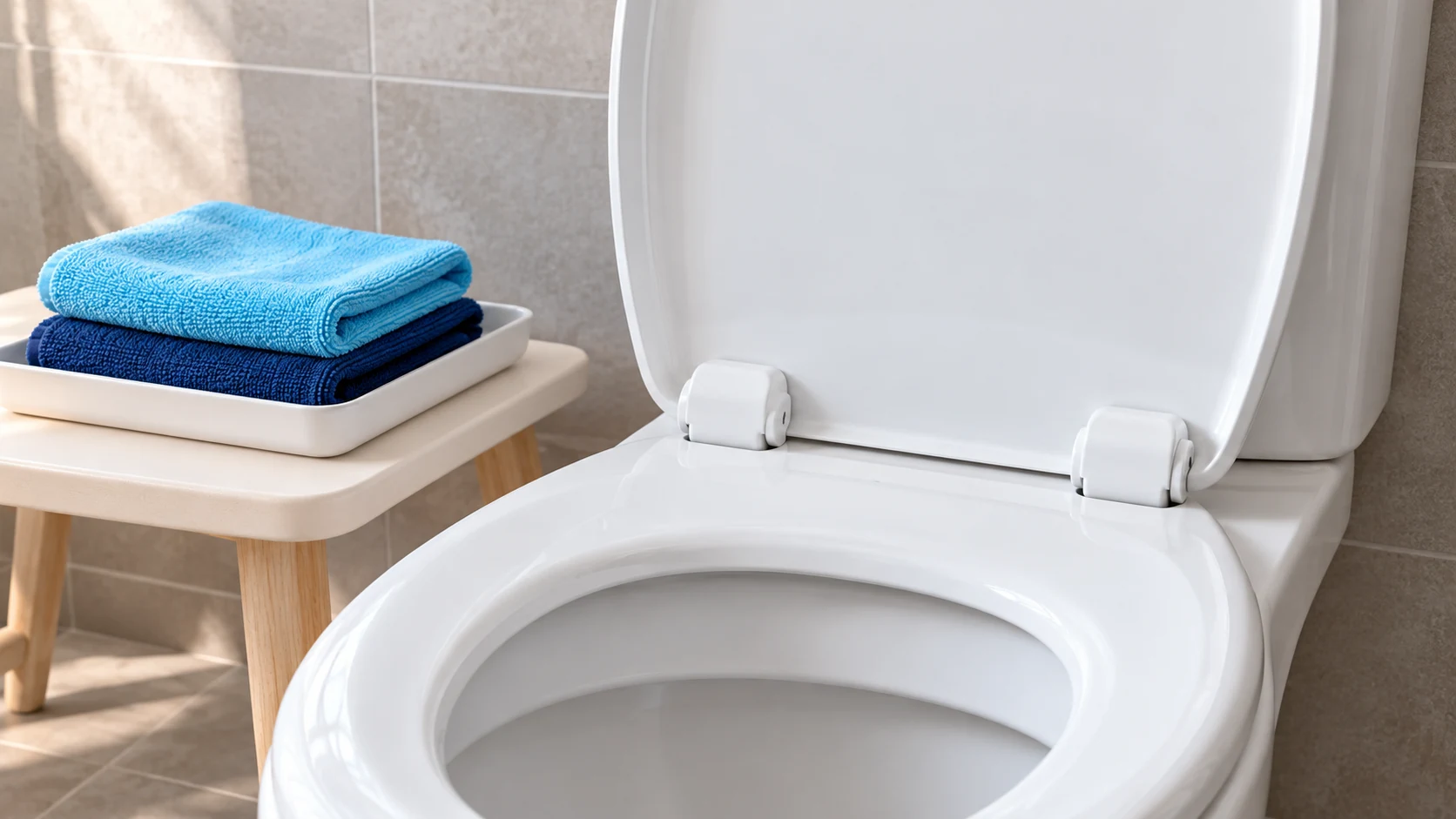
Clean a toilet seat and exterior with dedicated cloths and products approved for each material. Work from cleaner upper surfaces toward the more soiled bowl exterior and base, changing cloths as you go. Bowl cleaner should stay inside the bowl, away from seat coatings and hinges.
Check the seat before choosing a cleaner
Seats may be plastic, coated wood or a specialty material. Hinges can be metal, painted or plated, and electronic bidet seats have additional restrictions. Read the seat’s own instructions as well as the toilet’s care guide. Bemis, for example, recommends mild soapy water and warns that harsh chemicals can damage seats and hinges.
This method is for an ordinary non-electrical seat and accessible toilet exterior. Use the exact manual for a heated seat, bidet attachment or built-in controls. Do not spray into electrical components or improvise disassembly.
Set up a dedicated kit
- Mild cleaner compatible with the seat and exterior, plus fresh water
- Several soft cloths or disposable wipes reserved for toilet cleaning
- A separate drying cloth and a bag or container for used cloths
- Label-required gloves and other protection; ventilation where required
Follow a cleaner-to-dirtier route
1. Move nearby items and check for leaks, cracks or a rocking toilet. Do not treat fresh water appearing around the base as a cleaning spill. Report it before continuing, particularly if the floor is soft or damaged.
2. Prepare the cleaner exactly as instructed. Use a discreet test for a new product. If the surface directions favor applying to a cloth, do that rather than spraying over hinges, walls and the floor.
3. Clean the tank exterior and top, then the flush control, using fresh cloth faces. Avoid lifting the tank lid unnecessarily or placing a heavy ceramic lid where it can fall. Never add a cleaner inside the tank as part of this exterior routine.
4. Wipe both sides of the seat lid, then both sides of the ring. Fold or replace the cloth before moving between surfaces. Keep dirty cloths out of the clean solution and away from counters or handwashing fixtures.
5. Clean the accessible hinge area gently. Remove a quick-release seat only when its manual explains how. Do not soak metal hinges or force a fixed mechanism loose just to reach a small mark.
6. Use a fresh dedicated cloth for the outer bowl and another for the lower base as needed. Finish seams with controlled damp wiping. Rinse where the care guide calls for it, then dry compatible surfaces and the surrounding floor.
If disinfection is needed
Choose a disinfectant that is compatible with the exact seat and exterior, and follow its labeled wet contact time and final treatment. Clean visible soil first. If the seat maker prohibits available disinfectants, ask for a suitable option rather than assuming a stronger product is worth the damage.
Do not mix cleaning chemicals. A fragrance or a visibly shiny seat does not prove disinfection, and a disinfectant wipe used too quickly may not meet its own instructions.
Finish cleanly
Keep toilet cloths separate from other tools and handle laundering or disposal according to their instructions. Wash hands after removing gloves. Check hinges and the base on future cleaning visits so damage is noticed early. For restroom care within a business or office cleaning plan in Orange County, Chino and Ontario, California, contact JLV at /contact/.