
Bathroom cleaning
How to Clean a Toilet Bowl With a Mineral Ring
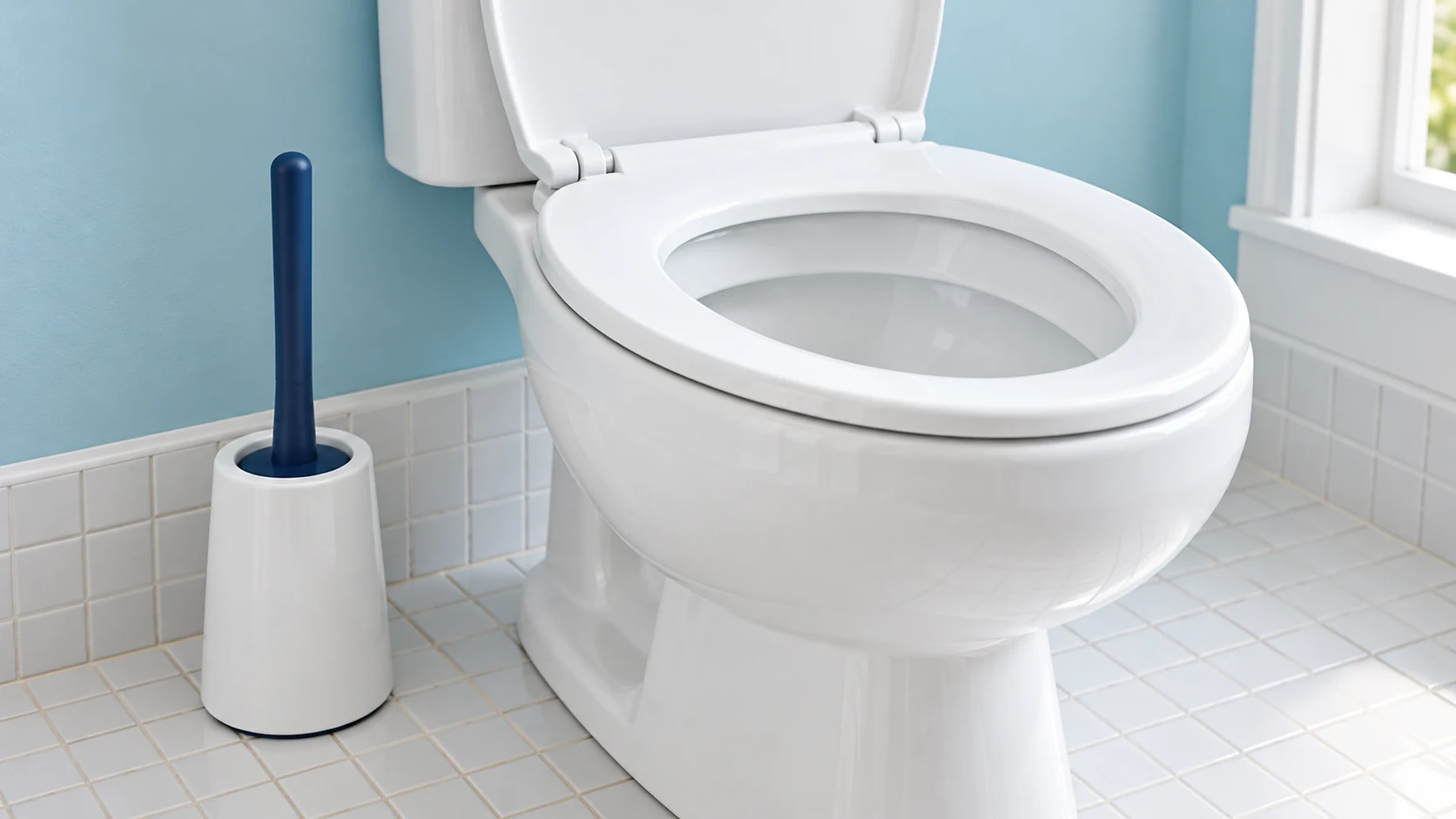
Start a toilet-bowl mineral ring with the toilet manufacturer’s approved cleaner and a soft plastic toilet brush. Before using any product, check for existing bowl or tank treatments. Never add a descaler or acidic cleaner to a toilet that may contain bleach or another incompatible chemical.
Identify the toilet and what is already in it
Look up the model and bowl-surface instructions. Some toilets have specialty glazes with strict cleaner restrictions. TOTO’s CEFIONTECT guidance, for example, excludes bleach, gritty cleaners and acid or alkaline detergents. A generic claim that “all porcelain handles this” is not enough.
Check for a tank tablet, clip-on product or cleaning system already dosing the water. If you cannot identify the product or confirm compatibility, do not add another cleaner. Follow the treatment maker’s directions or ask for advice; a quick flush does not reliably establish that a chemical is gone.
Prepare the supplies
- One bowl cleaner approved for the exact toilet surface and intended deposit
- A dedicated soft-bristled plastic toilet brush
- Label-required gloves, eye protection and ventilation
- Separate cloths for accidental exterior splashes, kept apart from other cleaning tools
Clean and assess the ring
1. Keep children, pets and other users away during treatment. Remove nearby objects that could be splashed and check that the toilet flushes normally. A clog, backup, crack or leak needs attention before routine cleaning.
2. Read the whole cleaner label. Confirm the surface, purpose, amount, contact time and rinse or flush instructions. Do not make a home chemical mixture or combine two products to attack different parts of the ring.
3. Apply the approved cleaner as directed, keeping it inside the bowl. Avoid getting bowl cleaner on the seat, hinges, stone floor or metal fittings. Those surfaces have separate care requirements.
4. Brush the waterline and other accessible interior surfaces gently, using the product’s instructed sequence. Work the bristles against the deposit without banging the brush handle into the glaze. Do not force tools into jets or internal passages.
5. Leave the product only for its labeled time, then flush or rinse as directed. Do not lengthen treatment into an overnight soak unless the exact product and toilet instructions allow that use.
6. Inspect the remaining ring after the bowl returns to normal conditions. Note whether the first treatment loosened material. Repeat only if the directions allow it and the surface shows no change or damage.
When the ring will not move
A remaining mark may be stubborn scale, metal staining or damaged glaze. Ask the toilet maker which product is compatible with the model and the deposit. If the surface instructions exclude the usual mineral removers, that limit still applies.
Do not reach automatically for a pumice stone, razor, wire brush or sandpaper. Those tools can create permanent scratches on some finishes. Also avoid repeatedly layering new cleaners over an unsuccessful treatment. Keep a record of what has been used so the next person does not unknowingly mix chemicals.
Prevent repeat buildup
Include gentle bowl cleaning in the routine before deposits become thick, and report a continuously running toilet or unusual water staining. Clean the brush and holder according to their instructions and keep them dedicated to the toilet. For business and office cleaning in Orange County, Chino and Ontario, California, discuss restroom needs with JLV at /contact/.