
Post-construction cleaning
How to Clean Fine Dust After Renovation
Quick answer
Before cleaning renovation dust, have the contractor or responsible qualified professional identify the materials and confirm that the area is ready for ordinary final cleaning. Once hazards are assessed and controlled, collect remaining nonhazardous dust with suitable equipment and clean compatible surfaces from higher areas downward. Unknown dust is a stop signal.
The safety decision comes first
Cutting, sanding, demolition, and old building materials can introduce hazards that cannot be identified by dust color. Concrete, masonry, and some construction products may create respirable crystalline silica. Disturbed older finishes or materials may involve lead or asbestos. A thin layer of powder is not evidence that exposure is insignificant.
Ask the project lead what work occurred, what hazard assessment was performed, and whether any required specialist cleanup or clearance is complete. Obtain the relevant handover information before ordinary housekeeping begins. If the answers are incomplete, keep the area restricted and request qualified assessment. Do not sample suspect material yourself.
OSHA's silica rules involve exposure assessment and controls beyond housekeeping. EPA warns against disturbing suspected asbestos debris. This guide does not provide hazardous-material cleanup instructions or establish that JLV performs remediation. A vacuum fitted with a filter labeled HEPA is not, by itself, a complete hazard-control plan.
Prepare only after the area is released
- Confirm trades have finished dust-generating work in the cleaning area
- Obtain the finish schedule and cleaning restrictions for new surfaces
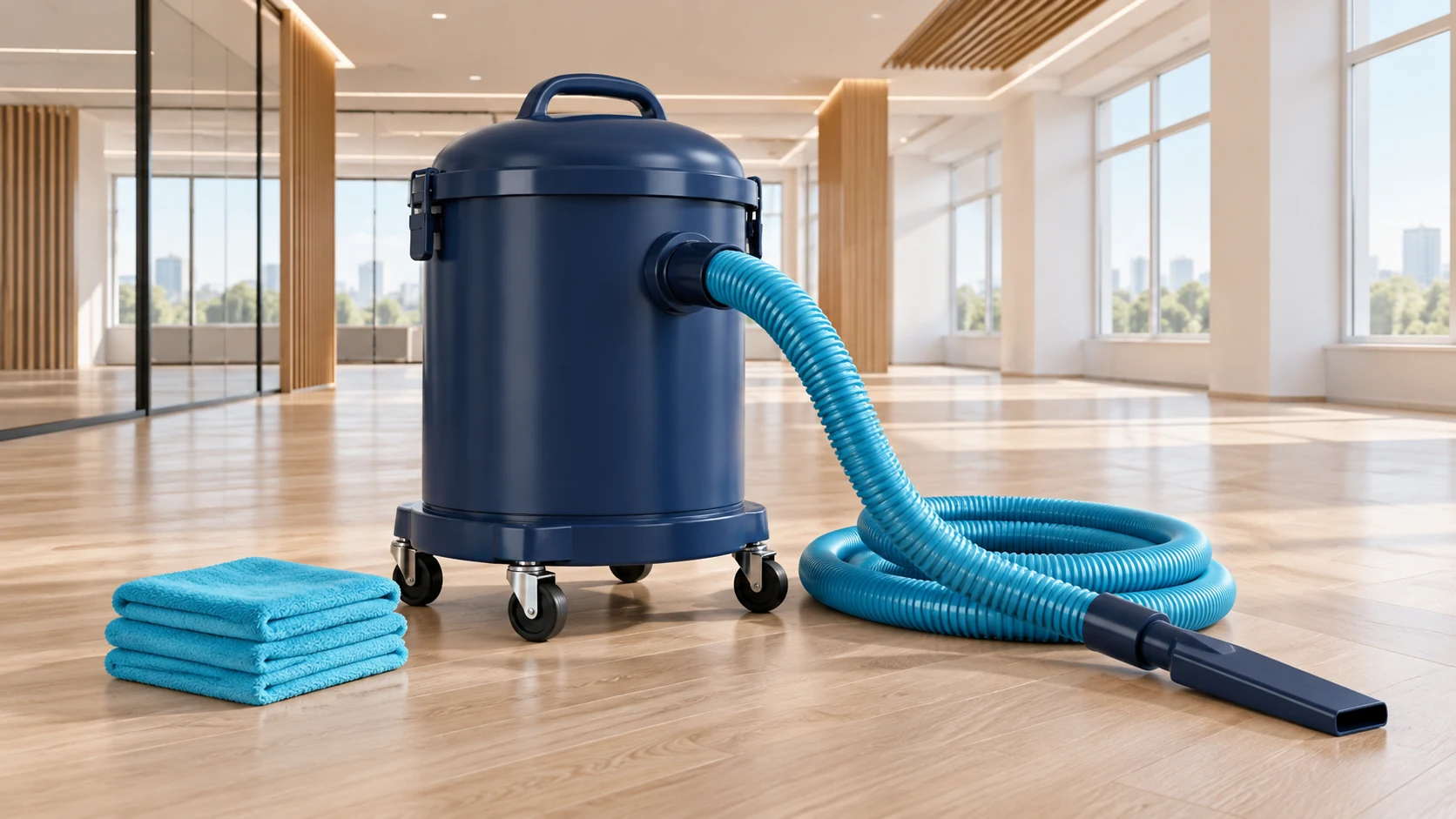
- Use an appropriate sealed HEPA-filtration vacuum specified for the assessed residual dust, with trained operation and disposal procedures
- Prepare soft compatible attachments, clean cloths, and approved surface cleaners
- Arrange safe access, required protection, waste handling, and a controlled exit route
Have facilities staff address HVAC questions. Do not open ducts, change ventilation settings, or remove construction containment independently. Stop if new work resumes or the dust source is still active.
A controlled sequence for ordinary residual dust
Inspect the released space and photograph existing damage. Remove only the ordinary debris included in the agreed scope using the approved method. Do not dry sweep fine dust, use compressed air, or blow it from a ledge into the room.
Work from accessible higher surfaces toward lower ones. Use the suitable capture attachment gently so grit is lifted before any wiping. Avoid pressing a dirty nozzle against fresh paint, polished metal, or fragile finishes. High or inaccessible areas need appropriate access arrangements, not a chair used as a ladder.
After loose dust is captured, wipe compatible surfaces with a clean cloth lightly dampened using the approved product. Fold to a fresh face or change cloths frequently. Do not saturate new woodwork, joints, electrical controls, or uncured coatings.
Clean floor edges and then the floor using its material-specific procedure. Collect dirty solution, allow the area to dry, and inspect again in normal and angled light. Repeat only the approved ordinary-cleaning step where residual dust remains; never use a clean-looking cloth as hazardous-material clearance.
When dust returns
If surfaces quickly become dusty again, stop and investigate the source with the contractor or facilities manager. Continuing work, an unclean adjacent area, or a building-system issue may need correction before another final clean makes sense.
Unexplained irritation, suspect debris, visible airborne dust, or missing hazard documentation requires renewed assessment. Leave the affected area and report the concern rather than increasing the vacuum's power or changing the chemical.
Plan a clear finish
Agree who checks the work, which surfaces are included, and what remains deferred. Keep ordinary cleanliness inspection separate from any regulatory or environmental clearance. For post-construction cleaning in Orange County, Chino, or Ontario, contact JLV at /contact/ to discuss site readiness and the proposed scope.