
Office cleaning
Hand dryer not responding normally: the sensor and inlet cleaning checks
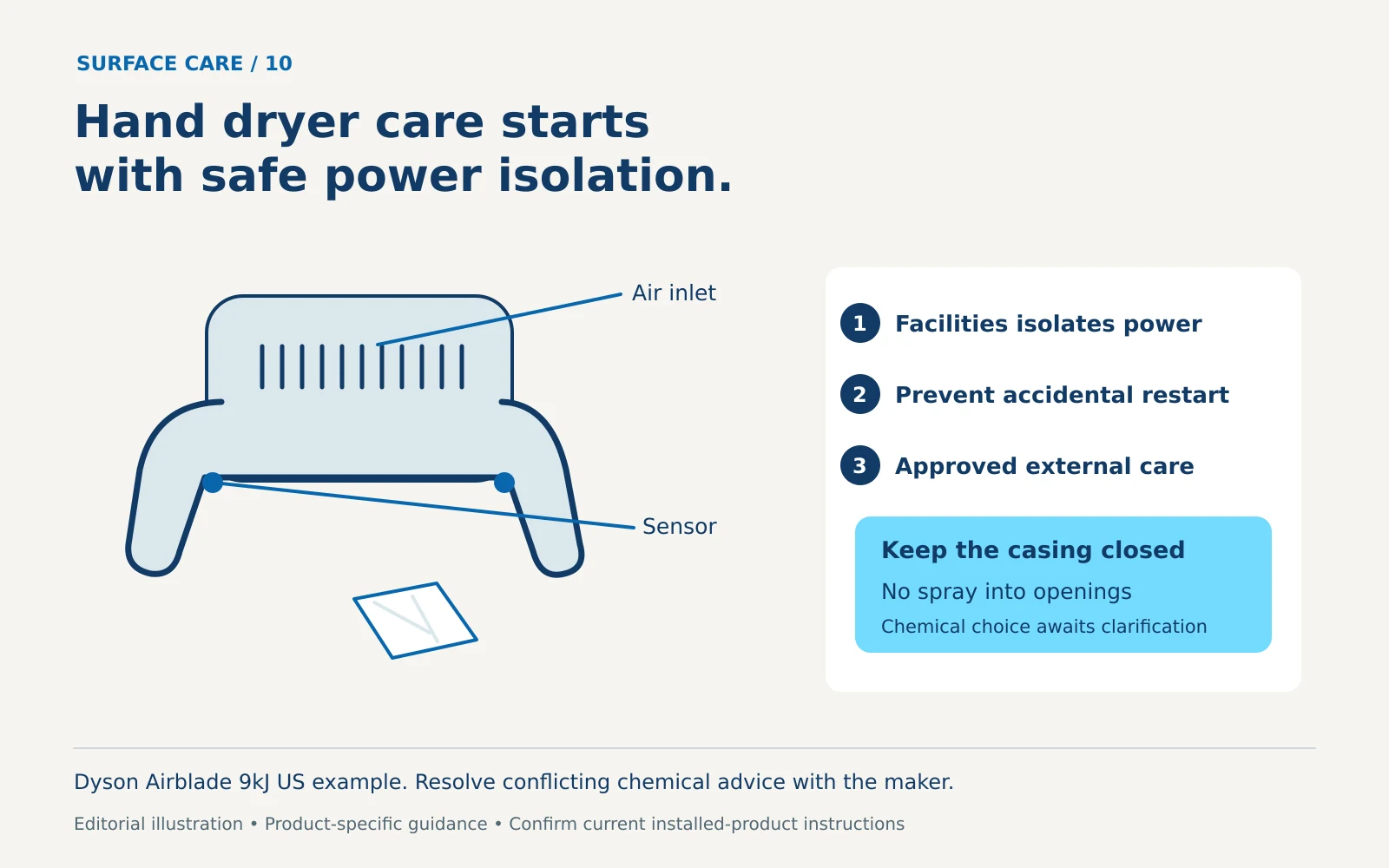
A hand dryer that does not respond normally may need more than a cleaning visit. Confirm its model, record the symptom and check whether routine external care is authorized. For the Dyson Airblade 9kJ example here, safe power isolation is a prerequisite to cleaning, and unresolved behavior should go to facilities or service.
Start with identity and symptoms
Use the equipment record or accessible rating information to confirm the model and market-specific manual. A Dyson logo alone does not establish which care procedure applies. Record whether the complaint is failure to start, unexpected running, a change in sound or longer drying during normal use.
Report visible damage, overheating, unusual odor or moisture exposure promptly through the building's equipment procedure. Do not keep testing a unit that may be unsafe. An office manager can coordinate a service response and an alternative hand-drying arrangement without asking a cleaning crew to diagnose wiring.
Read the safety instructions before the cleaning section
The Airblade 9kJ US instructions require power to be switched off at the service panel before cleaning, with protection against accidental restoration. Facilities must arrange that safely. The manual describes soft-cloth sensor and inlet care and prohibits power washing. Its maintenance section mentions nonabrasive cleaner and a compatibility test, but the warranty section says not to use chemicals. Because those passages conflict, obtain Dyson clarification before selecting a chemical; do not resolve the ambiguity by guessing that a familiar restroom product is safe. Read the Dyson Airblade 9kJ manual, US sections.
This source is an example for that model, not a general hand-dryer cleaning specification. Document any manufacturer clarification with the equipment record so the next visit does not restart the same uncertainty.
Define the external-care boundary
Before work, agree who handles isolation, who performs the approved care and who restores service. A casual request to “wipe the sensor” should not bypass the manual's safety setup. If that setup cannot be arranged, record the blockage and leave the dependent cleaning task pending.
Keep the task limited to accessible external areas permitted by the applicable instructions. Do not remove a casing, probe an opening, wash a filter or attempt electrical repairs. Filter maintenance and deeper blockage investigation need their own manufacturer procedure and an appropriately authorized provider.
If a finish test is required for a clarified, approved product, use a discreet area and assess it after drying. Stop for any surface change, residue that cannot be removed by the approved method or evidence that liquid has reached an unintended location. Do not treat additional pressure or a stronger chemical as the automatic next step.
Verify the result without claiming a repair
After the authorized person restores the equipment according to the facility procedure, check ordinary operation. Record what changed and what did not. “Visible inlet dust removed; intermittent starting remains” is more useful than “dryer serviced,” which can suggest work that was never performed.
For example, an office notices a dryer starting inconsistently after a renovation. The work order first identifies the exact unit and confirms safe access and isolation. The agreed external care is completed, but the fault continues. The cleaner reports the remaining symptom and facilities requests service. Nobody opens the housing to chase the cause during a cleaning visit.
Use a handoff checklist:
- Exact model and applicable manual identified
- Safety concerns reported before testing
- Isolation responsibility confirmed
- Chemical ambiguity resolved or chemical use deferred
- Only approved external care completed
- Operational result and service owner recorded
Ask JLV for an office/business or post-construction cleaning quote in Orange County, Chino Hills, Chino, Ontario, Corona or Eastvale. Include the equipment list and facility access rules; confirm specialty equipment care separately.