
Stone cleaning
How to Clean Travertine Tile
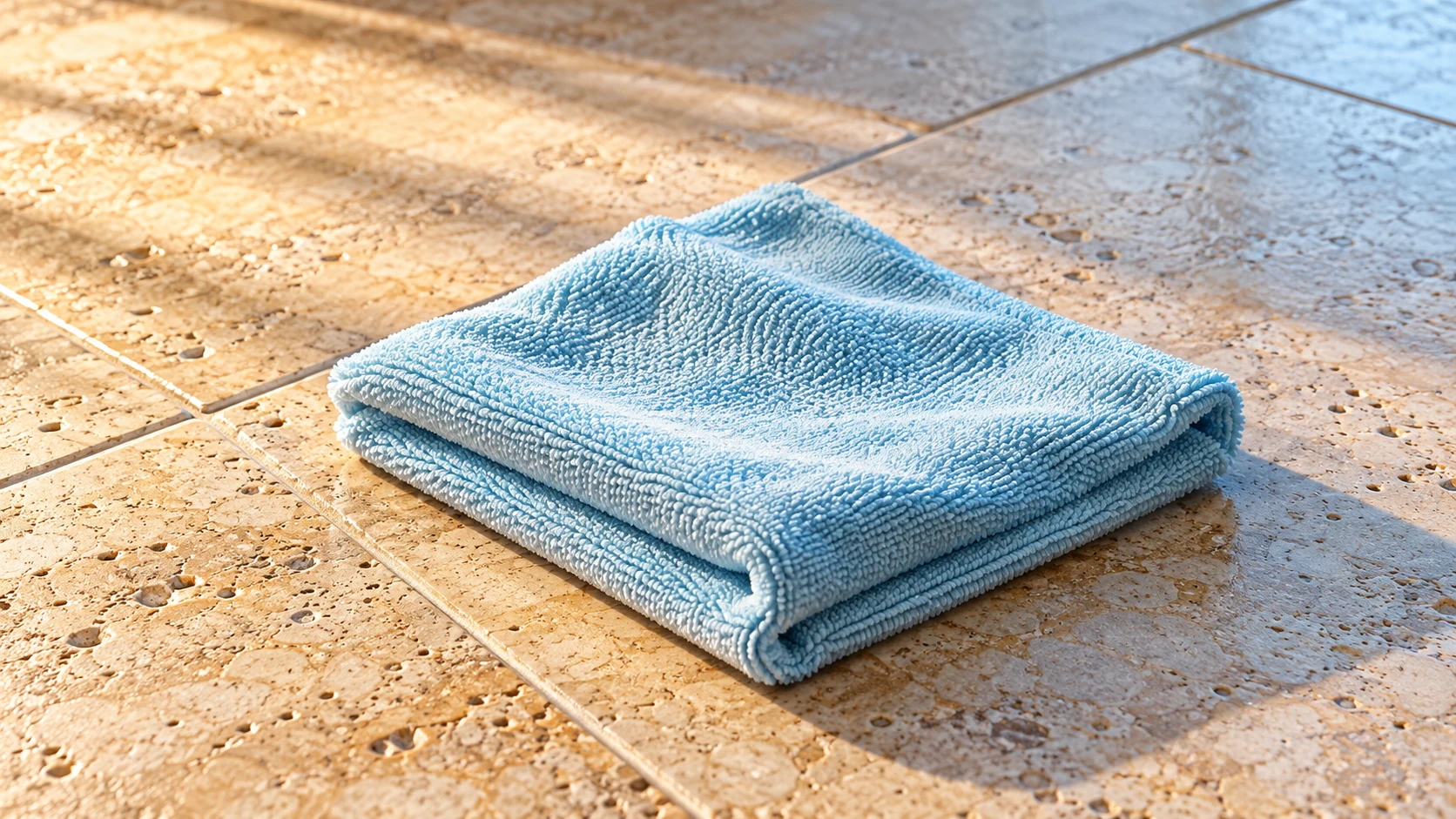
Clean travertine by removing grit, using a neutral stone-safe cleaner and collecting rinse water before it settles into the surface. Treat holes and filled areas gently. If a dark spot is actually missing filler or a new void, more scrubbing will not solve it.
Start with the finish and the fill
Travertine may be polished, honed, tumbled, filled or intentionally unfilled. Those differences affect how a cloth moves across it and where soil collects. Check the original specifications, including any sealer or coating. A stone-look ceramic tile should not be treated as natural travertine just because it has a similar pattern.
Travertine is acid-sensitive. The Natural Stone Institute groups it with calcium-carbonate stones that can be altered by mild acids. That makes vinegar, lemon and generic acidic descalers poor shortcuts. Check adjacent grout and metal too, so the entire cleaning path is compatible.
Prepare the kit
- A neutral cleaner approved for travertine, its finish and any sealer
- A clean soft dust mop or floor-safe vacuum for ordinary dry grit
- Soft cloths or mop pads, fresh water and towels for liquid pickup
- A soft nylon brush only if the stone supplier permits it, plus label-required protection
A controlled method
1. Inspect the dry stone before moving furniture. Mark the location of holes, loose filler, cracked tiles and rough edges on a simple room sketch or photo. Avoid placing heavy objects on damaged areas while cleaning.
2. Remove loose soil gently. Around open pores, use a non-scratching attachment without pressing or scraping. Do not try to excavate compacted material with a pointed tool; the edge of a void can be fragile.
3. Make a hidden test patch with correctly diluted cleaner. Include a filled area if the installation has one. Follow the label, rinse and let the test dry before judging color or texture changes.
4. Wash a small section with a damp cloth or pad. Keep enough solution on the surface for the approved method without flooding it. On permitted textured finishes, gentle brush strokes can reach recesses a flat cloth misses.
5. Lift the loosened soil with a fresh cloth. Rinse as directed using clean water and remove the liquid promptly. Change cloth faces frequently so residue is not pushed into the next set of pores.
6. Allow the area to dry and compare with your starting photos. Check whether the remaining mark is dirt, natural variation, a missing fill or a surface change. Do not decide that a wet, darker patch needs another chemical treatment.
Mistakes to avoid
Skip abrasive powders, wire brushes, unapproved steam and strong pressure. Do not use an acid cleaner simply because it is sold for “tile.” Avoid adding wax or an enhancing sealer to disguise patchiness; those alter the maintenance system and should be selected separately.
MSI notes that travertine fill can require maintenance. New holes, loose material or edges that catch a cloth deserve a stone professional’s assessment. Staining that remains after gentle cleaning may need a material-specific treatment, while etching or wear can require restoration rather than washing.
Keep grit from getting comfortable
Use appropriate entrance mats, clean their undersides and address spills promptly. Review sealing needs with the stone supplier instead of following a universal yearly schedule. For routine business and office cleaning in Orange County, Chino and Ontario, California, contact JLV at /contact/ to discuss a plan that respects your stone.