
Tile & grout cleaning
How to Clean Textured Porcelain Tile
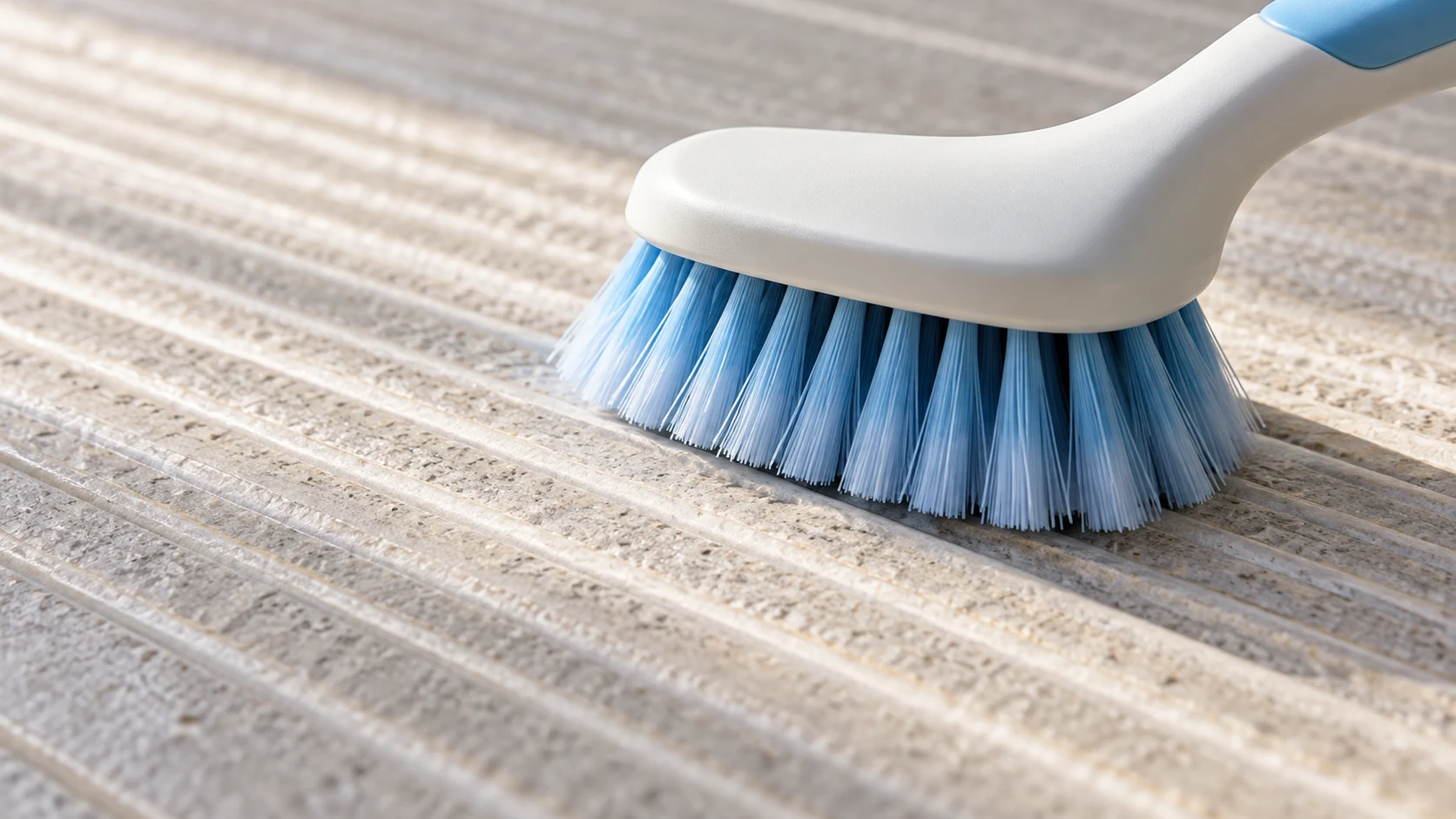
Textured porcelain needs cleaning down in the low spots, not just across the raised face. A suitable soft brush, compatible cleaner and careful rinse-water removal usually matter more than extra pressure. The goal is to release and collect trapped soil without wearing the finish.
Identify the surface
Confirm that the floor is porcelain rather than natural slate or another stone with a similar appearance. Find the care guide for the exact finish and identify the grout. Textured does not mean scratch-proof, chemical-proof or slip-proof. Decorative treatments and sealers can also change what is suitable.
Check one dry tile near an entrance and one protected tile. If only the recessed pattern looks dark, ordinary mopping may be missing it. If the whole floor became cloudy after construction, ask about grout residue before using a stronger maintenance cleaner.
Assemble the tools
- Neutral tile cleaner approved for the tile and grout, measured to its label
- A soft nylon brush that reaches the texture without scraping with its head
- A non-scratching vacuum, clean microfiber pads and fresh water
- Absorbent towels or liquid-rated recovery equipment, plus wet-floor signs
Clean the recesses in order
1. Clear and isolate the work area. Lift grit from the pattern with a floor-safe vacuum attachment. For ordinary dry household dirt, working in more than one direction helps reach the recesses. Do not dry-sweep unknown renovation dust.
2. Test a quiet corner with the chosen cleaner and brush. Follow dilution and contact-time directions, rinse, recover the liquid and let it dry. Check that the raised surfaces retain the same sheen and the grout stays sound.
3. Apply cleaner to a section small enough to finish before it dries. Start near a boundary you can recognize, such as a grout line, so it is easy to see where the next section begins.
4. Work the brush gently across and along the pattern. The bristle tips should reach the low points. Short overlapping passes give you better control than forcing a stiff brush over a large patch. Avoid scrubbing into flexible perimeter seals.
5. Collect the dirty liquid. Rinse with fresh water as required and recover that rinse too. A mop that merely spreads diluted dirt around the raised texture will not complete the job. Change cloths and water before moving on.
6. Dry and inspect under light from different directions. Pay attention to tile edges and corners where rinse liquid can collect. Reopen the area only when it is dry and free of slick residue.
Avoid the shortcuts
A coarse pad or drill-mounted brush can concentrate wear on the raised parts. Do not select one without explicit approval for the finish. Avoid adding wax to make a matte textured floor shine: Crossville warns that topical finishes change appearance, increase maintenance and can alter surface friction.
More detergent can also make recovery harder. If a correctly treated test area stays dirty, establish whether the mark is coating, grout residue, staining or wear before changing chemistry. Photograph the dry result for the tile supplier.
Keep textured tile manageable
Use suitable entry mats, remove tracked-in grit and include a periodic brush-and-recovery step when inspection shows that mopping alone is leaving soil. Persistent moisture, loose tiles or powdering grout should go to the installer. For business and office cleaning in Orange County, Chino and Ontario, California, contact JLV at /contact/ to discuss a surface-aware routine.