
Fixtures & surface cleaning
How to Clean Stainless Steel Elevator Doors
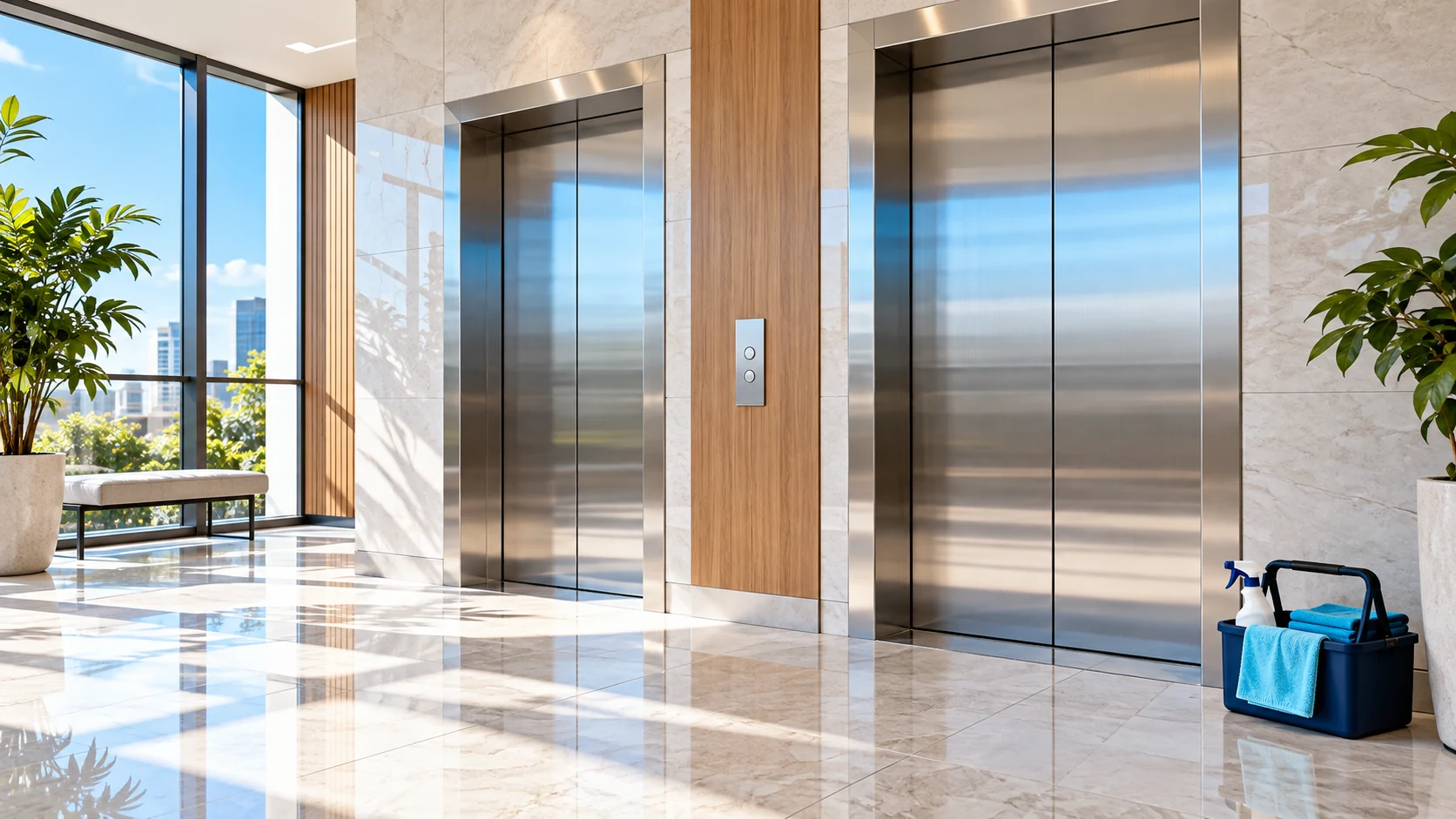
The quick answer
Clean elevator door faces only under the building's approved safe-work procedure, with the doors secured from movement by authorized personnel. Use a soft cloth and a compatible mild cleaner, follow the visible grain where applicable, remove residue and dry. Never hold a door open with a mop, block its sensors or clean a moving edge.
Establish the scope before touching the doors
Ask property staff or the elevator service provider how cleaning should be arranged. Routine surface cleaning does not authorize use of service keys, opening equipment, access to the shaft or work on door mechanisms. If a safe stationary condition cannot be established, postpone the task. Keep an accessible alternative route available according to the building's plan.
Identify the surface: brushed stainless, mirror-polished stainless, a colored coating or an anti-fingerprint treatment may need different products. Do not assume that a metallic-looking decorative laminate is bare stainless steel. Inspect for sharp damage, loose trim, unusual movement or fluid leaks and report them before cleaning.
Supplies
- Soft lint-free cloths dedicated to the door finish
- Mild cleaner specifically permitted for the panels and any coating
- Clean water for residue removal and a separate drying cloth
- Building-approved access controls and any PPE required by the product label
Clean the accessible faces
1. Confirm the safe-work arrangement with authorized building personnel and keep bystanders clear. Inspect the cloth for grit. Leave door gaps, sill tracks, sensors and mechanisms outside this surface-cleaning task. Do not reach into an opening to retrieve debris.
2. Lift ordinary dust and fingerprints with a lightly damp cloth. If the panel has a brushed grain, follow that direction. A mirror-polished or coated surface may require a different wiping technique specified by its supplier. Work gently from cleaner areas toward more visibly soiled ones.
3. Apply a small amount of approved cleaner to the cloth rather than spraying the door. Clean one section at a time, preventing liquid from running toward seams, controls or the floor threshold. Avoid circular scouring that could create a patch unlike the factory finish.
4. Remove residue using a fresh, lightly damp cloth as directed by the cleaner and panel maker. Pay attention to the accessible perimeter while staying clear of moving edges and gaps. Do not add oil to the door, rail or track as a finishing step.
5. Dry the faces completely and inspect from both sides of the lobby. Collect supplies and check the floor for drips. Let authorized staff restore normal elevator use under the building procedure. Report remaining defects with their locations instead of trying to repair them during cleaning.
Avoid damaging the finish or equipment
Do not use steel wool, acid cleaners, paint remover or an unapproved polish. Rust-looking marks can be caused by contamination and do not prove that abrasive restoration is needed. Excess water can damage elevator components. Keep all chemicals away from controls and safety devices, and never combine products.
When cleaning is not enough
Repeated streaks may be leftover cleaner; confirm with a small approved rinse pass. Deep scratches, corrosion, peeling coatings or irregular door operation need the appropriate service provider. Do not sand out a scratch or attempt to duplicate the brushed finish by hand. A damaged moving assembly takes priority over appearance.
Maintain a consistent lobby appearance
Schedule fingerprint removal around traffic and the building's safe-access process. Keep the finish instructions available to every cleaner. For office and business cleaning in Orange County, Chino and Ontario, California, JLV can discuss routine scope and property coordination at /contact/.