
Fixtures & surface cleaning
How to Clean Brass Door Handles
The quick answer
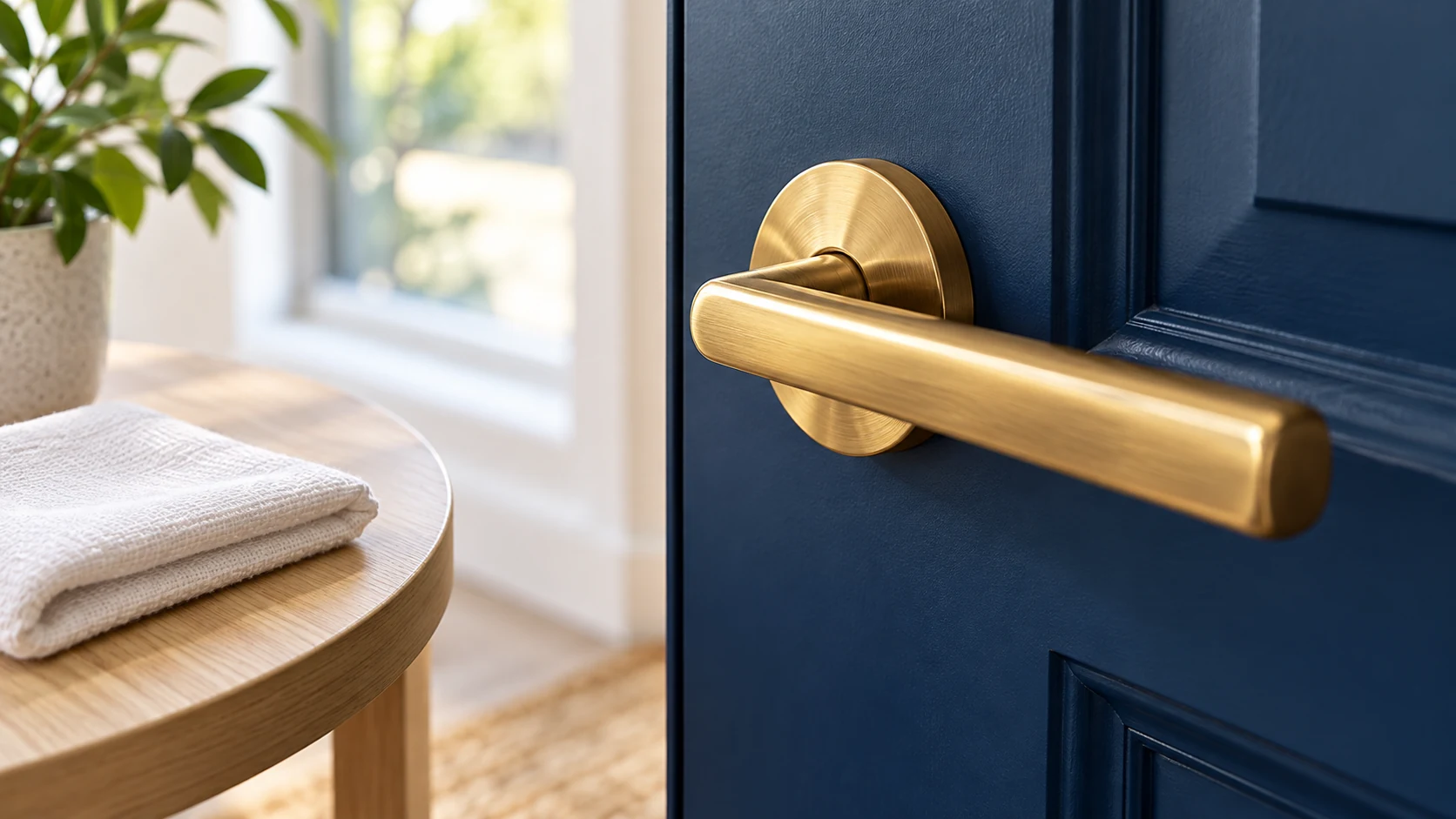
For routine dirt on an intact brass handle, follow its finish guide: often a soft cloth with mild soapy water, followed by residue removal and immediate drying. Identify the finish before using brass polish. A golden handle may be solid brass, plated metal, lacquered brass or a PVD-coated product, and those surfaces do not share one restoration method.
Decide whether the mark is actually dirt
Ask the owner whether the hardware has an intentional living finish. Such finishes are designed to change with handling and time. Darkening in recesses or brighter contact areas may be part of that appearance, not neglect. Cleaning away everyday soil is a different decision from stripping lacquer or removing patina.
Find the brand, model and finish code if possible. Check for keypad electronics, an access-control reader or decorative inserts. Inspect for loose handles, sharp edges and flaking finish. Do not dismantle a lock or disturb a door closer as part of exterior cleaning, particularly on a workplace exit.
Supplies
- Clean soft cloths for washing, residue removal and drying
- A mild cleaner approved for the finish and clean water
- Protection for adjacent painted or wood door surfaces
- The hardware care guide, especially if a living or coated finish is present
Clean the handle in place
1. Arrange access so the door can be used safely and security is maintained. Do not prop a fire-rated or secured door open for convenience. Ask property staff how to manage a busy entrance while cleaning its hardware.
2. Remove ordinary dust with the permitted soft-cloth method. Lightly dampen a clean cloth and wipe the handle, backplate and accessible underside. Keep liquid out of the keyway, spindle gap and any electronic component.
3. If soil remains, apply a small amount of approved mild cleaner to the cloth. Work gently around decorative details with a soft cloth edge. Do not use a toothpick, wire brush or other hard tool to excavate dark material from a finish you have not identified.
4. Remove detergent residue using a fresh damp cloth as the manufacturer directs. Keep the surrounding wood or painted door dry. Turn to a clean section frequently so hand oils and dirt are lifted away rather than spread over the backplate.
5. Dry the hardware promptly. Inspect after drying and confirm that the handle operates normally without forcing it. Return the entrance to its ordinary approved condition. Note persistent discoloration or looseness for the owner rather than adding a restoration product without agreement.
Shortcuts to avoid
Lemon-and-salt mixtures, vinegar pastes, abrasive pads and generic metal polish can harm a protective layer or alter intended patina. Do not spray a lock or immerse hardware. A cleaner suitable for uncoated solid brass may be wrong for a thin brass-colored finish. Never mix products, and do not substitute a disinfectant without checking finish compatibility and the labeled use requirements.
Troubleshoot the dry result
If a smear moves during wiping, change to a fresh cloth and remove the residue. If the color difference stays fixed, ask the supplier whether it reflects patina, tarnish under a coating or worn plating. Stop if finish transfers onto the cloth. A hardware specialist can discuss restoration or replacement when needed; a locksmith should address unreliable operation.
Make ongoing care simpler
Record the finish code and the owner's preference about patina. Clean high-contact points as part of the workplace routine using dedicated tools. For business cleaning in Orange County, Chino and Ontario, California, discuss a practical entrance-care plan with JLV at /contact/.