
Bathroom cleaning
How to Clean Soap Buildup Around a Bathroom Dispenser
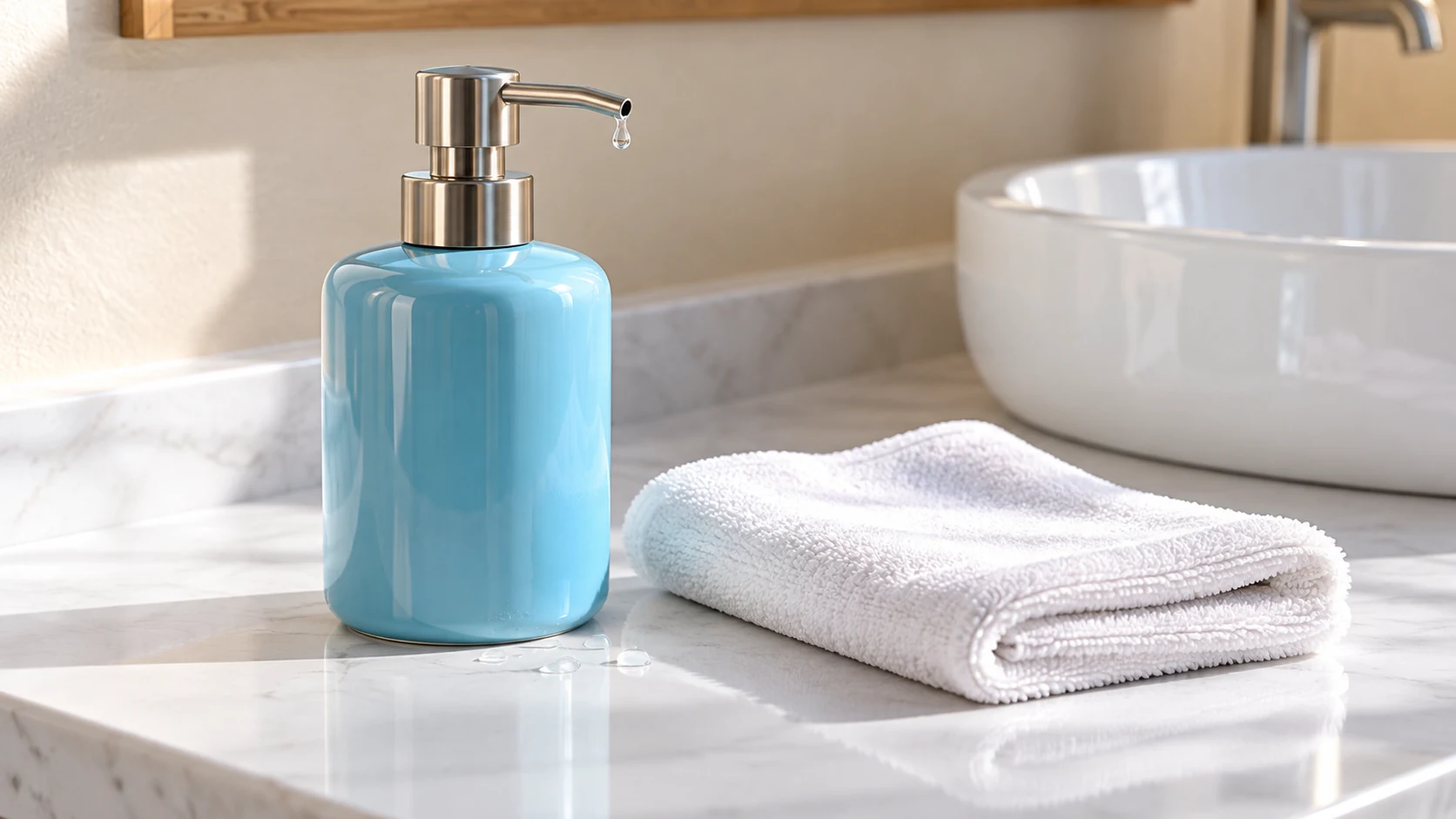
Remove ordinary dried soap around a bathroom dispenser with controlled damp wiping and a soft cloth, then clean the counter underneath separately. Keep water and cleaner out of the reservoir and electronics. Exterior cleanup should not turn into an improvised pump flush or refill procedure.
Check the dispenser and counter
Identify whether the unit is manual, sensor-operated, wall-mounted or built into the counter. Read its care instructions and note the exterior finish. Stone, quartz, laminate and solid-surface counters also have different care limits, so choose a method compatible with each.
A sticky ring under a portable dispenser is often easier to clean once the dispenser is lifted. A fixed mount should stay in place unless its instructions permit removal. Report a loose mount, leaking bottle, cracked housing or damaged electrical component rather than trying to conceal it with repeated wiping.
Supplies
- Several clean soft cloths, fresh water and a dry finishing cloth
- Mild cleaner only where approved by both the dispenser and counter makers
- A clean tray to hold a portable unit during counter cleaning
- Gloves or other protection if the product label requires it
Clean the exterior in a clear sequence
1. Move nearby toiletries and clear the work area. For an automatic dispenser, use the manufacturer’s cleaning or off mode as directed so it does not dispense onto your hand or cloth unexpectedly. Keep charging equipment away from wet work.
2. Wipe loose residue from the body with a lightly dampened cloth. Let ordinary water soften the external dried soap where the maker permits damp care, then lift it away. Do not scrape a coated surface with a blade or abrasive pad.
3. Clean the exterior of the nozzle gently. Use a fresh cloth face and avoid pushing residue inward. simplehuman’s sensor-pump support recommends damp-cloth care for external soap residue; internal blockages need the model’s own troubleshooting method.
4. Wipe the sensor window if present, then dry it as instructed. Do not spray directly into the unit or immerse it simply because it lives next to a sink. Water resistance differs between models and does not imply that every opening is safe to soak.
5. Lift a portable dispenser and clean the counter beneath it with the counter’s approved product. On natural granite, a neutral stone cleaner may be appropriate; do not use an acidic descaler around an unidentified stone surface. Remove any residue with a clean cloth and dry the area.
6. Clean and dry the dispenser’s underside before returning it. Restore normal operation according to the manual and check that soap reaches the intended handwashing area without dripping onto the counter or floor.
Keep refill hygiene separate
Do not dilute the soap to make it flow or add fresh soap to a partly empty shared dispenser. CDC identifies contamination risks associated with topping off liquid soap. Follow the dispenser and soap manufacturer’s complete refill procedure, using the intended refill or cartridge and preserving its instructions.
Do not introduce a cleaning cloth, brush or rinse water into the reservoir during exterior maintenance. An unpleasant odor, changed product appearance or persistent pump problem needs the facility’s replacement or servicing process, not an improvised chemical treatment.
Prevent the next sticky ring
Wipe fresh drips, check the nozzle direction and dry beneath portable units regularly. A leaking pump should be repaired or replaced by the appropriate person. For routine business and office cleaning in Orange County, Chino and Ontario, California, contact JLV through /contact/ to discuss washroom details that are easy to overlook.