
Fixtures & surface cleaning
How to Clean Chrome Bathroom Faucets
The quick answer
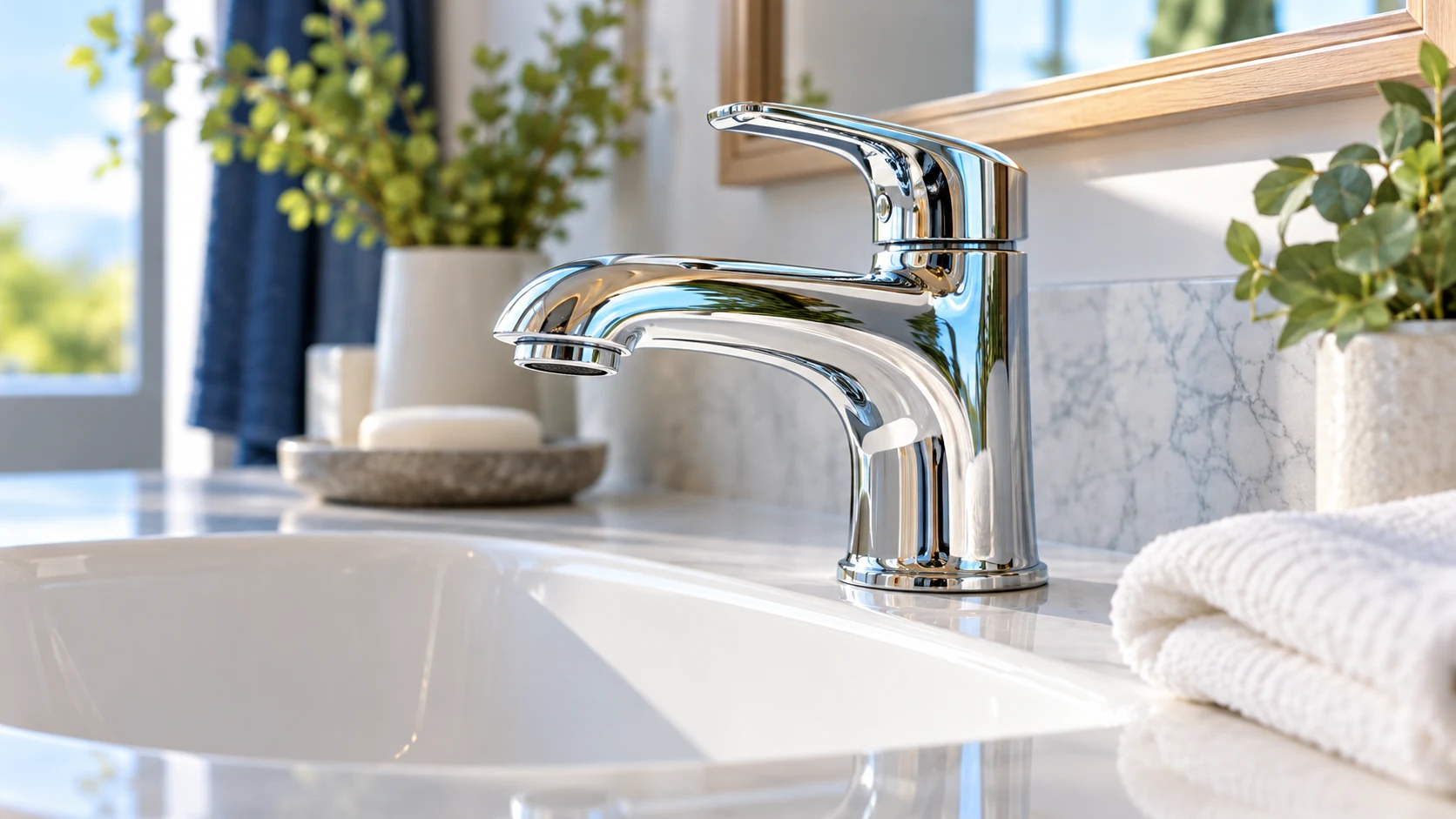
Wipe an intact chrome faucet with a soft damp cloth, using a small amount of manufacturer-approved mild cleaner when needed. Remove residue and dry the fixture with a fresh soft cloth. This handles many fingerprints, splashes and ordinary soap marks without an abrasive polish. A hard mineral crust needs finish-specific guidance rather than a long acid soak.
Confirm the finish and condition
Check the faucet's model and finish name. A silver-colored surface may be chrome, stainless steel, nickel or a coated finish. Look for a special spot-resistant treatment and check whether the handles include acrylic, painted inserts or electronics. Each added material can have separate limits.
Inspect around the spout, handle and base before cleaning. Pitting, flaking or a worn patch may expose material beneath the chrome. Do not try to scrub that patch back to silver. A faucet that drips, rocks at its mount or sprays from a joint needs a plumbing assessment in addition to exterior cleaning.
Supplies
- A soft, nonabrasive cloth for washing and another for drying
- Clean water and mild cleaner approved for the particular finish
- A separate cloth for the sink or counter
- Gloves if required by the cleaner and protection for nearby sensitive stone
Clean the visible surfaces
1. Clear the area and check what was used previously. Rinse away residual cleaning product as its label directs before introducing anything else. Never layer a new cleaner over unknown residue. Keep all containers labeled and use only one cleaning product at a time.
2. Start with the damp cloth on the top and sides of the spout. Lift light fingerprints and fresh splashes gently. Work toward the handle and base, changing to a clean cloth face as it picks up soil.
3. Where soap residue persists, apply the approved mild cleaner to the cloth. Clean around the base with its soft folded edge. Do not push a metal tool under the faucet or into a seam. Keep product away from sensor windows and openings unless the model instructions expressly cover them.
4. Remove cleaner with clean water using a fresh damp cloth or the method specified by the maker. Pay attention to the underside of the spout and the rear of the base, where residue can be missed. Avoid flooding the counter or leaving runoff against stone.
5. Dry the chrome and nearby surface thoroughly with separate clean cloths. Inspect the fixture in good light after drying. Turn the faucet on briefly for normal use only if appropriate, then note any persistent leakage for the property manager.
Avoid making a dull spot
Skip steel wool, scouring sponges, abrasive powders and metal-polishing products unless the exact finish instructions permit them. Do not use toilet-bowl cleaner on the faucet. Do not wrap it in vinegar-soaked towels or leave a descaler on for an improvised period. A mild product can still cause trouble when used too strong or left too long.
If spots remain
First distinguish a fresh drying mark from a raised mineral deposit. A second gentle cleaning with a clean cloth may resolve residue; persistent scale needs the manufacturer's approved treatment. If the surface is pitted or plating is peeling, ask the faucet supplier or a plumber about repair or replacement. More cleaning cannot replace missing metal finish.
Maintain the finish
Dry fresh splashes and report recurring drips that keep the base wet. Keep faucet cloths separate from toilet-cleaning tools. JLV provides a place to start planning office and business cleaning in Orange County, Chino and Ontario, California. Discuss your washroom cleaning needs at /contact/.