
Exterior & outdoor cleaning
How to Clean a Small Bird-Dropping Spot Outdoors
Quick answer
For one small, isolated dropping on an accessible outdoor hard surface, avoid direct contact and avoid creating airborne dust. Gently dampen the spot, lift it with disposable material, then clean the surface by its approved method. Never dry sweep, brush, vacuum with a household machine or pressure-wash bird waste.
Before you start
This guide excludes accumulations, nesting or roosting sites, bat droppings, enclosed spaces, overhead work, porous furnishings and contaminated soil. People at higher risk from infection, including those with weakened immune systems, should avoid this cleanup and seek suitable help. CDC advises using specialists for large amounts of bird or bat droppings.
Supplies
- Disposable gloves, washable clothing and closed footwear; avoid contact with the face or mouth.
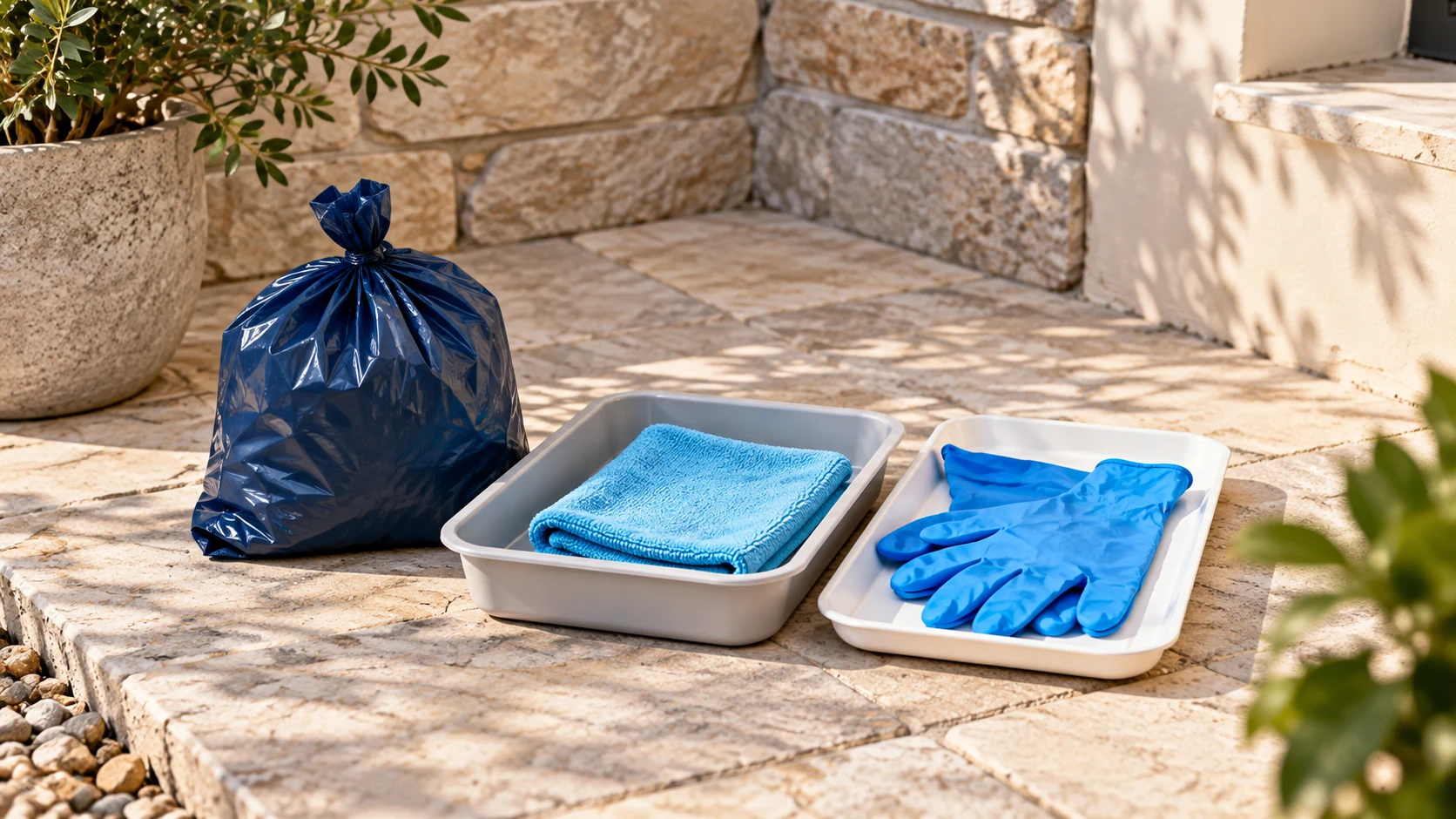
- Disposable absorbent material, a small amount of clean water and a sealable waste container or bag accepted by the local disposal route.
- A surface-compatible cleaner used according to its label, additional clean cloths and access to handwashing.
Step-by-step method
- 1. Assess the area before approaching. Confirm there is only a small isolated spot and no larger deposit above or nearby. If the spot is beneath an active roost, around ventilation equipment or mixed with unknown material, leave it undisturbed and ask the property manager for specialist advice.
- 2. Keep people and pets away from the immediate area. Work from stable ground in calm conditions and protect nearby clean surfaces. Do not move the job into a sink used for food or personal washing, and do not carry a contaminated cushion through the building.
- 3. Put on gloves and gently lay damp disposable material over the spot to soften it without spraying a mist. Use only enough moisture to prevent dust and allow lifting. If the material will not loosen without scraping or force, stop rather than changing to a high-pressure method.
- 4. Lift the dampened material carefully with disposable cloths or paper, folding contamination inward. Place it directly into the prepared waste container. Avoid squeezing, flicking or spreading residue over a larger area. Do not touch the waste with bare hands.
- 5. Clean the remaining small mark using the hard surface’s approved cleaner and label instructions. Apply it in a controlled way rather than spraying overhead. Keep liquids contained and out of storm drains. Do not combine cleaning chemicals or assume ordinary cleaning makes the area sterile.
- 6. If disinfection is appropriate, confirm a compatible registered product and follow its full label, including any required precleaning, wet contact time and rinse. Do not invent a dilution or claim that this eliminates Histoplasma: CDC reports no EPA-registered products specifically effective against it or registered as soil disinfectants. A household product is not a substitute for specialist contamination control.
- 7. Seal and dispose of waste according to applicable local requirements. Remove gloves without touching the contaminated outside, then wash hands thoroughly with soap and water. Launder clothing if contaminated, and clean reusable tools only through a suitable, controlled method.
Check the result and avoid common mistakes
- A pressure washer can spread contamination. A small visible stain does not justify aerosolizing the material.
- Do not use a household vacuum on dry droppings or rely on a face covering as permission to tackle an accumulation.
- Keep stain removal separate from safety. A permanent mark may remain even after the removable material is gone.
Keep it easier next time
Watch for repeat spotting from a safe distance and have the property manager investigate recurring roosting with a suitable wildlife professional. Do not remove active nests or seal wildlife into a structure. Changing where outdoor furniture is placed may reduce contact while the underlying issue is assessed.
When to stop
Stop for multiple deposits, old dusty buildup, bats, sick or dead birds, height access, enclosed space or uncertainty about personal risk. Seek medical advice if symptoms develop after a concerning exposure and mention that exposure. This guide makes no claim that JLV provides hazardous-waste or bird-contamination removal.
A practical next step
For business and office cleaning or post-construction cleaning in Orange County, Chino or Ontario, California, contact JLV Cleaning and Maintenance to discuss your space at /contact/.