
Stone cleaning
How to Clean Slate Tile Floors
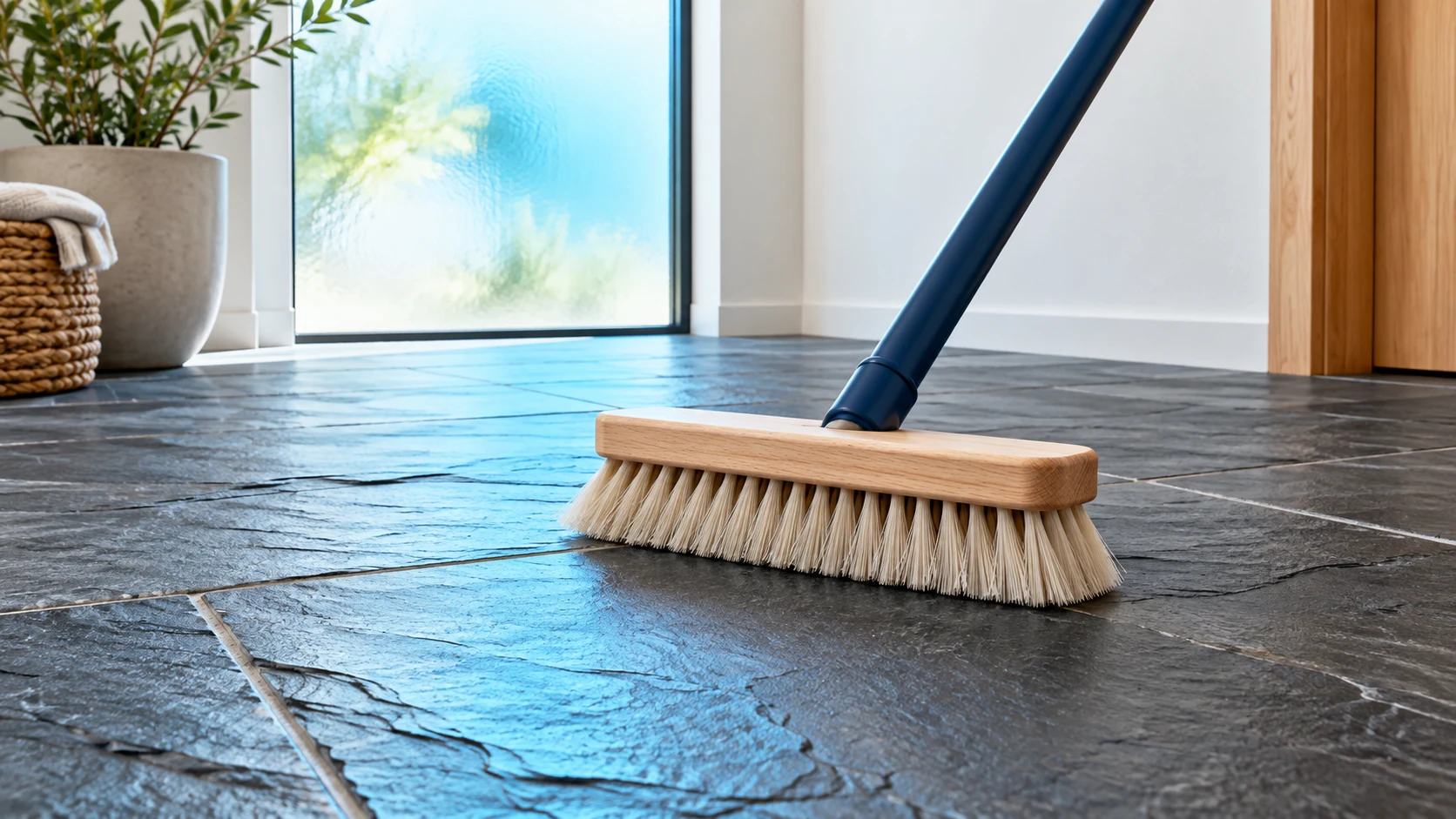
Slate floors clean best when you identify the finish first, lift loose grit from the uneven surface and use a compatible neutral stone cleaner. Recover the dirty water and inspect only after drying. Trying to make every slate floor shine can create an unnecessary coating problem.
Find out what is on the slate
Natural slate can have a cleft, uneven surface or a smoother finish. Some floors also carry an enhancer, topical coating or other treatment. The cleaner has to suit both the stone and that treatment. Start with installer records, the original supplier or the last maintenance invoice.
Do not assume a glossy patch is dirt or that a pale patch needs oil. It may be worn coating, residue, moisture or a difference in the stone. Photograph the dry floor in ordinary room light before testing. Note any flaking, loose pieces or sharp edges and keep traffic away from unsafe areas.
Supplies
- Neutral stone cleaner approved for the identified slate and coating
- A vacuum with an intact non-scratching floor attachment
- Soft microfiber cloths or pads, clean water and absorbent towels
- A soft brush if permitted for the finish; cleaner-label protective equipment and wet-floor control
Clean in small zones
1. Remove rugs and movable objects. Examine rug backings for trapped grit, dampness or staining. Clear the route to the exit so you can work without dragging furniture across a wet stone floor.
2. Vacuum ordinary loose dirt slowly. Let the attachment reach the clefts without catching or striking raised edges. Avoid a damaged wheel or rotating brush that knocks against the surface. Do not use this approach for unidentified hazardous dust.
3. Test the cleaner and tool together in a hidden zone. Follow dilution and contact-time instructions, recover the liquid, rinse as required and let the test dry. Check whether the existing coating has become sticky, cloudy or uneven.
4. Apply the approved solution to one manageable section. Wipe the broad faces, then work gently into shallow low points with a permitted soft brush. Keep hard tool edges away from raised stone edges and grout.
5. Collect dirty liquid before it dries. A second clean cloth is often more useful than another dose of detergent. Use fresh rinse water where required and remove it, rather than leaving pools in the natural texture.
6. Let the section dry fully before moving rugs back. Compare the cleaned area with your photograph. Check corners and transitions where a mop may leave a concentrated line of residue.
Avoid changing the floor by accident
Vinegar, harsh descalers, oil soap and general floor polish are not routine slate-care substitutes. An unapproved coating can change the appearance and complicate future care. Do not strip an unknown finish because one patch looks dull.
Stop if the surface flakes under gentle wiping, a coating transfers to the cloth or a mark persists without improvement. Ask the stone supplier or a restoration professional to distinguish soil from wear, moisture or a failed treatment. Cleaning cannot stabilize a loose tile or repair the source of recurring dampness.
A practical maintenance rhythm
Remove tracked-in grit frequently, blot spills and wash only as often as the actual soil requires. Keep product names with the property records and check beneath mats periodically. JLV can discuss business and office cleaning in Orange County, Chino and Ontario, California. Share the slate’s care information and your priorities through /contact/.