
Floor & carpet cleaning
How to Clean Sealed Concrete Floors
Quick answer
Clean sealed concrete according to the sealer or coating, not simply the concrete underneath it. Remove loose soil, test an approved cleaner, use gentle equipment, and recover the liquid. If the coating peels, turns soft, or remains cloudy, stop and have the installer assess it before trying stronger chemicals.
Identify the surface layer
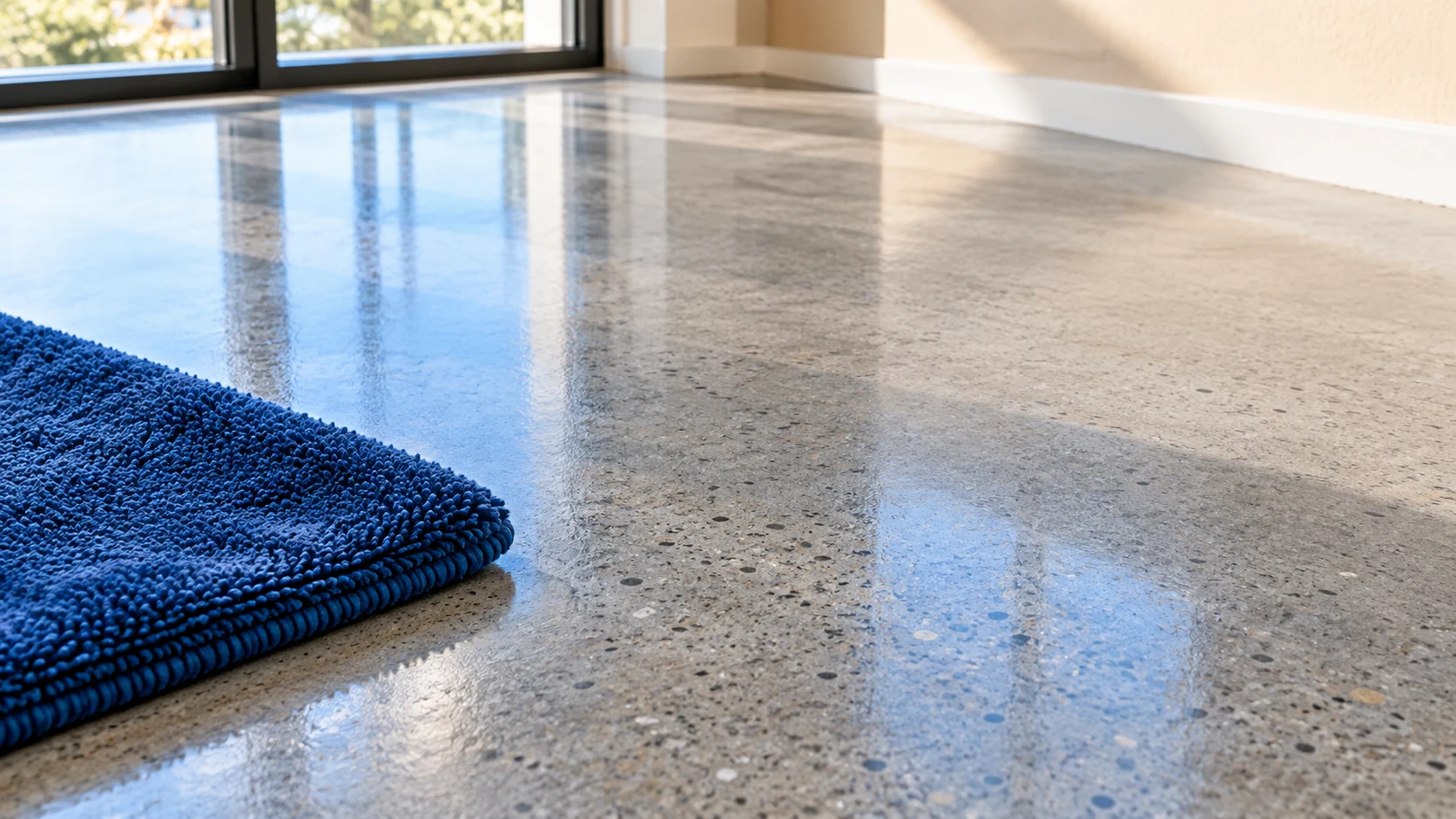
This guide covers concrete with a topical protective layer, such as an acrylic sealer, epoxy, or polyurethane coating. Penetrating treatments and mechanically polished concrete require their own care plans. These systems are not interchangeable. Find the installation record, product name, cure requirements, and care instructions. A floor that feels dry to the touch may still be within a new coating's restricted-use period.
Ask whether earlier cleaners added a wax or maintenance film. That history matters when a floor becomes sticky or patchy. If nobody knows what is on the floor, limit initial work to safe removal of ordinary loose soil and request guidance. Do not use a solvent test to identify the coating.
Supplies and limits
- Soft dry-soil removal equipment suitable for the floor
- Cleaner approved by the sealer or coating manufacturer
- Measuring equipment if dilution is required
- Clean soft pads, absorbent cloths, and the specified rinse or recovery setup
- Barriers and an alternate route for occupants
This method is not for fuel, chemical, sewage, or hazardous-dust cleanup. Keep those areas isolated and notify the responsible site manager. Likewise, do not grind, sand, acid-wash, or strip a floor as part of ordinary office cleaning.
Clean without working against the coating
Start by inspecting the floor in good light. Note peeling edges, scratches, bubbles, cracks, and spots that are already a different color. Check door thresholds and the area under movable mats for trapped water or debris.
Remove dry grit before bringing a damp tool onto the surface. Use a clean attachment so embedded debris cannot score the coating. Lift manageable objects instead of dragging them; arrange help where moving furniture would strain the worker or damage the floor.
Follow the cleaner's dilution exactly and make a small test in a discreet area. Let the patch dry. Continue only if the coating retains its normal color, texture, and firmness. A test that still feels tacky is a reason to stop, even if the visible soil has disappeared.
Work in small sections from the far side toward the exit. Use light pressure and change pads when they collect dirt. Recover dirty liquid rather than leaving it to evaporate into a film. Rinse when the product requires it, using controlled moisture around cracks and edges.
Keep foot traffic away until the area has dried and been inspected. If the floor remains unusually slick, reopen nothing until the cause has been investigated and corrected.
Read the clues before treating again
A milky patch can have several causes, including a coating or moisture problem. A dark mark may be below the protective layer. Neither appearance justifies an automatic second round with a stronger product. Record when the mark appeared, what was spilled, and what cleaning was already attempted.
If an approved gentle clean produces no improvement, the next step is manufacturer or installer advice. Cleaning cannot reliably restore missing coating, repair a crack, or resolve moisture traveling through the slab.
Make the routine repeatable
Keep the sealer's care guide with the building records and label approved supplies clearly. Inspect recurring wet spots and replace damaged mats promptly. JLV can discuss office cleaning in Orange County, Chino, and Ontario at /contact/, with your floor's care limits included in the plan.