
Glass & window cleaning
How to Clean Glass Shower Doors
The quick answer
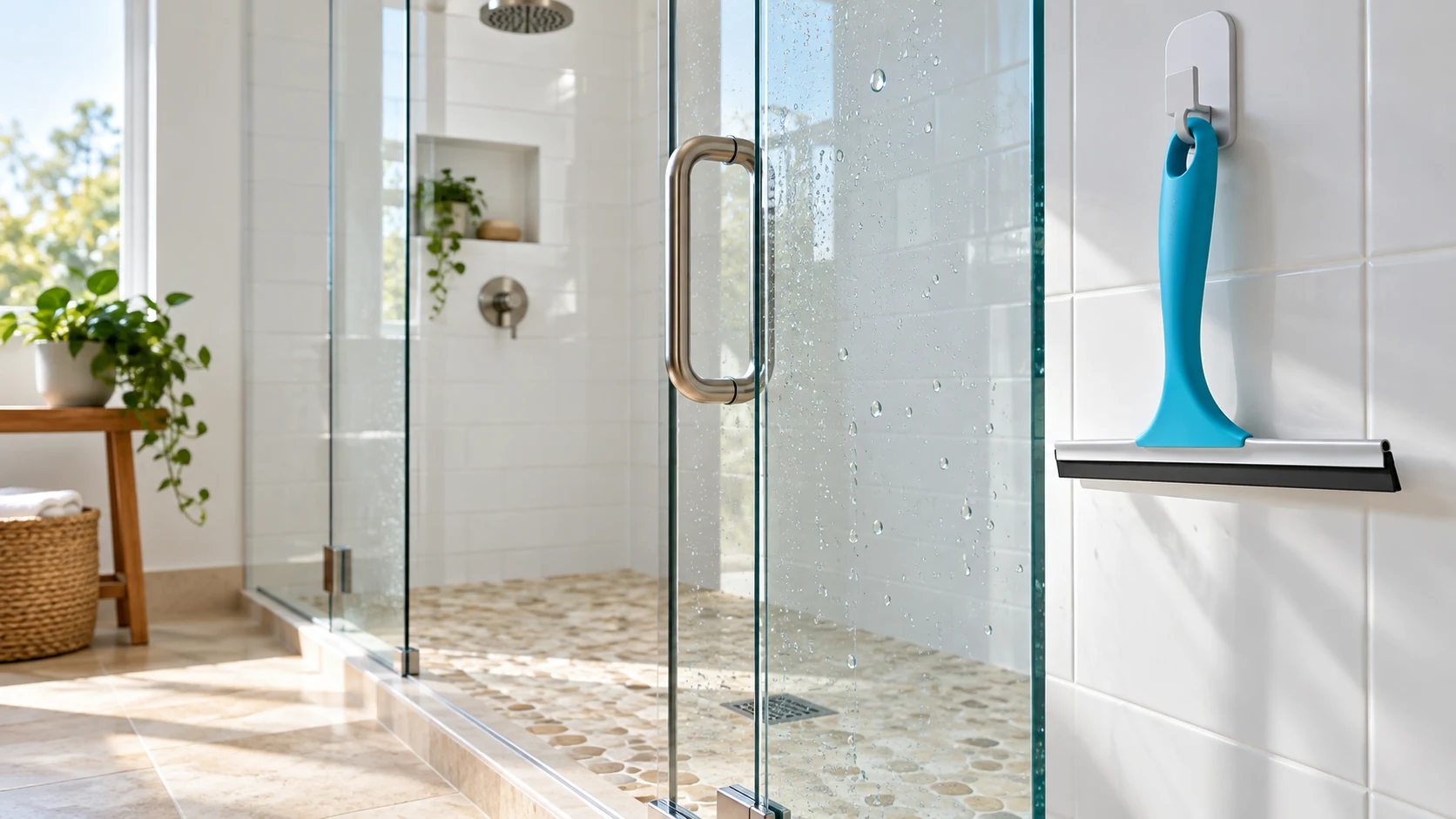
Clean a glass shower door with a product approved for its coating and the surrounding materials, using a soft applicator. Rinse as directed and remove the water with a clean squeegee or soft cloth. Soap film and mineral deposits may require different treatment. Start with routine cleaning instead of immediately reaching for the strongest descaler.
Identify glass, coating and neighboring surfaces
Find the door's manufacturer and any protective-coating information. Safety-tempered glass still needs careful cleaning; its safety designation is not permission to scrape it. A coating approved for one named cleaner does not establish that the cleaner is suitable for every shower door.
Look at the full assembly: stone wall tile, metal handles, seals and the shower base may be less chemically tolerant than the glass. Inspect for chipped edges, loose hinges or glass rubbing against hardware. Stop and arrange assessment if any of those conditions are present. Do not try to adjust the door as part of cleaning.
Supplies
- Soft nonabrasive cloth or sponge approved for the door
- Glass or shower cleaner permitted for the exact coating
- Clean rinse water and a clean rubber squeegee if permitted
- Dry towels and any gloves or ventilation required by the cleaner label
Clean in manageable sections
1. Remove bottles and loose items from the work area. Make sure the floor is stable and not slippery. Read the cleaner label and the glass instructions together, including exclusions, application method, contact time and rinsing. Use one product at a time.
2. Gently rinse or dampen the glass as allowed to release loose surface dirt. Do not force spray at a hinge, seal or door gap. Inspect the applicator for trapped grit before making contact with the pane.
3. Test a small area using the complete method: apply, wait only as directed, rinse and dry. Compare clarity and sheen before continuing; stop for any change. After a successful test, clean manageable sections with light pressure and the same contact time. Control runoff and do not wrap hardware in soaked paper towels.
4. Rinse away loosened soil and cleaner completely as directed. Work around the lower edge with a soft cloth, keeping fingers away from pinch points. Avoid levering under seals or poking tools into a track.
5. Remove remaining water and dry accessible edges. Check the door from outside the shower after it dries. Inspect the lower section separately; it often shows residue that looked invisible when wet. Put supplies away and leave the floor dry before normal use resumes.
Avoid these shortcuts
Do not use a razor, abrasive pad or polishing powder on unknown shower glass. Avoid generic vinegar soaks, toilet-bowl cleaner and strong acid mixtures. A product suitable for a toilet or tile grout may damage the door, nearby stone or metal. Never combine bleach, descaler or other cleaning products, and do not apply a second cleaner over residue from the first.
When a white mark remains
Repeat a small, approved routine-cleaning test once with a fresh cloth. If a crust remains, ask the glass maker which mineral-removal product matches the coating. If the mark appears permanently etched or the glass has scratches, further scrubbing may only add damage. A glazier or coating specialist can distinguish a cleaning issue from a repair issue.
Reduce the next buildup
Remove standing droplets after use and keep the room ventilated. Address dripping fittings or failed seals with the appropriate maintenance provider. For routine office or business cleaning in Orange County, Chino and Ontario, California, talk with JLV about a sensible scope at /contact/.