
Bathroom cleaning
How to Clean a Porcelain-Enameled Bathtub
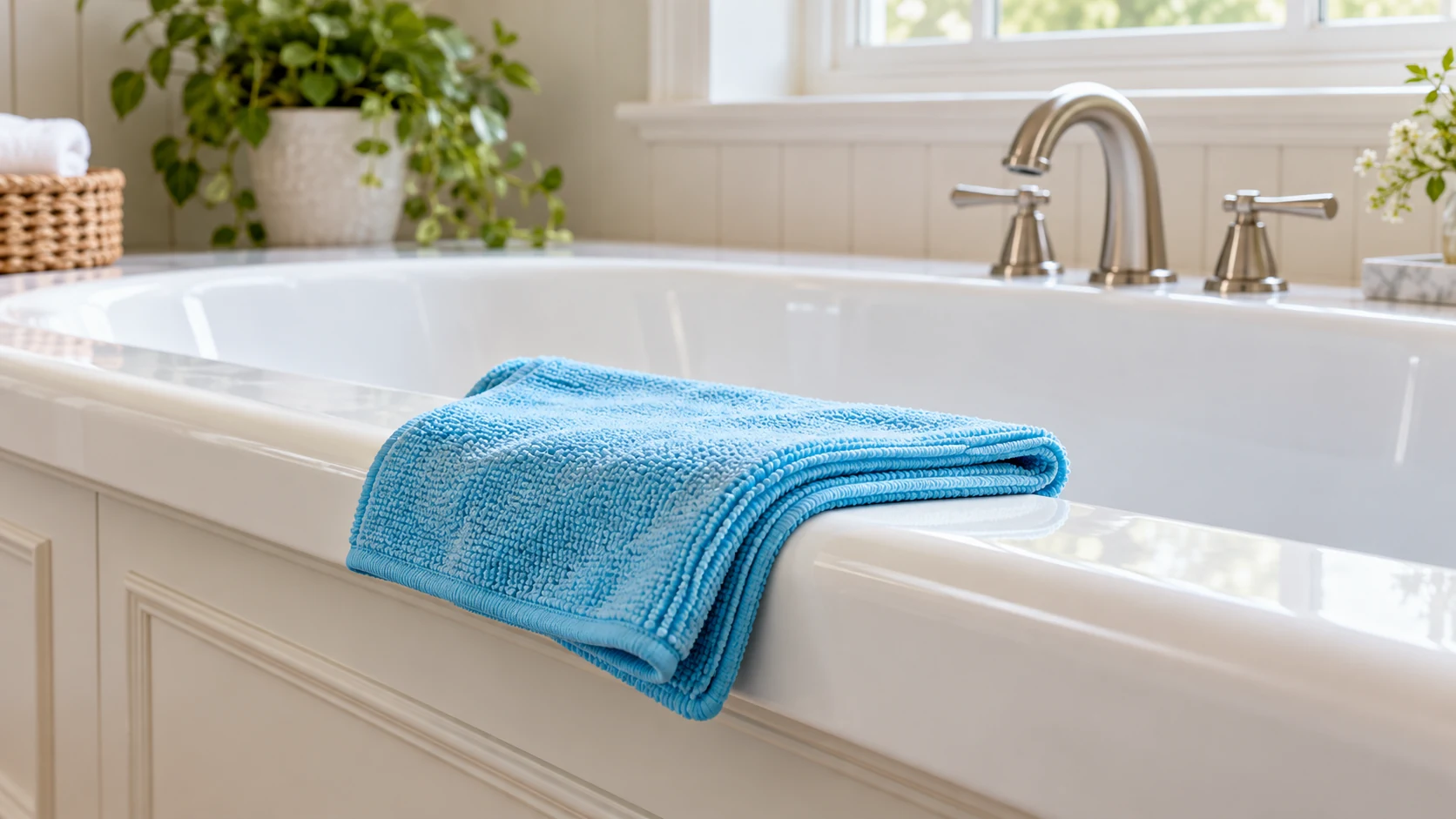
Clean a porcelain-enameled bathtub with a suitable mild nonabrasive cleaner and soft tools, then rinse and dry. Inspect chips before treating rust-colored marks. If the enamel is missing and metal is exposed, cleaning alone will not restore the protective finish.
Verify the tub’s finish
Porcelain enamel over steel or cast iron is different from a ceramic sink, an acrylic tub or a spray-applied refinishing coating. Find the tub model and any repair history. If the tub has been refinished, the refinisher’s instructions govern the new coating.
Also identify a factory slip-resistant standing surface, decorative feet and metal fittings. Each may have different care requirements. Do not assume that a cleaner approved for a smooth sidewall is appropriate for the textured bottom or faucet.
Supplies
- A mild liquid cleaner approved for that enameled bathtub
- Soft cloths or a nonabrasive sponge and clean rinse water
- A soft nylon brush only if approved for the bottom texture
- A drying towel, label-required gloves and eye protection, and ventilation
Work around the waterline
1. Remove toiletries and movable accessories. Clear loose hair and debris. Lift items rather than sliding metal containers over the enamel, and inspect the tub for chips or cracks under good light.
2. Rinse away loose particles with a gentle flow of water. Check that the drain is clear enough for the planned rinse. If a drain cleaner has been used, follow its instructions before any other cleaning and avoid adding an incompatible product.
3. Test the selected cleaner discreetly. Follow application and contact-time directions, rinse and dry. A small safe test is more useful than starting with a powerful cleaner over the entire bathtub.
4. Wipe the upper rim and sidewalls in short sections. Use light repeated strokes along the waterline. Change to a clean cloth face whenever it picks up residue, and prevent product from lingering on unapproved metal trim.
5. Clean the bottom using the maker’s method for any slip-resistant treatment. Do not use a buffing machine or rough pad to force a uniform shine. Kohler’s enameled-bath guidance warns that improper cleaning can damage its slip-resistant surface.
6. Rinse the tub thoroughly, including corners and the drain surround. Remove splashes from the outside floor. Dry with a soft towel and inspect the surface under normal light before putting accessories back.
Handle persistent marks carefully
A deposit sitting on intact enamel, a metal transfer mark and rust from an exposed chip are separate problems. Ask the manufacturer to identify a remaining mark and recommend a product-specific treatment. Supply a close photograph and a wider one showing its location.
Do not use toilet-bowl cleaner, an overnight acid soak, a metal scraper or steel wool. Avoid treating every stain with an abrasive powder simply because the finish feels hard. The safest general routine preserves the existing enamel while you establish what the mark actually is.
Know when washing should stop
Stop for spreading rust at a chip, peeling recoating, cracks, sharp damage or water leaking around the tub. A qualified repair specialist or plumber can assess those problems. Do not conceal them with a new coating or caulk applied over wet damaged areas.
Rinse ordinary residue promptly, keep toiletries from leaking onto the rim and inspect sealant while drying. For workplace washroom care as part of business or office cleaning in Orange County, Chino and Ontario, California, contact JLV through /contact/ to discuss the routine and its boundaries.