
Bathroom cleaning
How to Clean an Acrylic Bathtub
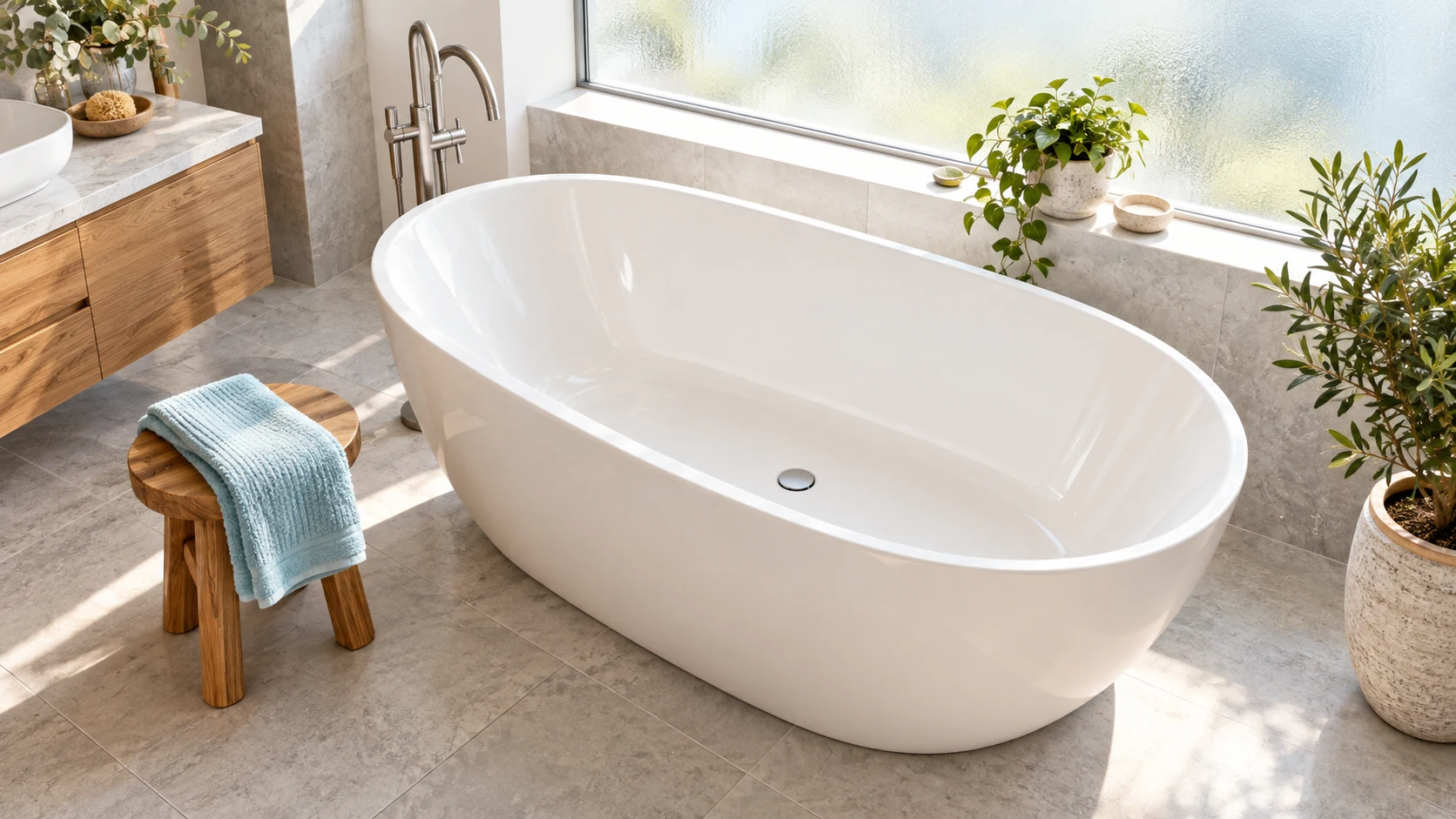
Clean an acrylic bathtub with an approved mild cleaner, a soft cloth or nonabrasive sponge, and a complete rinse. Avoid scrapers and rough pads. When the waterline needs extra attention, use patient, small-area cleaning rather than trying to grind the mark away.
Confirm acrylic and check its condition
Find the tub’s model information or original care guide. Acrylic, fiberglass gelcoat, porcelain enamel and refinished surfaces are different systems. Even an acrylic tub may have a separate slip-resistant treatment or attached components with special instructions.
Inspect the dry tub for cracks, lifting finish, damaged sealant and stains around fittings. Take a photograph of anything questionable before cleaning. A repaired or recoated area needs the repair provider’s care instructions. A crack or leak should be assessed before the tub is used again.
Keep the supplies simple
- A cleaner approved by the bathtub maker for its acrylic surface
- Soft cloths or a nonabrasive sponge, plus clean rinse water
- A soft drying towel and a stable place to keep the bottle
- Protective equipment and ventilation required by the cleaning product
Clean without scratching
1. Remove bottles, toys, bath pillows and removable mats. Follow the tub maker’s advice about mats and attachments. Lift hair and loose debris so they do not get pressed into the surface during wiping.
2. Rinse the tub gently to move remaining loose particles. Do not use very hot water or an unapproved steam tool. Keep the bathroom floor dry and work from a stable position outside the tub where possible.
3. Test the approved product in a discreet spot. Apply it as directed, rinse and let the spot dry. Check for dulling, color change or tackiness before using it over the rest of the tub.
4. Wipe the rim and upper walls first. Move around the tub in short sections, using fresh cloth faces. Keep runoff away from faucets, drains and other finishes unless their care guides also approve the cleaner.
5. Work on the waterline with light repeated strokes after the product’s permitted working time. Do not extend a soak beyond the label. If residue is lifting, finish that section, rinse it and reassess dry before deciding whether a permitted repeat is worthwhile.
6. Clean the bottom last. Follow any specific instructions for its texture or slip-resistant surface. Rinse away all loosened soil and cleaner, then dry with a soft towel. Check that no cleaner remains around the drain or in the texture.
Leave these shortcuts out
Kohler’s acrylic care instructions exclude abrasive cleansers and solvents. Do not use steel wool, scraping blades, paint thinner, acetone or an unapproved erasing pad to remove a stubborn mark. Do not apply wax or polish to a standing surface: appearance must not come at the expense of safe footing.
A persistent patch may be mineral buildup, transferred material, a stain or damage. Contact the tub manufacturer for a product-specific next step rather than borrowing advice meant for porcelain. Whirlpool jets and air systems have separate maintenance procedures; cleaning the shell does not service those internal systems.
Keep the tub easier to maintain
Rinse ordinary residue after bathing when the maker recommends it, wipe the waterline and let accessories dry. Check sealant while wiping instead of overlooking a recurring wet corner. For a workplace with washroom or shower facilities, JLV can discuss business and office cleaning in Orange County, Chino and Ontario, California. Start at /contact/.