
Office cleaning
Carpet Still Looks Patchy After Cleaning: Check Pile Direction Before Spot-Treating
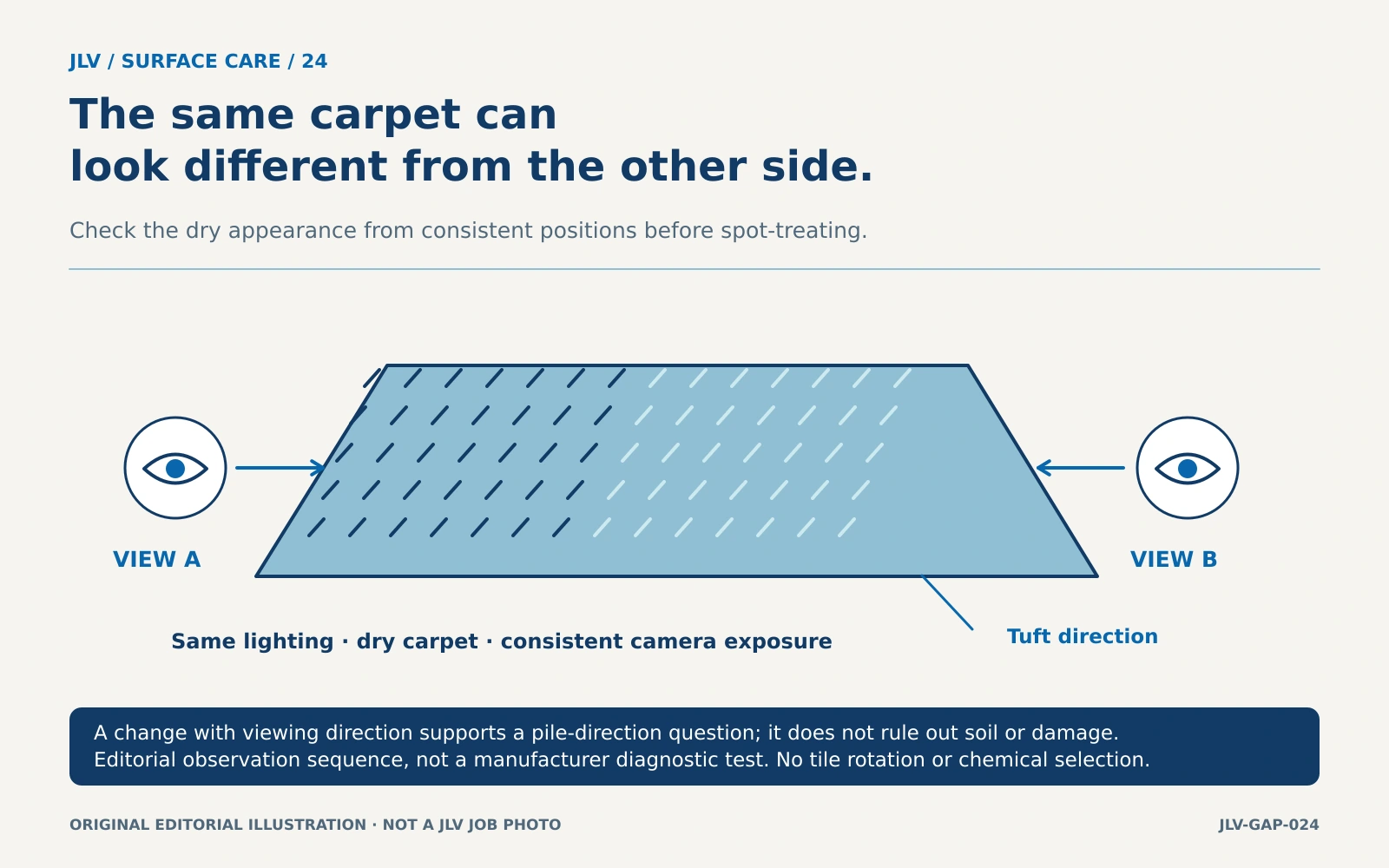
A carpet that looks patchy after cleaning may need a closer look before another spot treatment. On some cut-pile carpets, the direction of the tufts changes the way light reflects. A dark-looking area from one doorway may look lighter from the other side.
This is worth observing, especially when there is no known spill. It does not establish that the carpet is clean, undamaged or correctly installed. The goal is to gather better evidence before adding more moisture or chemicals.
Start with product and cleaning details
Confirm the carpet manufacturer, product line and construction, including whether it is cut pile, loop pile or a combination. Obtain the relevant care instructions and ask what the last cleaning involved. Record whether the patch existed beforehand, appeared during drying or became noticeable after furniture moved.
If the carpet is still damp, keep it protected and follow the agreed drying and reopening plan. Make an appearance comparison only when the carpet has dried as required. Persistent unexplained dampness needs separate attention; do not keep treating the visible patch while ignoring it.
A new installation also needs a review of the installation plan and product records. Do not lift or rotate tiles simply to see whether their appearance improves.
Understand the limited manufacturer example
Shaw's Caress residential guide explains that certain cut-pile constructions show shading because light reflects differently from tuft ends and sides. This explains why appearance can vary, but the guidance does not identify the cause of a patch on every commercial carpet. Shaw Caress care guide
Interface's commercial carpet guide notes that appropriate vacuuming can lift the pile, particularly cut pile, and emphasizes suitable equipment and technique. Use the actual installed carpet's vacuum recommendations rather than assuming any brush setting is acceptable. Interface carpet maintenance guide
Make a low-risk viewing comparison
The following observation sequence is an editorial way to organize those principles. It is not a manufacturer diagnostic test and cannot rule out soil, damage or a defect.
- Mark the viewing position in your notes, without attaching tape to the carpet. Take a wide photograph that includes fixed room features.
- Look at the same area from the opposite side while keeping the room lighting unchanged. Record whether the light-and-dark relationship appears to reverse or simply remains in place.
- If the product instructions permit it, have the cleaning operator vacuum the dry area using approved equipment and technique. Stop if the machine snags, pulls fibers or is difficult to move.
- Compare again from the original positions. Keep camera exposure consistent where possible so automatic adjustments do not create a misleading comparison.
Look at the carpet in person as well. A phone image is useful documentation, but one photograph cannot settle the cause.
Let the observation change the next step
If the apparent patch changes substantially with viewing direction or approved vacuuming, record that behavior before authorizing stain treatment. It supports asking whether pile direction contributes to the appearance. It does not mean all discoloration or soil has been excluded.
If the area remains visibly different, record its boundaries and any known spill history. A fixed patch may need a carpet-specific assessment; the observation alone does not justify choosing a chemical.
If there is a known recent ordinary spill, follow the installed carpet's approved spill procedure promptly rather than delaying solely for photographs. For an unidentified residue or persistent post-cleaning mark, ask the responsible cleaning provider to review the previous treatment first.
Stop repeated spot treatment when there is no established removable substance to target. Fraying, pulled tufts, unexplained color loss, seam changes or persistent distortion should be documented for the owner and carpet supplier. Avoid improvised heat, sharp grooming tools or aggressive brushing.
Set a realistic acceptance discussion
At the walkthrough, review the carpet from agreed positions and lighting. Keep the before-cleaning record, dry-condition photographs and trial observations together. Ask whether additional cleaning has a supported purpose or whether the appearance question belongs with the carpet manufacturer.
For an office-cleaning discussion, contact JLV with the carpet details and the concern. Describe the desired cleaning outcome without assuming that every difference in shading can be removed.