
Office cleaning
What to do when cleaning reveals a slow water leak
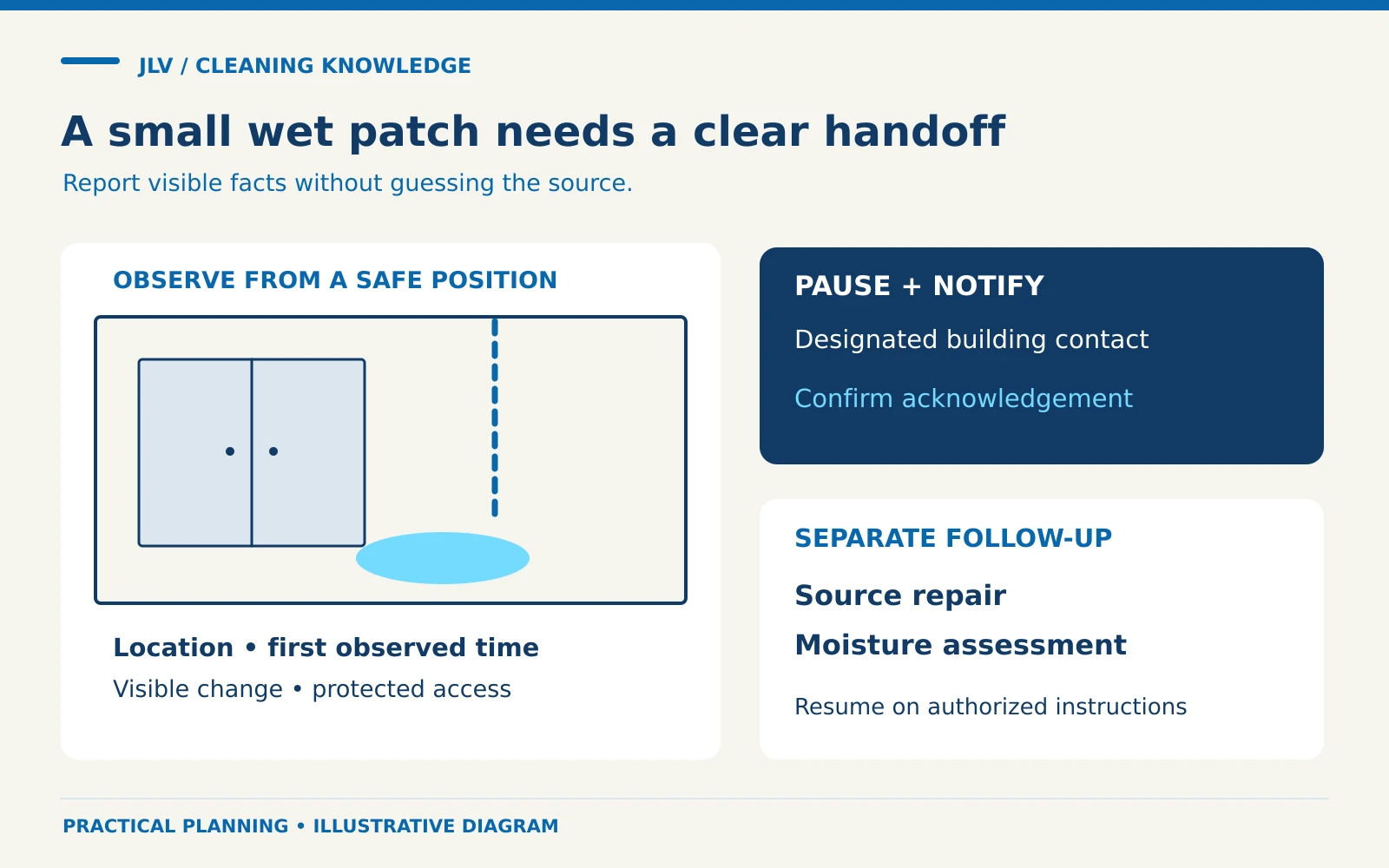
When cleaning reveals a slow water leak, pause work in the affected area and notify the building’s designated contact promptly. A small puddle can be easy to remove while the source continues wetting materials behind or beneath it. The immediate goal is to protect access and give the repair decision-maker useful information.
Avoid assuming the water came from mopping, a loose pipe, condensation, or a roof leak. Describe what is visible and what changed. Repair, drying assessment, and any remediation need their own authorized response.
Check whether ordinary reporting is enough
From a safe position, look for circumstances requiring the site’s urgent incident procedure: water reaching electrical equipment, a bulging ceiling, rapidly spreading water, suspected sewage, or unsafe access. Keep people out of the affected area and contact building management or emergency responders as the situation requires. Do not enter standing water to inspect equipment or operate switches.
If there is no immediate danger, protect the affected walking route using the site’s established controls. OSHA requires walking-surface hazards to be corrected before employee use, or guarded when immediate correction is not possible. A warning sign alone may not prevent access to the hazard. OSHA walking-working surfaces.
Record observations before changing the scene
Note the discovery time, exact location, and visible extent. Useful landmarks include a sink cabinet, wall joint, doorway, or numbered room. Take photographs only where site rules allow, keeping people, screens, and confidential documents out of the frame.
Record whether water is actively dripping, whether the patch has returned, and whether nearby materials look stained, swollen, or damaged. If timing is unknown, write “first observed at 7:10 p.m.” rather than claiming the leak began then. Do not open walls, lift installed flooring, or move heavy equipment to search for a source.
Stop adding cleaning water nearby. If routine pickup of a small, known, nonhazardous spill is within the approved scope and safe conditions, the authorized crew can follow its established procedure. That action does not establish that concealed materials are dry or the leak is repaired.
Send a report that prompts a decision
Use this short report:
- Location and discovery time: ____
- Visible condition and approximate affected area: ____
- Active dripping or repeated wetting observed: ____
- Nearby electrical, ceiling, access, or contamination concerns: ____
- Work paused and access controls in place: ____
- Photographs available under site rules: ____
- Contact notified, time, and acknowledgement: ____
- Requested next step and responsible person: ____
For example: “At 7:10 p.m., water was visible along the back edge of the second-floor utility cabinet. The floor patch returned after routine pickup. We paused cleaning in that corner and protected the route. Please arrange a source inspection and advise whether the cabinet area remains closed.” This gives facts without diagnosing a plumbing failure.
Give moisture follow-up a separate owner
Ask management who is arranging repair, who will assess affected materials, and when the crew should expect an update. EPA recommends fixing leaks promptly and cleaning and drying wet or damp areas within 48 hours. This is a prompt-response goal, not a waiting period or proof that every material can be saved. EPA commercial-building moisture guidance.
If suspected mold, contaminated water, or building-material damage is present, leave evaluation and the appropriate response to qualified personnel. Do not add disinfectant, fragrance, or a stronger cleaner as a substitute for investigating the source.
If the first contact does not acknowledge the report, use the site’s documented escalation contact. A message sent to an unattended inbox should not be treated as a completed handoff.
Resume on clear instructions
Before returning to ordinary cleaning, obtain the authorized contact’s decision about access, remaining drying work, and surface-care restrictions. Record any area still excluded from service. A cleaning crew’s visual check cannot certify hidden assemblies as dry.
At the next agreed visit, report renewed wetting or a change in the affected area. Close the cleaning incident only when its assigned actions and reporting are complete; keep any repair or drying follow-up visible to its owner until that work is resolved.
For the ordinary cleaning responsibilities that remain before and after this task, use the office responsibility checklist. Include the confirmed business-cleaning areas and access limitations when requesting a JLV quote.