
Office cleaning
How to separate urgent cleaning incidents from routine requests
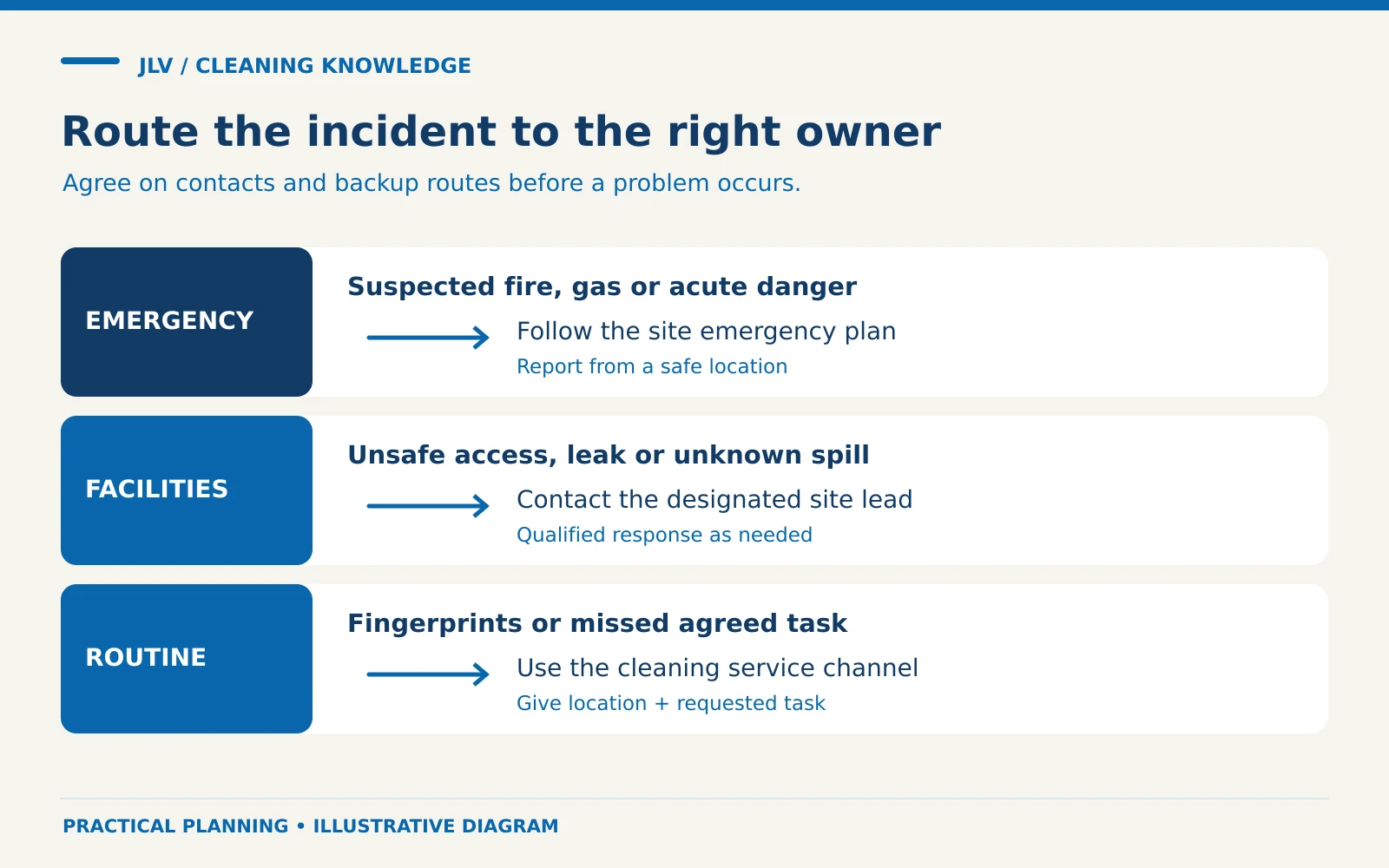
The person who spots a cleaning problem should not have to guess whether to email the cleaner, call facilities or trigger an emergency response. A simple routing plan separates routine requests from conditions that need immediate attention. Agree on that plan before an incident, using the building's actual emergency procedures and contacts.
Make emergency routing the first branch
Suspected fire, gas release, dangerous chemical exposure or a medical emergency belongs in the site's emergency process. Leave an unsafe area and contact the appropriate emergency responder from a safe location. A routine quote form, voicemail or social-media message is not an emergency channel.
For suspected natural gas leaks, follow the utility's instructions to leave immediately and call from a safe place. Do not investigate by operating equipment or repeatedly entering the area. SoCalGas emergency information
Separate urgent facilities conditions
A spreading leak, an obstructed exit, unstable debris or an unidentified spill may require building management to restrict access and arrange a qualified response. The fact that a condition looks dirty does not establish that an ordinary cleaning crew should handle it.
OSHA's general walking-working surface standard calls for safe conditions and correction of hazards before employee use, or guarding the area when immediate correction is not possible. Use that as a reason to have a site-specific response plan, not as a claim that a cone alone solves every hazard. OSHA walking-working surfaces
Do not touch an unknown substance, sharps, suspected contaminated material or exposed electrical equipment. Notify the authorized site contact and follow their instructions. Specialist work must be assigned to people with the appropriate training, equipment and scope.
Identify ordinary cleaning requests
Examples include fingerprints on a glass door, a missed reachable shelf or a waste bin that needs its agreed collection. Give each request a room, task and reasonable desired date. State whether the issue falls inside the existing agreement or may need an additional quote.
A visible coffee spill in a walking route may need prompt control even though the material is familiar. The office should use its established spill procedure and designated trained person rather than leave it until the next scheduled visit. Urgency depends on the situation and exposure, not just the substance's name.
Create three clear contact routes
Your routing sheet can use these headings:
- Emergency: follow the building emergency plan; identify the emergency contact method and safe reporting location.
- Urgent facilities concern: contact the building's designated responsible person; report access restrictions and whether a qualified responder is needed.
- Routine cleaning: submit a location-specific ticket through the agreed service channel; identify the next planned visit and approval contact.
Add a backup contact and a rule for what happens when nobody answers. Do not invent a provider response time. Obtain the actual available hours and agreed escalation route from each responsible organization.
Practice with a short example
Imagine a shared office finds dusty window ledges, water dripping near a powered floor outlet and a loose shipping carton in the hallway. The ledges become a routine task. The water-and-electrical condition goes to the site's urgent or emergency procedure as appropriate, with people kept clear. The carton is reported for prompt safe removal by the person responsible for that route. Combining all three into “please clean the hallway” loses the information that matters.
Record handoff and closure
For each incident, record the location, observation time, what was reported, who accepted it and the next action. Avoid unnecessary personal information or photographs of injured people. Mark the issue resolved only after the responsible person confirms the required work and access decision.
JLV's business cleaning and post-construction cleaning can be discussed through an ordinary quote request. This article does not advertise emergency, hazardous-material or biohazard response. Use the office responsibility guide to agree on the boundary before a problem occurs.