
Space and astrophysics
Viking Lands on Mars and Asks What Clean Really Means
Historical event:
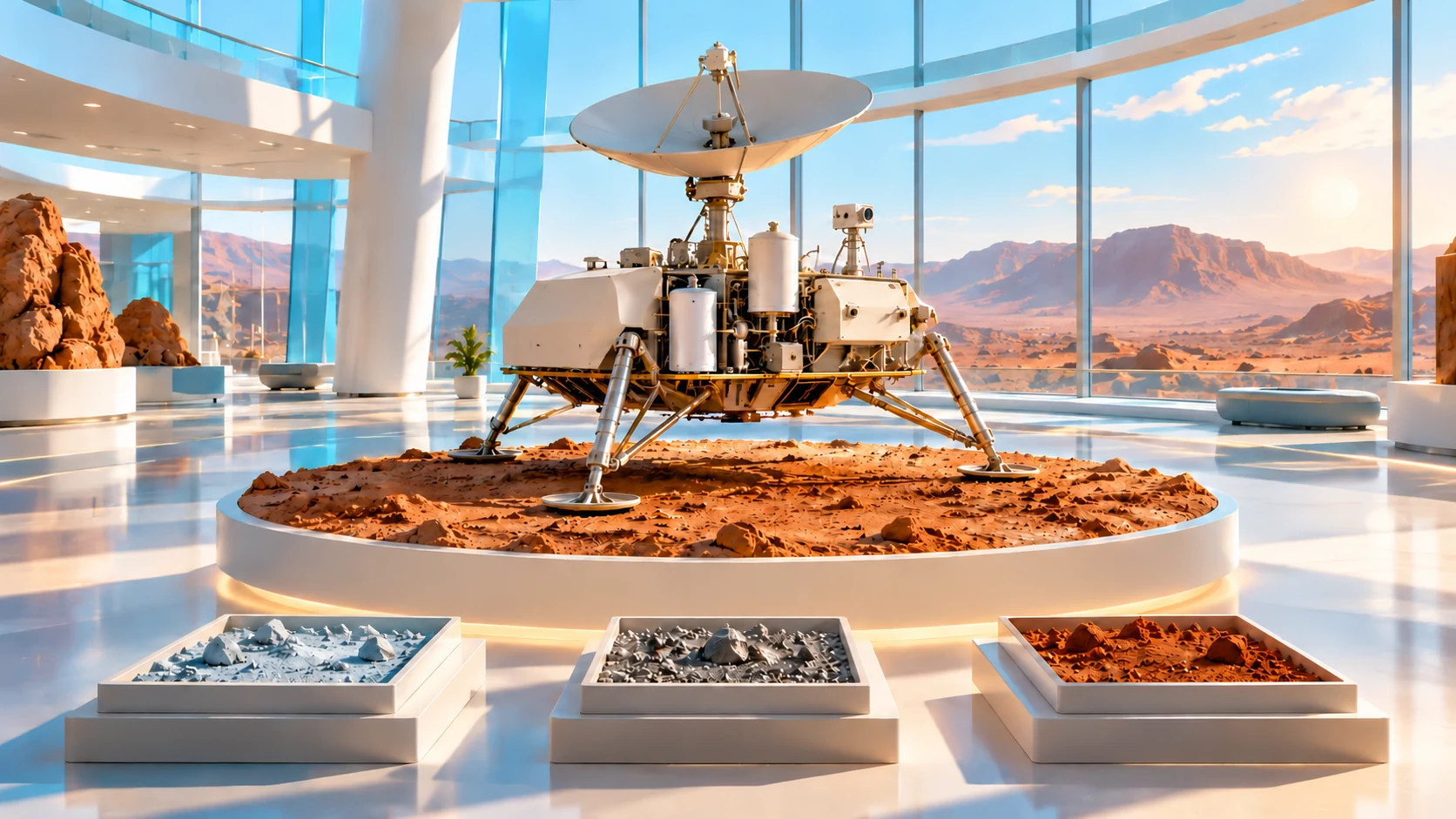
On July 20 in 1976, Viking 1 landed on Mars. Its cameras began returning a view from the surface, while onboard experiments prepared to investigate a question that had followed the planet for generations: could it harbor life?
Viking 1 was a paired orbiter-and-lander mission. One part examined Mars from above while the other worked at a particular place on the ground. Those different vantage points made the mission more than a single dramatic touchdown.
Getting a spacecraft there was only part of the challenge. The mission also had to consider what the spacecraft might bring with it. Earth microorganisms could complicate both planetary protection and the interpretation of a result. A search for Martian biology needed to take the possibility of earthly contamination seriously.
NASA's account describes a lander assembly enclosed in a bioshield and subjected to a controlled heat-sterilization process before launch. Engineers had to establish that components and materials could tolerate that preparation and still function. Those requirements helped shape the spacecraft from the design stage onward.
The experiments themselves required equally careful interpretation. An October 1976 report considered biological and nonbiological explanations for the observed chemical reactions and stopped short of a definitive answer about life. A dramatic mission did not entitle anyone to a simpler conclusion than the evidence supported.
The question determines the standard
That is what makes Viking's preparation so interesting. The relevant standard followed from the scientific purpose. If the goal is to distinguish a Martian signal from material introduced on Earth, the history of the apparatus matters. What touched it, how it was prepared, and what survived the journey all become part of understanding the result.
The vocabulary should be just as deliberate. In ordinary conversation, “clean,” “disinfected,” and “sterile” sometimes blur into one impressive-sounding description. They refer to different objectives and processes.
EPA explains that cleaning removes dirt and organic matter, while disinfecting targets microorganisms under the applicable product directions. Sterilization goes further, including resistant microbial forms such as bacterial spores. Those distinctions matter more than whether a surface looks shiny.
For a business owner, the useful takeaway is to ask for the actual task in plain language. Which surfaces are included? What result is being requested? If disinfection is part of the discussion, which appropriate product and directions support that work? Avoid letting a broad adjective stand in for an agreed scope.
In an office, those clear descriptions give the owner a fair way to review the work. A visible-dust concern and a request for disinfection should each get an appropriate answer. Being specific is more useful than simply reaching for the most impressive-sounding word.
For your Orange County office, tell JLV what needs attention and let's define the cleaning work clearly. Good preparation begins with the right question.