
Space and astrophysics
Perseverance Lands and Makes Careful Handling Part of the Mission
Historical event:
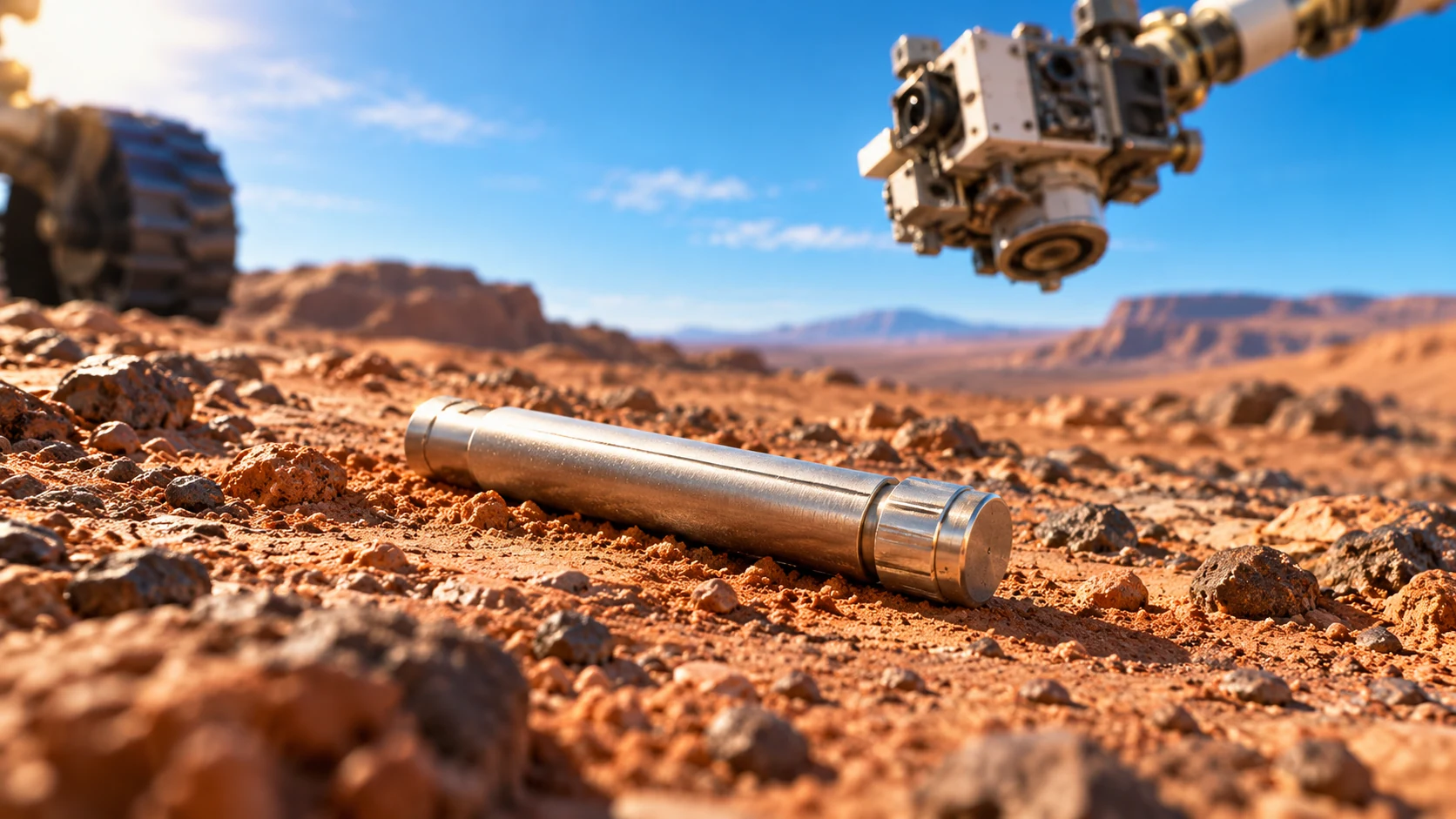
On February 18 in 2021, Perseverance arrived at Mars' Jezero Crater with an ambitious scientific assignment and a collection of remarkably carefully prepared tubes. The rover would study an ancient environment and collect material for a proposed later return to Earth.
The tubes were small, but their paperwork was not. NASA's prelanding account says each flight tube had generated more than 250 pages of documentation during preparation, along with extensive images and video. Scientists wanted to understand the containers' condition before those containers ever encountered a Martian sample.
The mission carried 43 tubes, including five designed for a special supporting role. These witness tubes would capture information about potential contamination around sample collection. Their purpose was to help distinguish the material of interest from things that might have arrived through the spacecraft or its handling history.
That is an important scientific idea hidden inside an unassuming object. A sample is more useful when you understand not only where it came from, but also what may have happened to it along the way.
The evidence around the evidence
The rover's mission was designed around questions about Mars' geology and past habitability, including the search for signs of ancient microbial life. Those are difficult questions, so context matters. An intriguing measurement needs a reliable account of what was measured.
The tubes are therefore part of the scientific reasoning. Their preparation and records help later investigators interpret what they find. The history of handling can make a result clearer or leave an avoidable question beside it.
Handling history matters in more familiar settings, too. A workplace has objects whose purpose will not be obvious to a visitor, and the person responsible for them can explain what needs to stay exactly where it is.
An office table may hold ordinary everyday items beside a prototype, a document set, a display sample, or equipment that must remain in position. To someone arriving to clean the room, their different importance may not be visible.
Before service, identify what must not be touched or moved and which surrounding surfaces are available. Give those boundaries a clear location and a responsible contact. If an item needs special handling, keep that requirement separate from the ordinary cleaning scope rather than expecting its significance to be guessed.
This can be a short conversation with a lasting practical benefit: fewer ambiguities for the cleaning provider and less uncertainty for the owner when returning to the space.
Perseverance's little tubes carried big questions. Your business has its own work worth protecting.
Your Ontario team has work worth protecting and a room worth presenting well. Talk with JLV about office cleaning around the way you actually work. Give the important details a place in the plan.