
Glass & window cleaning
How to Remove Sticker Residue From Glass
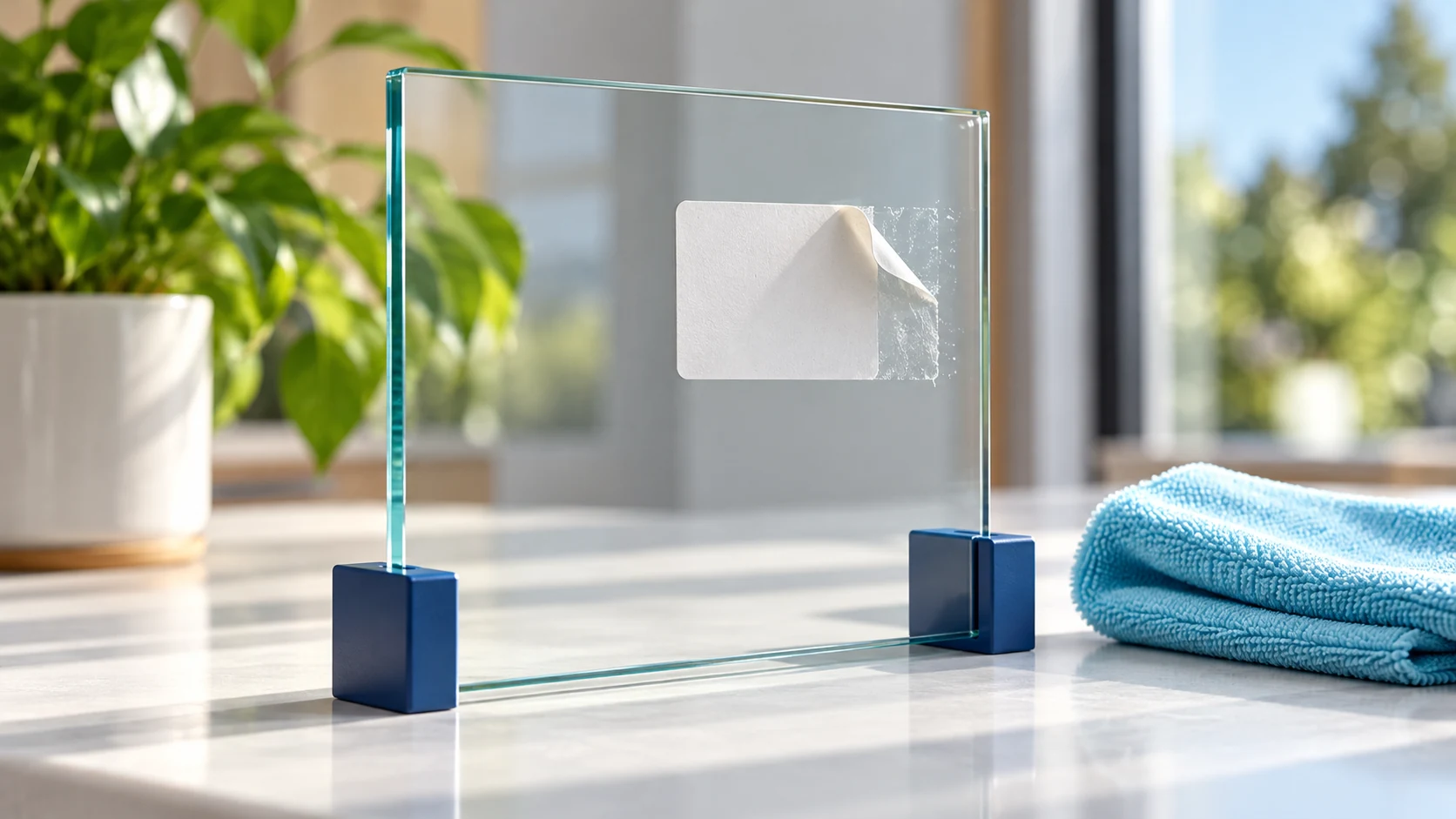
The quick answer
Identify the glass and any exposed coating or film before treating the adhesive. Soften an ordinary paper label with the window maker's permitted cleaning method, peel gently when it releases, and use an approved adhesive remover only if needed. Do not start with a razor blade or heat gun. Sticker glue is inconvenient; scratched glass is much harder to fix.
Confirm that the label can be removed
Check with the owner before removing workplace notices, security markings, inspection labels or installation information. Permanent etched safety markings are part of the glass and should remain. A label can contain a product identifier useful for warranty or service, so let the owner preserve that information before disposal.
Find out whether the sticker is on bare glass, applied film, an exposed coating, a mirror or a plastic panel. Stop if the surface is unknown. This guide is for routine accessible window glass, not historic glue, painted graphics, automotive glass, delicate mirror backing or adhesive across a damaged edge.
Supplies
- Soft clean cloths and the glass maker's permitted mild cleaning solution
- Clean water for the approved final wash
- A manufacturer-approved adhesive remover only if the identified glass and surrounding materials allow it
- Label-required gloves, ventilation and protection for the frame and floor
Work from mild cleaning to a defined next step
1. Inspect the pane for scratches, chips and film edges. Work on cool glass away from direct sunlight. Protect surrounding paint, sealant and flooring, but do not attach masking tape to a sensitive finish without permission. Make sure cleaning liquid cannot run into electronics or the window assembly.
2. For an ordinary paper label on compatible glass, dampen it using the approved solution and allow only the softening time the product or glass instructions permit. Keep the area controlled rather than soaking the entire pane or sill. Do not substitute boiling water.
3. Try lifting a label edge gently with your fingers when it releases easily. Peel slowly without levering against the glass. If it tears or resists, repeat the permitted softening method or pause. Do not introduce a blade, abrasive pad or hard scraper to make the process faster.
4. If glue remains, check the glass manufacturer's approved adhesive-removal process and the remover's label. Test as instructed and apply only the permitted amount and method, usually with controlled cloth application rather than spraying surrounding surfaces. Keep solvents away from heat and ignition sources when the label requires it. Never mix products.
5. Remove the adhesive and cleaner residue using the specified final wash and rinse. Dry the glass and adjacent frame, then inspect the pane from both sides. Stop if a fixed shadow remains after the surface is clean; it may be a finish difference or damage rather than glue.
Mistakes to avoid
Tempered glass is not automatically safe to scrape, and a clear pane is not proof of an uncoated surface. Do not use acetone, alcohol, citrus solvent or an oil-based household remedy without compatibility approval. Avoid prolonged wet wrapping, heat guns and attempts to polish the mark away. Protect seals and nearby plastic even when the glass itself accepts the remover.
When to call for help
Large aged decals, unknown coatings, stubborn construction adhesives and any surface damage merit the installer or a qualified glass-cleaning specialist's assessment. Provide the product information and a photograph taken without exposing private workplace details. Do not let repeated trial-and-error treatments become the repair problem.
Prevent the next residue problem
Ask before placing adhesive signs on glazing and select a mounting method approved for the surface. For post-construction or routine business cleaning in Orange County, Chino and Ontario, California, discuss the materials and scope with JLV at /contact/.