
Office cleaning
How to prepare for the first cleaning visit after an office move
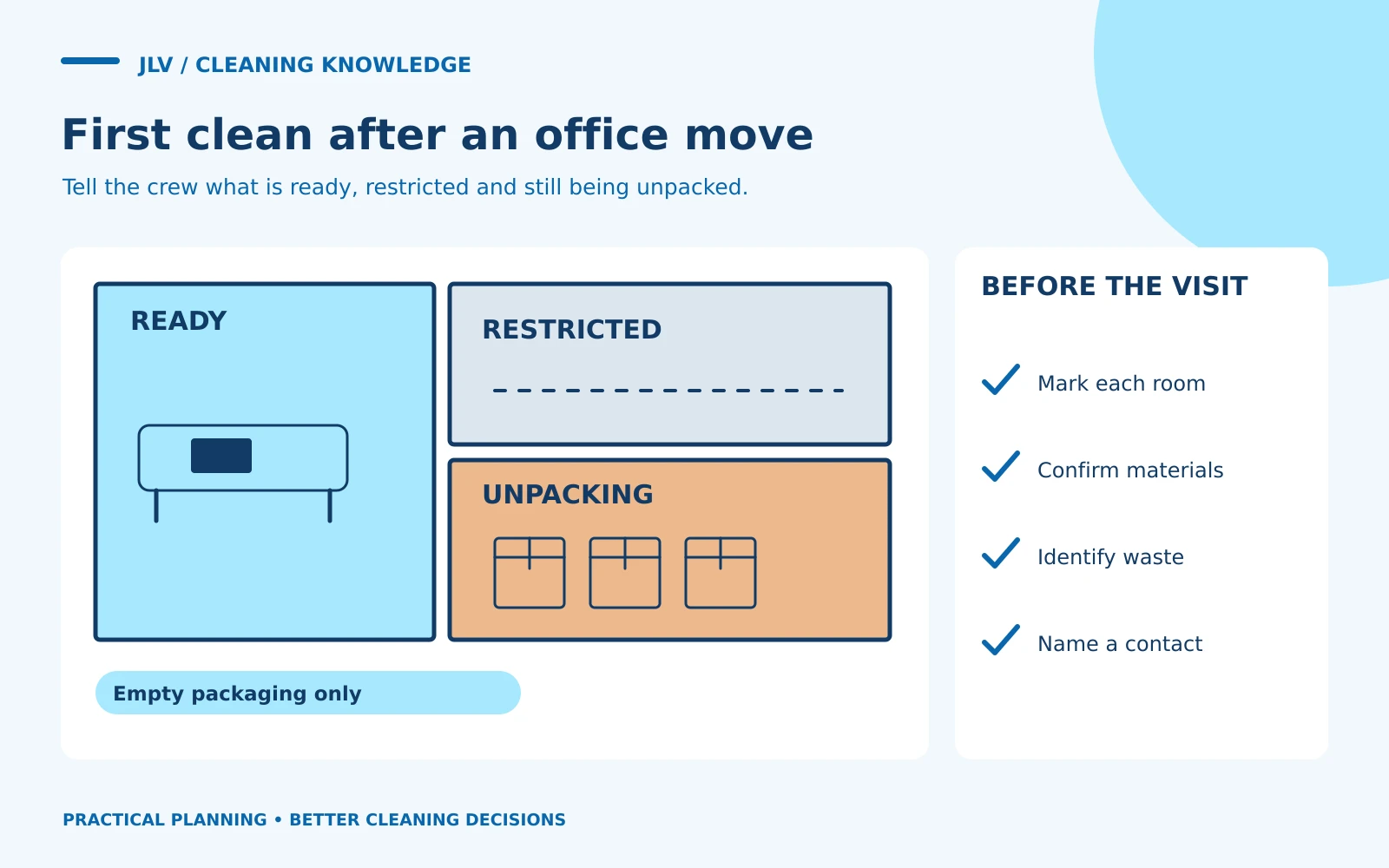
Prepare for the first cleaning visit after an office move by identifying which rooms are usable, which materials need special care, and which boxes and waste the crew may handle. Treat the first visit as a defined transition visit rather than assuming the old office’s routine checklist fits the new space.
A move changes more than floor area. Furniture can hide previously accessible edges, shared-building rules may differ, and unpacking can continue long after employees start work. A useful first-visit brief describes the conditions the crew will actually encounter.
Mark ready and not-ready areas
Make a simple room list with three conditions: ready for agreed cleaning, occupied with restrictions, and unavailable. Identify rooms where installers, IT staff, or movers are still working. Update the list shortly before the visit, because a plan made a week earlier may no longer describe the office.
Specify who will confirm a room is ready. If a closed room is excluded, say whether the provider should report it or return later by arrangement. Do not ask cleaners to move packed cartons, disconnect equipment, or enter restricted rooms to reach the original checklist.
Decide what counts as waste
Label the approved waste collection location and explain how empty packaging is distinguished from boxes holding office property. An unsealed carton is not automatically trash. The office representative should authorize disposal of questionable items, especially records, electronics, samples, or supplies.
Identify who removes pallets, large furniture packaging, and moving-company materials. Confirm the building’s disposal route and any restrictions. If unpacking creates more ordinary waste than a routine visit covers, describe the volume when requesting the visit rather than leaving the crew to discover it on arrival.
Keep confidential documents and storage devices in the office’s secure collection process. Cleaning staff should not inspect their contents to decide whether they are disposable.
Collect new-surface instructions
Ask the landlord or installer for the actual floor finish, furniture model, and care information where relevant. Record recently installed materials and any restrictions still in effect. Avoid choosing a chemical solely because it worked at the previous office.
Manufacturer instructions can differ by material and product. Herman Miller’s care resources provide one example of product-specific guidance. Use the instructions for the furniture you have, and ask for clarification when the finish is unknown.
Construction residue, adhesive deposits, or heavy installation dust should be described separately. Do not imply that an ordinary move-in visit includes specialist residue removal or ongoing construction cleanup.
First-visit briefing checklist
- New address, suite, authorized entrance, and parking instructions
- Named on-site or reachable contact
- Ready rooms and restricted rooms
- Agreed ordinary waste and separate move-related debris
- Location of authorized waste destinations
- Material details and supplied care instructions
- Desk and personal-property handling boundaries
- Supplies available and purchasing responsibility
- Method for reporting incomplete tasks or unexpected conditions
Share operational access instructions through an approved channel and keep security credentials out of the general room list.
Use the first visit to improve the next one
For example, the initial visit may cover reception, restrooms, and unpacked workstation aisles while a storage room remains unavailable. The follow-up decision is whether to add that room when unpacking ends, not whether the first visit failed to clean an inaccessible area.
Review the provider’s observations promptly. Confirm which temporary exclusions should end and whether the recurring schedule now matches occupancy. Keep any extra unpacking cleanup separate from the future routine scope so both sides know what the next visit is intended to accomplish.