
Office cleaning
How to prepare a janitorial storage area for shared building use
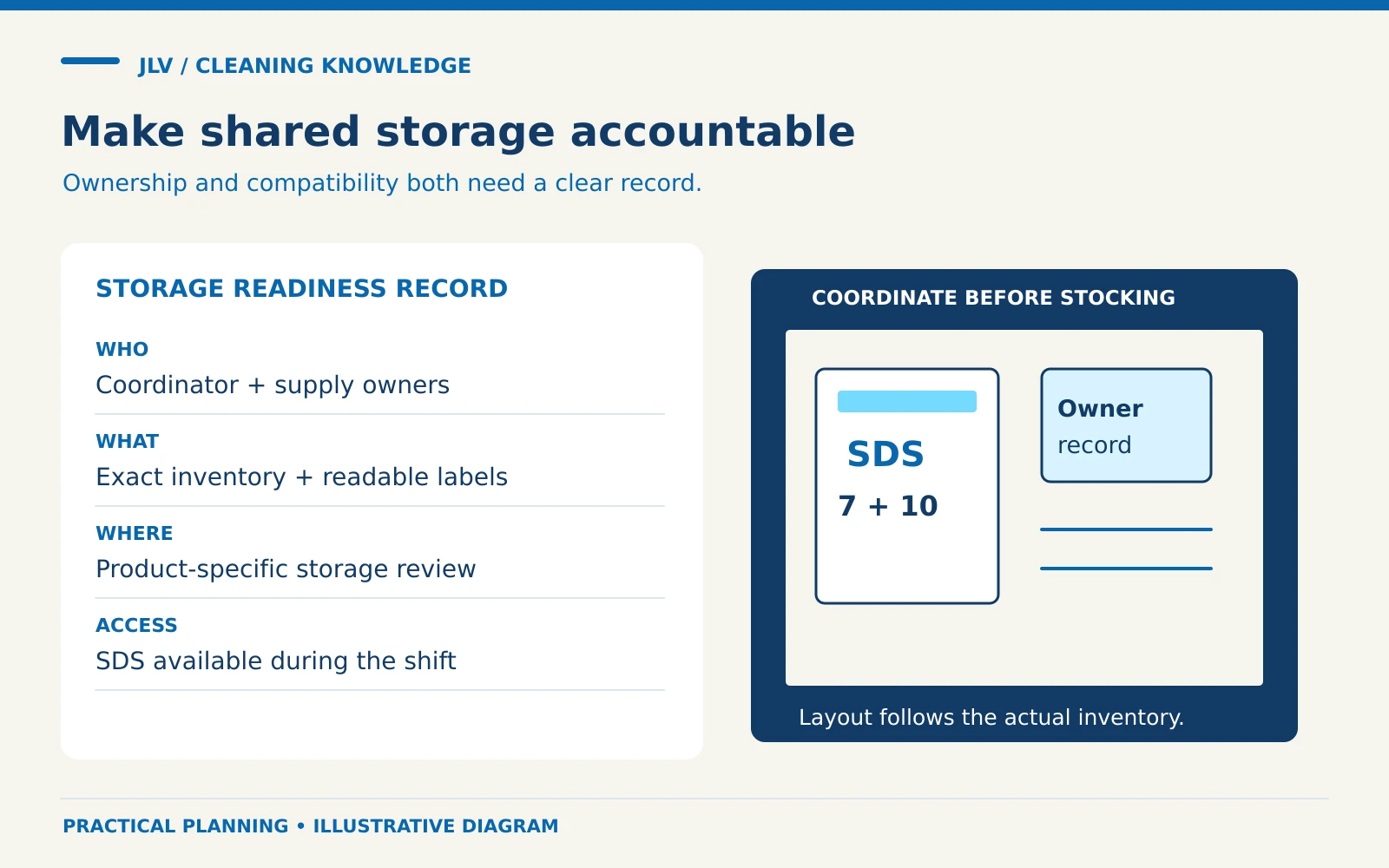
Prepare a shared janitorial storage area by agreeing who controls access, which supplies belong there, and how each product will be stored before deliveries arrive. An empty closet is only a starting point. Different tenants and contractors may bring different chemicals, equipment, and expectations.
Use the following checklist as an operational handover. It does not certify fire-code compliance, chemical compatibility, or the adequacy of the building’s safety program. Building management and the relevant employers must resolve those questions for the actual room and inventory.
Name one storage coordinator
Assign a building contact who can approve space allocations and resolve conflicts. Each company using the room should also name a supply owner. Record who orders products, checks deliveries, maintains product information, removes obsolete stock, and reports damage.
Decide who may enter and who may use which equipment. Labeling a shelf with a contractor’s name does not give other users permission to borrow its chemicals or machines. Keep access credentials in the approved security system rather than on a public inventory sheet.
Review the real inventory
List each product’s exact name, owner, container size, approximate quantity, and proposed location. Match the name to its label and current safety data sheet, or SDS. Include products delivered by tenants, not just those purchased by the cleaning provider.
For covered workplaces, OSHA’s hazard-communication standard addresses chemical inventories, labels, accessible SDSs, training, and coordination where other employers’ workers may be exposed. Shared storage needs an agreed way to exchange that information. OSHA hazard communication.
Do not identify an unmarked bottle by its color or smell. Keep it out of use and refer it to the responsible employer for assessment. Do not pour unknown leftovers together to save space or improvise a disposal route.
Allocate locations using product information
Read each product’s storage instructions. SDS Section 7 describes handling and storage, including incompatibilities; Section 10 addresses stability and reactivity. Ask the responsible safety contact to resolve conflicts before placing products together. OSHA SDS requirements.
Separate supplies by both ownership and confirmed compatibility. Two products used in restrooms do not automatically belong in the same spill tray. Shelf color and product category cannot replace a product-specific review. Keep food, drinks, and personal belongings in their designated areas outside chemical storage.
Have management confirm suitable shelving, permitted quantities, ventilation needs, required clearances, and any containment or cabinet requirements. Avoid publishing a universal shelf layout when the products and local building requirements are unknown.
Make everyday use workable
Walk through a normal visit with the provider. Can a worker reach the assigned supplies without moving another tenant’s containers? Is there an approved place for returning equipment? Where do used tools go while awaiting their established cleaning and drying process?
Check that the room’s door, working space, and approved routes remain usable when carts are parked. Record how deliveries will be handled if nobody is available to receive them. A delivery should not turn the doorway into temporary storage by default.
For SDS access, test the actual method with an authorized worker. If information is electronic, confirm that access works during the cleaning shift rather than depending on an office employee who has gone home.
Use a storage readiness record
Complete these fields together:
- Room and building contact: ____
- Participating companies and supply owners: ____
- Approved products and quantities reviewed on: ____
- Storage instructions and compatibility checked by: ____
- Assigned shelf or cabinet locations: ____
- Label or SDS issues still open: ____
- Delivery, inventory, and obsolete-stock responsibilities: ____
- Emergency reporting contact and access process: ____
- Handover date and next review trigger: ____
For example, if a second tenant adds a new floor-care product, pause its placement until the product information and allocated space have been reviewed. Do not assume last month’s room approval covers every future chemical.
Stop the handover if containers are leaking, unidentified, or visibly damaged, or if required safety information and storage conditions remain unresolved. Use the site’s incident procedure for an active spill or exposure. Resume ordinary storage only after the responsible contact has addressed the issue.
For the ordinary cleaning responsibilities that remain before and after this task, use the office responsibility checklist. Include the confirmed business-cleaning areas and access limitations when requesting a JLV quote.