
Office cleaning
How to plan office entry cleaning during rainy weather
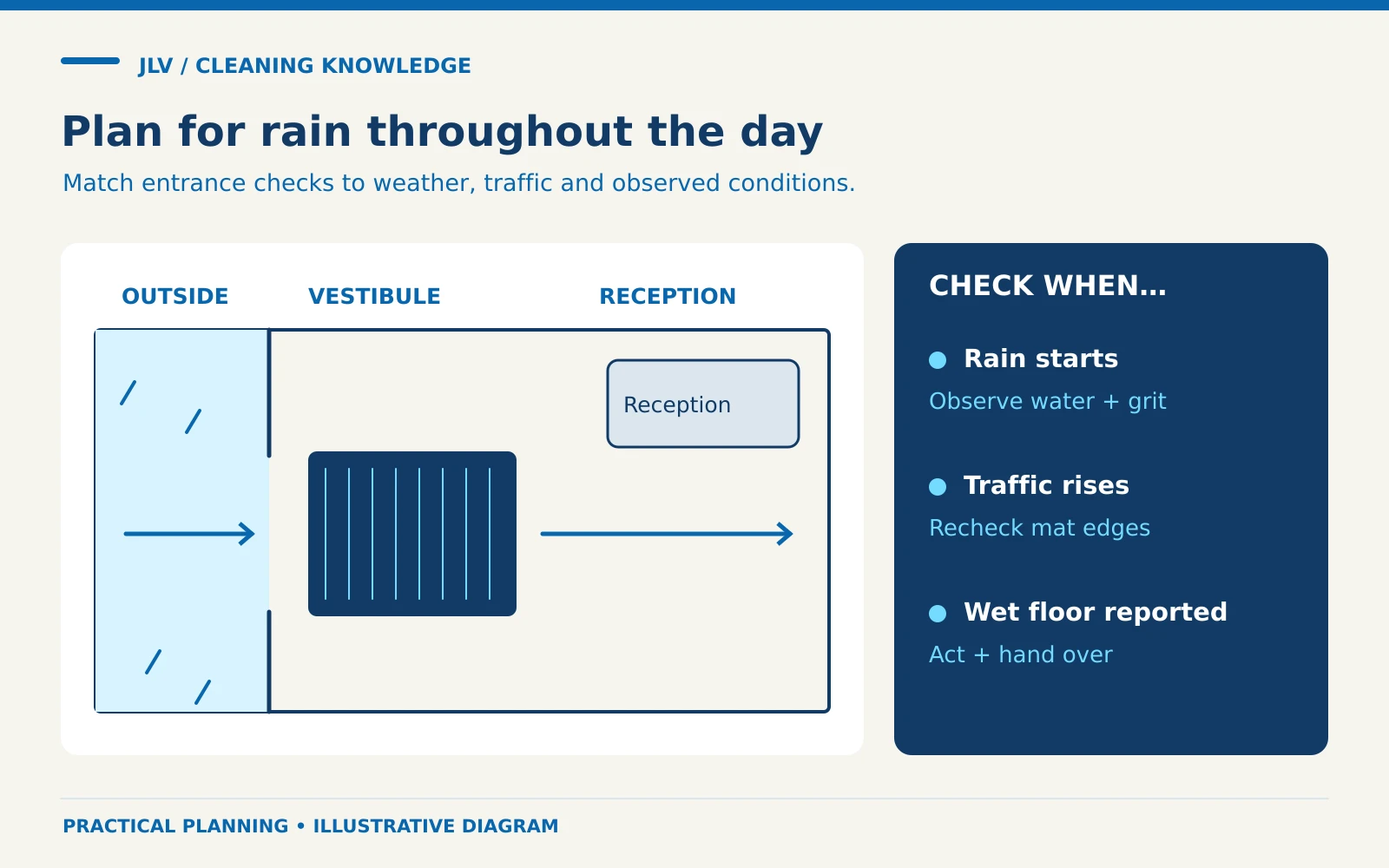
Plan rainy-weather entry cleaning around what happens at the doorway during a storm. Identify who checks the entrance, what conditions trigger extra work, and who can restrict a route that cannot be kept safe. A normal evening visit may leave an important coverage gap during the morning arrival rush.
The plan should fit the actual doors, floor finish, traffic pattern, and available mats. There is no single inspection interval or mat length that answers those questions for every office.
Walk the entrance before rain arrives
Trace the route from outside to reception, including vestibules, turns, stairs, and elevator approaches. Identify where umbrellas drip, where people step off mats, and where water has previously collected. Include delivery and accessible entrances rather than assessing only the main doors.
Ask management to distinguish tracked-in rain from water entering through a damaged door, roof, or drainage problem. Cleaning staff can report recurring wet locations; building repairs need their own owner. Record who can arrange a repair inspection without waiting for the cleaning contract to change.
Agree on mat readiness
Check the actual mat’s placement and manufacturer instructions. Look for curled edges, movement, damage, and water beneath it. Confirm that the mat does not interfere with door operation or the approved route. Have a plan for removing or replacing a mat that cannot stay flat and secure.
Crown Matting’s maintenance guidance calls for keeping the floor beneath its mats clean and dry and allowing cleaned mats to dry before reinstallation. Apply the installed product’s own instructions when selecting care methods. Crown mat maintenance guidance.
Record where a suitable replacement is stored and who may install it. Do not solve a wet entrance by improvising loose towels, stacking mats, or extending a mat into a door’s swing path. Ask the building contact to review any proposed change to the entrance layout.
Assign checks to observable triggers
Start with an inspection before occupants arrive when rain is forecast. Add checks when rain begins, traffic increases, deliveries arrive, or an employee reports wet flooring. Have the responsible person adjust the next check to the observed rate of water and grit accumulation.
For example, an entrance that remains dry during light rain may need a new check after a large visitor group arrives. If wet footprints repeatedly extend past the mat, review both the mat arrangement and staffing coverage instead of merely repeating the original schedule.
OSHA requires regular inspections as needed, safe walking surfaces, and correction or guarding of hazards. It does not supply a universal rainy-lobby inspection interval. OSHA walking-working surfaces.
Keep a usable route through the work
Agree on who removes ordinary grit and tracked water, which tools are approved for the floor, and how the work area will be protected. Coordinate with reception before changing the normal entrance. Any alternative route must be approved and remain usable for the people who need it.
If water returns faster than the assigned coverage can manage, contact management for additional controls or coverage. Do not leave an unsafe route open merely because a sign has been placed nearby. Stop routine work if the water source is uncertain, electrical equipment is affected, or the condition requires the building’s incident response.
Use a storm inspection log
Give each entry point its own short record:
- Entrance and responsible checker: ____
- Check time and current rain or traffic condition: ____
- Floor, mat edges, and surrounding route observed: ____
- Grit or water removed under the approved procedure: ____
- Mat change or maintenance report needed: ____
- Access control or management escalation: ____
- Next check trigger and person accepting handoff: ____
A handoff matters at shift changes. Reception may leave before the evening crew arrives, so name the person covering that gap rather than assuming someone will notice.
After the weather settles, inspect for residual moisture and mat problems, arrange manufacturer-approved care, and document recurring trouble spots. Use that record to improve the next storm plan. The practical measure of success is a maintained, usable entry route with clear responsibility throughout the weather event.
For the ordinary cleaning responsibilities that remain before and after this task, use the office responsibility checklist. Include the confirmed business-cleaning areas and access limitations when requesting a JLV quote.