
Office cleaning
How to pause cleaning service during a temporary office closure
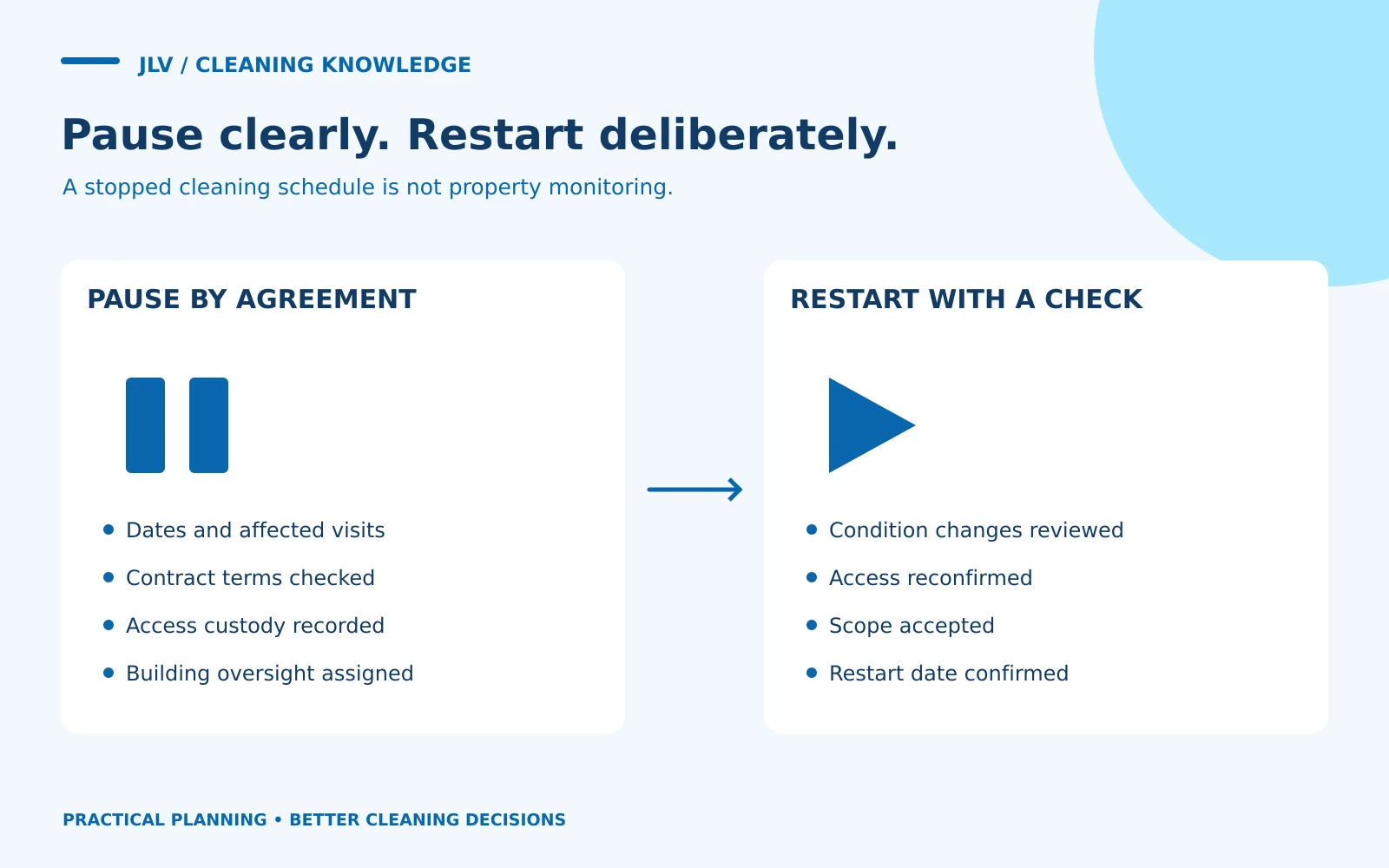
Pause cleaning service by agreeing on the exact visits and tasks being suspended, the effective dates, and how service will restart. Check the current agreement for notice, billing, and cancellation terms rather than assuming an empty office automatically stops the service.
A temporary closure needs two separate decisions: what cleaning changes, and who remains responsible for the building while the office is unused. A paused cleaning schedule should not leave either responsibility unclear.
Define the pause precisely
State whether all visits stop or a reduced scope continues. Identify any partially occupied rooms, contractor activity, or landlord-maintained common areas. If the closure date is uncertain, set a review date and name the person who can extend or end the pause.
Ask the provider to confirm the arrangement in writing, including any charges or notice obligations under the agreement. Do not describe a proposed pause as accepted until both sides have resolved those details. This guide does not interpret individual contracts.
List work already approved but not completed. A periodic task may need cancellation, rescheduling, or separate access; it should not disappear into the general pause instruction.
Decide what happens to access and supplies
Have the authorized building or security administrator decide whether keys, badges, or permissions remain active. Record custody and return arrangements without copying access codes into an ordinary email chain. Do not ask cleaning personnel to retain access “just in case” unless the responsible party approves it.
FTC guidance for businesses recommends limiting unnecessary information and access. Apply that principle when deciding who still needs the closure plan and contact list.
Clarify ownership and storage of supplies and equipment left on site. Identify who may retrieve them and how access is scheduled. Store products according to their actual instructions; a closed office is not a reason to move chemicals into an unsuitable space.
Assign oversight during the closure
Name the building contact responsible for security, leaks, moisture concerns, and system maintenance. If anyone will conduct inspections, define that work separately with the appropriate provider. A stopped cleaning service should never be represented as continuing property monitoring.
CDC reopening guidance identifies potential water-system and moisture hazards associated with inactivity. Facilities management should decide what assessment is needed before reoccupation. Ordinary cleaning does not replace that assessment or certify a building ready for use.
Service-pause checklist
- Last visit and first suspended visit identified
- Full pause or reduced scope stated
- Contract notice and charges checked
- Outstanding work addressed
- Keys, badges, and equipment custody documented
- Authorized closure contact assigned
- Building oversight assigned separately
- Restart request method and notice needs confirmed
- Pre-return inspection responsibility identified
A practical example is a suite closed for an uncertain relocation decision. Rather than repeatedly canceling individual visits, the parties could agree on a documented pause and a review date, subject to the actual contract. The example does not imply that every provider offers that arrangement.
Restart against current conditions
Before reopening, tell the provider about any work performed, access changes, occupancy plans, and observed condition changes. A space may need a different first visit after prolonged vacancy, contractors, or a water incident. Ask for assessment rather than automatically resuming the old checklist.
Confirm the accepted restart date and recurring schedule. Keep any building investigations or repairs on a separate responsibility list so restarting routine cleaning does not imply that unresolved facilities concerns have been cleared.