
Office cleaning
How to handle recycling contamination in a shared office
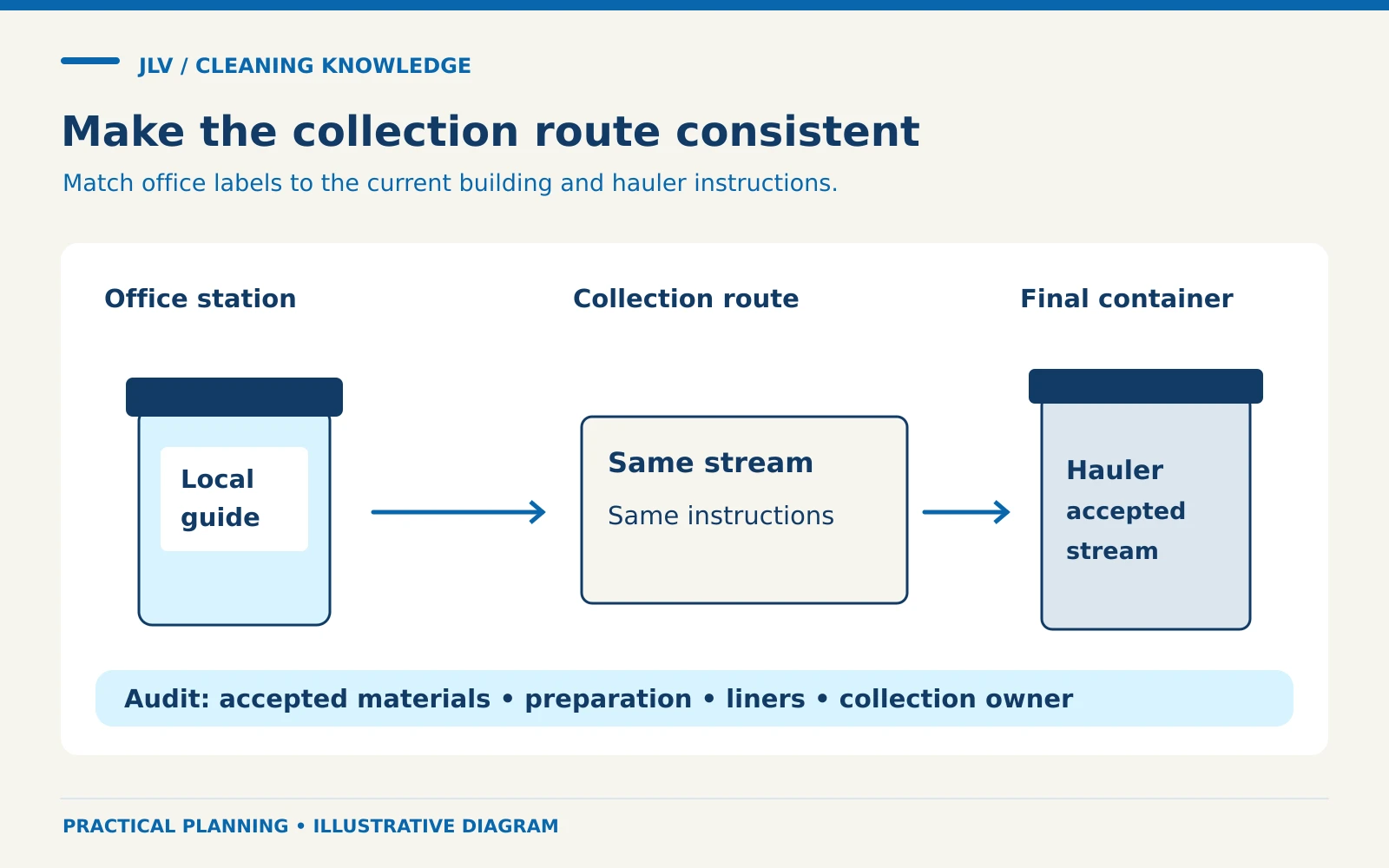
Start a recycling-contamination problem by checking the building’s actual collection instructions. A bin marked “recycling” does not tell occupants which materials the service accepts, how containers should be prepared, or whether a liner is allowed. Those gaps can send the same unwanted items into the stream every week.
The useful outcome is a consistent route from the office station to the building’s collection container, with instructions that match at both ends. Assign the program decisions to management and define the cleaning crew’s collection role explicitly.
Confirm the service before changing labels
Ask the account holder for the current hauler guide and any building-specific instructions. Confirm the accepted materials, food-residue rules, required separation, liner policy, and handling of cardboard or oversized packaging. Record the service address and date checked so a guide for another property is not reused accidentally.
CalRecycle advises California businesses to check local program requirements, which may differ in scope from statewide requirements. Its organics guidance also emphasizes correct containers, education, and contamination checks. Have management verify which requirements and any exemptions apply to the site. CalRecycle commercial recycling and organic-waste collection guidance.
Ask about recycling and organics together. Otherwise, food scraps or food-soiled packaging may keep appearing in a recycling bin because occupants have no clear instruction for the alternative stream.
Inspect the labels and route
Walk from each collection point to the building’s final containers. Check whether the same stream name and examples remain consistent through utility areas, meeting rooms, and shared areas. Look for a recycling label on a bin that is routinely emptied into a different stream.
Observe visible contamination without opening sealed bags or reaching into mixed waste. Note the item and station, not the person you think discarded it. Photographs should avoid papers, labels, or other material that may expose confidential information.
Check whether the most common confusing items appear on the sign. A generic recycling symbol is less useful than the actual local instructions for the cups, packaging, or containers used in that office.
Use a bin-label audit worksheet
Create one entry per station:
- Station name and photo reference if permitted: ____
- Intended stream and final collection container: ____
- Current accepted-materials guide and date: ____
- Frequent misplaced items observed: ____
- Correct destination confirmed with hauler: ____
- Preparation or liner instructions missing: ____
- Revised label and responsible approver: ____
- Collection task owner and review date: ____
For example, a meeting-room sign may say “all plastic,” while the actual service excludes a particular type of packaging used at catered meetings. Replace the broad phrase with locally confirmed examples and update the event cleanup instructions. Do not assume a resin code or recycling symbol proves acceptance. EPA says acceptance varies by local program. EPA recycling questions.
Define what the crew should do
Agree whether routine service means collecting an already-separated stream, reporting visible contamination, or performing a specifically assessed sorting task. Do not quietly add hand-sorting mixed waste to a standard bin-emptying assignment.
If a bag contains visible sharps, leaking chemicals, batteries, or unknown material, stop ordinary handling and notify the designated site contact. Use the appropriate specialist or established waste procedure. California identifies batteries and various electronic and chemical wastes as requiring separate handling; they should not be redirected into ordinary recycling as a convenient fallback. CalRecycle waste guidance.
For ordinary contamination, agree in advance who asks the hauler what to do with the affected load. Avoid inventing a rule that every contaminated bag must be rejected or that staff should always move it to trash.
Test one correction and review it
Choose a station with a repeated, visible problem. Update its approved label, give occupants a short explanation, and confirm that the crew has the same instructions. Recheck after a representative period of office use and record whether that specific item is still misplaced.
If the issue persists, look at bin placement, missing collection options, catering materials, and inconsistent instructions before repeating the same reminder. Keep the latest hauler guidance accessible and review it when service changes. The aim is a clear, usable system with fewer preventable mistakes, not a recycling-rate claim unsupported by measured collection data.
For the ordinary cleaning responsibilities that remain before and after this task, use the office responsibility checklist. Include the confirmed business-cleaning areas and access limitations when requesting a JLV quote.