
Office cleaning
How to hand over cleaning instructions when an office manager leaves
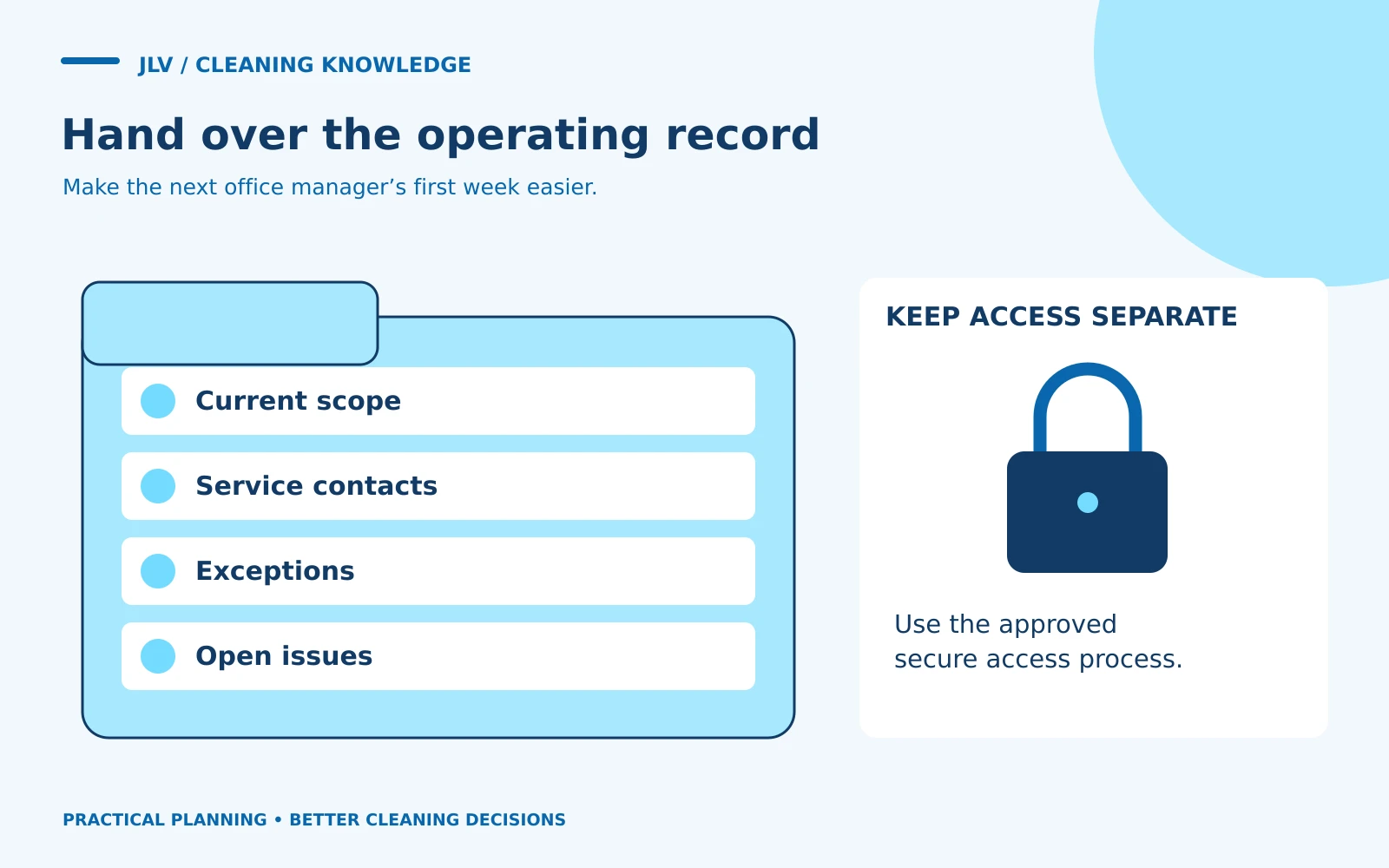
Hand over cleaning instructions as a short, current operating record supported by a walkthrough. The new office manager should be able to identify the approved scope, contact the right people, authorize changes within their role, and understand unresolved issues without searching a former employee’s inbox.
Keep the handover separate from credentials. Passwords, alarm codes, personal employee information, and unnecessary customer records do not belong in a shared cleaning guide. Security administrators should manage any access changes through the organization’s approved process.
Begin with the agreement that is actually in effect
Locate the current service agreement, approved schedule, and later written changes. Note which rooms and tasks are included, which are excluded, and who supplies consumables. If an old checklist conflicts with a newer authorized change, resolve the discrepancy before presenting the checklist as current.
List the people who can approve extra visits or changed scope. A provider may receive requests from several employees, but the handover should identify the authorized decision-maker and the backup when that person is away. Do not infer spending authority from a job title alone.
Build a practical handover folder
Use a small number of clearly named sections: current scope, building access process, product and finish instructions, service contacts, and open issues. Link to the approved secure system for restricted information rather than copying it into the folder.
For contacts, record business details and the reason to call each person. The cleaning supervisor, building engineer, landlord representative, and security contact solve different problems. Mark who handles urgent building concerns and which requests can wait for the next routine visit.
FTC business guidance recommends retaining only needed personal information and protecting access to it. Apply that principle to inspection photos, complaint records, and old email exports as well as to the final guide.
Walk the exceptions together
A walkthrough is most valuable at locations where the written scope can be misunderstood. Point out a restricted room, a desk that must remain undisturbed, an unusual finish, or a shared space maintained by the landlord. Explain the approved instruction rather than relying on “the crew knows.”
Record open issues using observable facts: location, date reported, action requested, and person responsible. Avoid naming an employee who complained unless the new manager genuinely needs that information. Keep health-related accommodation details in the organization’s appropriate private process; the cleaning team generally needs the operational instruction.
Handover checklist
- Current agreement and approved amendments located
- Service days, arrival process, and cancellation contacts checked
- Included rooms and exclusions confirmed
- Supply ownership and purchasing responsibilities identified
- Extra-work approval authority recorded
- Finish and product instructions available
- Outstanding issues assigned an owner
- Access administration transferred by authorized staff
- First review date agreed with the new manager
Ask the incoming manager to explain how they would handle one ordinary request and one urgent building issue. This reveals missing contacts more effectively than simply asking whether the folder makes sense.
Use a brief transition example
Suppose a conference room is temporarily excluded while equipment is installed. The handover should state the exclusion, who can confirm completion, and how cleaning restarts. “Conference room skipped” leaves the new manager guessing whether the omission is permanent or accidental.
After the first review, archive superseded instructions according to office policy and maintain one authoritative version. Tell the provider who the new contact is through an approved business channel. A successful transfer leaves clear ownership of future decisions, not a larger collection of unexplained documents.