
Office cleaning
How to coordinate office cleaning with a service elevator booking
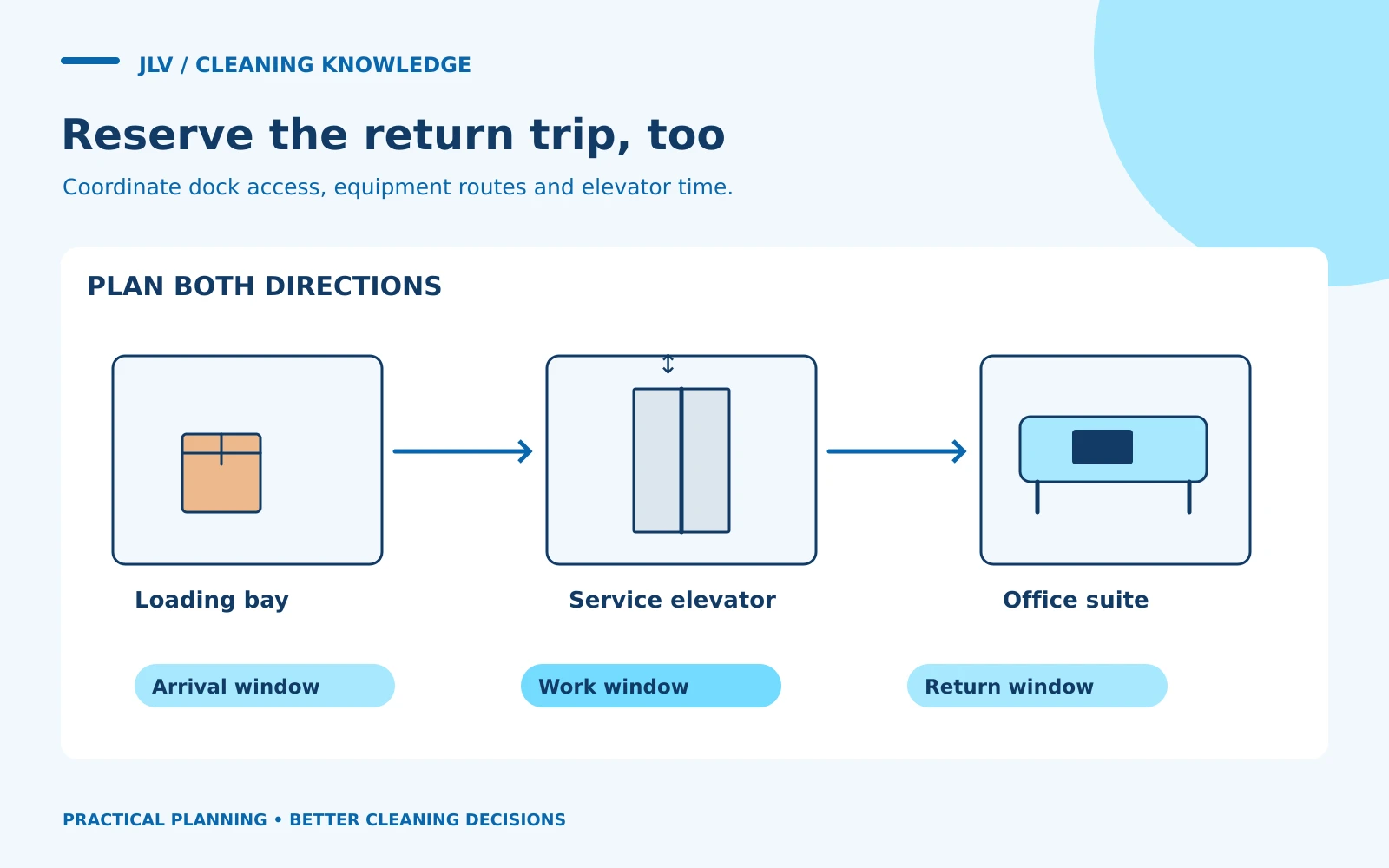
Book the cleaning crew’s arrival, equipment movement, and departure around the building’s confirmed service-elevator window. Give the provider the approved route and restrictions before scheduling the work. A reservation for bringing equipment upstairs may not cover taking equipment and collected waste back down.
The useful document is a short movement plan. It connects the cleaning scope to the building’s loading rules without expecting the cleaning crew to negotiate access at the dock.
Confirm the reservation before confirming the visit
Ask the building contact which elevator is authorized, where the crew checks in, and whether the reservation is exclusive or shared. Record the date, start and end time, floors served, booking reference, and person who can resolve a delay. Clarify whether protective pads, floor protection, escorts, or particular paperwork are required. These are building-specific questions, not universal requirements.
Include any separate loading-dock reservation. A free elevator is of little use if the crew cannot unload where permitted. Ask where the vehicle may wait and who handles an early arrival. Keep access codes and other credentials out of the general booking sheet; use the building’s approved access process.
Match the equipment to the route
Have the provider confirm cart and equipment dimensions against the actual route, including door openings and turns. Building management should resolve elevator capacity and operating restrictions. Never assume a posted passenger count establishes a safe equipment load.
Walk the path from vehicle to work area. Look for thresholds, occupied reception zones, narrow corridors, and temporary construction barriers. Allocate a permitted staging area that will not obstruct circulation. OSHA’s walking-surface guidance emphasizes safe access and keeping walking surfaces free of hazards.
Cleaning staff should not override elevator controls, prop restricted doors, or use an unavailable passenger elevator as an improvised alternative. If the approved route changes, obtain the building contact’s instructions before moving equipment.
Use a three-part timing plan
Write separate windows for arrival, work, and departure. An illustrative plan might allow unloading at 6:00 p.m., cleaning after equipment reaches the suite, and a return elevator trip arranged for the end of the visit. These are example milestones, not promised service durations.
Include time for check-in, protection installation if required, and returning borrowed access devices. Ask whether waste can travel with equipment and where the building permits it to be deposited. Do not assume construction debris or furniture can enter the ordinary waste stream.
Reservation checklist
- Building approval and booking reference received
- Loading address and permitted vehicle position confirmed
- Equipment route and staging location checked
- Elevator dimensions and applicable load rules confirmed by authorized parties
- Required protection and responsibility for its removal assigned
- Arrival and return trips covered
- Authorized waste destination identified
- Delay contact and fallback decision recorded
The fallback should be a decision, such as rescheduling or completing a smaller agreed scope with approved access. It should not instruct staff to work around a safety or security restriction.
Close the loop after the visit
Ask the provider to report whether the elevator window worked and identify any access-related work left incomplete. Note the actual bottleneck: a delayed escort, occupied dock, or inadequate return window calls for a different correction. Share operational facts with the building contact without circulating tenant information or security details.
A repeatable elevator plan makes future bookings simpler because the next visit starts with verified conditions rather than assumptions.